Canada Computers Breach: 1.2K Guest Shoppers Exposed
What Happened in the Breach
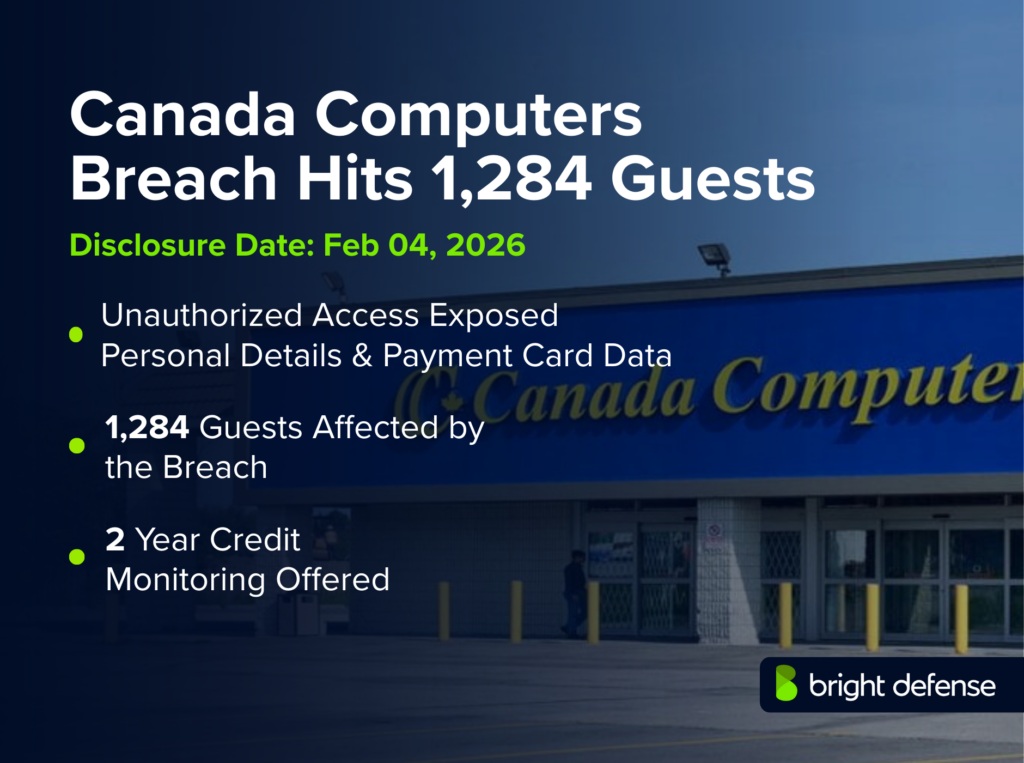
Canadian electronics retailer Canada Computers & Electronics disclosed that 1,284 customers who used its website’s guest checkout had their personal data exposed. The company said that it learned on January 22, 2026 that an unauthorized party had accessed a system supporting its retail website.
An internal investigation determined that the intrusion lasted from December 29, 2025 until the January 22, 2026 discovery. Security news sources reported that the compromised data included names, addresses, email addresses and credit card details for customers who checked out as guests. Member accounts and in‑store purchases were not affected.
Timeline: From First Access To Latest Update
- December 29, 2025 — Beginning of intrusion window. According to Canada Computers’ investigation, guest checkout transactions made between December 29, 2025 and January 22, 2026 were at risk.
- January 22, 2026 — Breach discovery. The company detected unauthorized access to a system supporting its retail website and immediately shut down the affected platform. It notified its cybersecurity response team and began an internal investigation.
- January 25, 2026 — Initial notifications. Canada Computers started sending breach notices to impacted customers and reported the incident to federal and provincial privacy regulators. The company also informed payment card networks and banks.
- Early February 2026 — Public disclosure. The retailer issued a public statement and answered media inquiries. In interviews, it confirmed that 1,284 customers were affected and that only guest checkout users were impacted. The company explained that its current investigation showed no evidence that registered member accounts or point‑of‑sale systems were compromised.
- Mid‑February 2026 — Customer support measures. Canada Computers offered two years of complimentary credit monitoring and identity protection services to the 1,284 affected customers. It also set up a dedicated support line to answer questions and assist with card replacement or fraud alerts. Law enforcement and privacy regulators continued to assess the breach.
What Data Or Systems Were Affected
The breach targeted a system that handled online guest checkouts, not the core e‑commerce platform. Canada Computers said the intruder could have accessed personal information and credit card details for those who completed purchases without logging into an account.
The compromised data may include names, billing addresses, email addresses, phone numbers, credit card numbers, expiry dates and CVV codes. Registered member accounts, loyalty program data and in‑store transaction systems were unaffected. The company did not disclose whether passwords were involved because guest checkout does not require account creation.
Who Was Responsible (Confirmed Vs Alleged)
Canada Computers has not publicly identified the perpetrator. The company said only that an unauthorized party accessed a system supporting its retail website. There are unconfirmed reports that the breach may have involved a credit‑card skimming script on the checkout page, similar to previous Magecart‑style attacks, but investigators have not confirmed the method. No hacking group has claimed responsibility, and law enforcement agencies have not named suspects.
How The Attack Worked
Although the exact method remains under investigation, cybersecurity analysts suggested that the incident resembled a card‑skimming attack. In such attacks, malicious code is injected into a checkout page to capture payment details as customers enter them.
Because the breach only affected guest checkout transactions, it is likely that the attacker exploited a vulnerability in a third‑party script or plugin used on the guest checkout page.
Once the malicious code was embedded, it could have transmitted customer details to an external server controlled by the attacker. Canada Computers said it removed the unauthorized code and strengthened security on its checkout systems. There was no indication that ransomware was involved.
Impact and Risks for Customers
The breach exposed sensitive payment information for 1,284 customers, putting them at risk of credit‑card fraud and identity theft. With access to card numbers, expiry dates and CVV codes, criminals could attempt unauthorized transactions or create cloned cards.
Additionally, personal details such as names and addresses could be used for targeted phishing or social‑engineering scams. Canada Computers advised affected customers to monitor their bank and credit card statements, notify their card issuers of the breach and be vigilant for suspicious emails or calls. Because member accounts and loyalty data were not impacted, the broader customer base faces minimal risk.
Company Response And Customer Remediation
Canada Computers said it immediately disabled the affected system upon discovery on January 22, 2026 and launched an investigation. The company engaged external cybersecurity experts to help determine the extent of the breach.
It notified the Office of the Privacy Commissioner of Canada and relevant provincial regulators, as well as payment card networks. Impacted customers received email notifications with details about the breach and steps to protect themselves.
The retailer offered two years of free credit monitoring and identity theft protection. Canada Computers said it has implemented additional monitoring, security audits and vulnerability scanning across its e‑commerce infrastructure.
Government, Law Enforcement, And Regulator Actions
After Canada Computers reported the breach, the Office of the Privacy Commissioner of Canada (OPC) began monitoring the company’s response. Provincial privacy regulators in Ontario and other affected provinces were notified.
The Canadian Anti‑Fraud Centre and local police departments issued advisories reminding customers to watch for fraud. There have been no public enforcement actions or fines yet, but regulators may investigate whether Canada Computers complied with PIPEDA (the Personal Information Protection and Electronic Documents Act). Because payment card data was involved, major card brands may require an audit under the Payment Card Industry Data Security Standard (PCI DSS).
Financial, Legal, And Business Impact
The breach could have financial implications for Canada Computers. Costs include forensic investigation, customer notification, credit monitoring services and potential card re‑issuance fees. If regulators determine that the retailer failed to implement adequate security measures or promptly notify customers, the company could face fines under privacy legislation.
There is also potential for a class‑action lawsuit, as some affected customers have expressed frustration over the limited details provided. Reputational damage may lead some shoppers to avoid the retailer, especially because the breach occurred during the busy holiday shopping season. However, by limiting the breach to guest checkout users and offering remediation, Canada Computers hopes to retain customer trust.
What Remains Unclear About the Canada Computers Breach
- Investigators have not publicly identified the vulnerability or method used to compromise the guest checkout system.
- The time the malicious code remained active and the scope beyond the 1,284 identified customers remain unclear.
- Canada Computers has not disclosed whether stolen card data was encrypted or whether CVV codes were stored.
- The status of data misuse remains unknown, and no confirmed fraudulent charges have been tied to the incident so far.
- Regulators have not determined whether Canada Computers security practices met industry standards, pending forensic and regulatory review.
Why This Incident Matters
The Canada Computers breach underscores the vulnerability of e commerce checkout systems, particularly when third party scripts or plugins are involved.
The incident demonstrates how a relatively small number of affected customers, 1,284, can still result in significant financial and reputational damage if payment card data is exposed. It highlights the importance of monitoring and promptly patching website components, especially during high traffic periods like holiday sales.
From a consumer standpoint, the breach is a reminder to use secure checkout methods, such as creating an account or utilising trusted payment gateways. For retailers, it stresses adherence to PCI DSS standards, regular security audits, and robust incident response plans to detect and mitigate threats quickly.
Bright Defense: Pen Tests and Continuous Compliance
A Bright Defense strategy focused on continuous testing and compliance can reduce the risk of breaches like Canada Computers. Pen testing can uncover weaknesses in checkout scripts, payment gateways, and third party integrations that enable card skimming.
Continuous compliance monitoring can track PCI DSS alignment and detect unauthorized code, risky changes, and missing patches. DevSecOps workflows and employee training can shorten exposure time and reduce phishing driven access.
Sources
- Yahoo News — Nearly 1,300 customers affected by Canada Computers data breach (Feb 2026).
https://ca.news.yahoo.com/nearly-1-300-customers-affected-021737843.html - Insurance Business Magazine — Canada Computers data breach exposes guest checkout customers’ card details (Feb 2026).
https://www.insurancebusinessmag.com/ca/news/cyber/canada-computers-data-breach-exposes-guest-checkout-customers-card-details-563944.aspx - CBC News excerpt via search snippet — Canada Computers told reporters that the incident affected 1,284 customers and that the breach occurred between December 29 and January 22.
https://ca.news.yahoo.com/nearly-1-300-customers-affected-021737843.html - InsuranceBusiness search snippet — Canada Computers said it learned on January 22, 2026 that an unauthorized party accessed a system supporting its retail website.
https://www.scworld.com/brief/canada-computers-cyberattack-exposes-customer-data-including-credit-card-details - CanadianSecurityMag search snippet — The stolen information may have included credit card details for customers who checked out without logging into their accounts.
- InsuranceBusiness search snippet — Impacted customers are being offered two years of complimentary credit monitoring and identity protection.
https://www.insurancebusinessmag.com/ca/news/cyber/canada-computers-data-breach-exposes-guest-checkout-customers-card-details-563944.aspx - SC World search snippet — Member accounts and in‑store purchases were not affected.
https://www.scworld.com/brief/canada-computers-cyberattack-exposes-customer-data-including-credit-card-details
Get In Touch