Updated:
January 28, 2026
vCISO Services: Your Key to Enhanced Cybersecurity
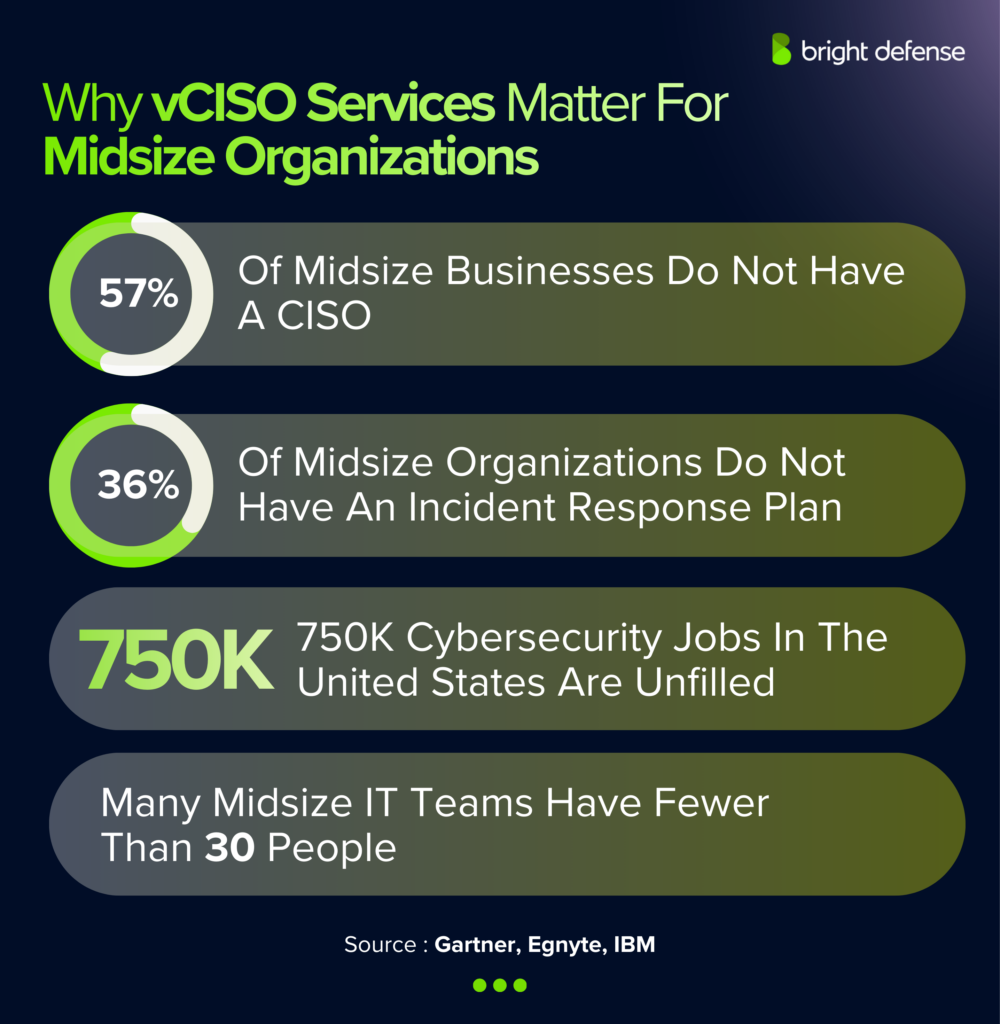
vCISO services give your business experienced security leadership without the cost and long term commitment of hiring a full time executive. Many organizations need clear direction on risk, governance, and frameworks like NIST, but hiring is tough. ISC2 reports a global cybersecurity workforce gap of 4.8 million professionals, up 19% year over year, and as of January 1, 2026, the average U.S. CISO salary is $384,783 per year.
For many SMBs, that price and scarcity make a full time CISO unrealistic, which helps explain why 79% of MSPs and MSSPs report strong demand for vCISO services among SMB clients. A vCISO provides part time leadership that organizes priorities, sets a practical roadmap, and moves security from scattered fixes to steady risk reduction and stronger compliance readiness.
What is a vCISO?
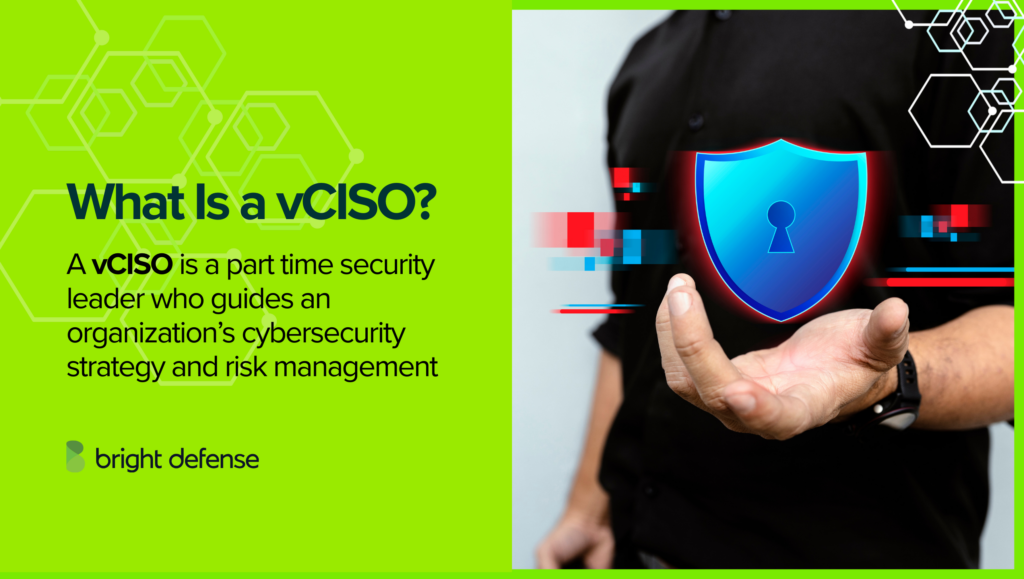
A vCISO is a virtual Chief Information Security Officer who provides senior cybersecurity guidance to an organization without being a full time employee. The role focuses on setting security priorities, managing risk, guiding compliance efforts, and advising leadership in a practical, business focused way.
How To Know If You Need a Virtual CISO Or Full-Time CISO?
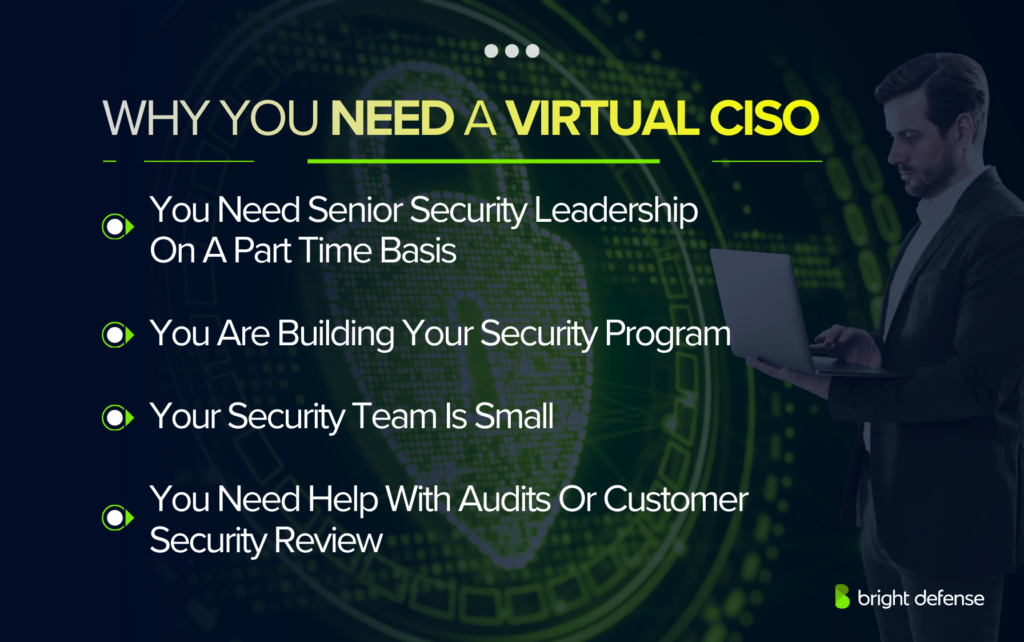
You typically need a virtual CISO when you want senior cybersecurity leadership on a flexible schedule, and you typically need a full-time CISO when cybersecurity leadership must operate daily to run a large, complex, high-risk program.
Executive leadership remains accountable for cybersecurity risk regardless of the model, so the right choice is the one that gives your organization clear authority, enough time coverage, and consistent oversight. (NIST Publications)
| Decision Signal | Virtual CISO Is Usually the Better Fit | Full-Time CISO Is Usually the Better Fit |
|---|---|---|
| Day-to-day demand | Security leadership needs weekly or monthly cadence, plus support during audits, projects, or incidents | Security leadership needs daily presence for continuous decisions, prioritization, and coordination |
| Program maturity | You are building or formalizing the security program, policies, and executive reporting | You are operating a mature program with ongoing governance, metrics, and constant improvement work |
| Team size | Small team, shared responsibilities, or heavy reliance on outside partners | Dedicated security team that needs full-time executive leadership and coaching |
| Compliance and customer pressure | Periodic audits or growing requirements that need guided preparation and executive support | High-stakes, ongoing regulatory obligations and frequent customer security reviews |
| Risk and incident tempo | Lower incident volume, with occasional surge needs after a breach or assessment | Frequent incidents, 24/7 operational risk, or high impact business exposure |
| Hiring realities | You need coverage now, need an interim leader, or want leadership while recruiting | You are ready to hire and retain a dedicated executive with long-term ownership |
A common path is to start with a virtual CISO to cover immediate leadership needs, close leadership gaps during recruiting, and provide steady executive direction for strategy and readiness work, then move to a full-time CISO when the workload becomes constant and the organization needs a dedicated executive seat every day.
What Do vCISO Services Include?
vCISO services usually cover executive level security leadership that sets direction, manages risk, supports compliance work, and prepares the organization to respond to incidents without hiring a full-time CISO.
Below are common services included in a vCISO engagement:
- Security strategy and a practical roadmap tied to business priorities
- Security program assessment and gap review with prioritized next steps
- Policy and governance support, including standards, procedures, and executive reporting
- Risk management, including risk assessment and remediation planning
- Compliance support and audit readiness for common frameworks
- Incident response planning, tabletop exercises, and incident leadership support
- Third-party and vendor risk oversight, including due diligence and review workflows
- Security awareness program guidance to build safer day-to-day habits
- Support for security program management, including tool evaluation and budget planning
What Are the Benefits of Virtual CISO Services?
Virtual CISO services give you an experienced security leader who helps set priorities, reduce risk, and guide security decisions without the cost of a full time executive.
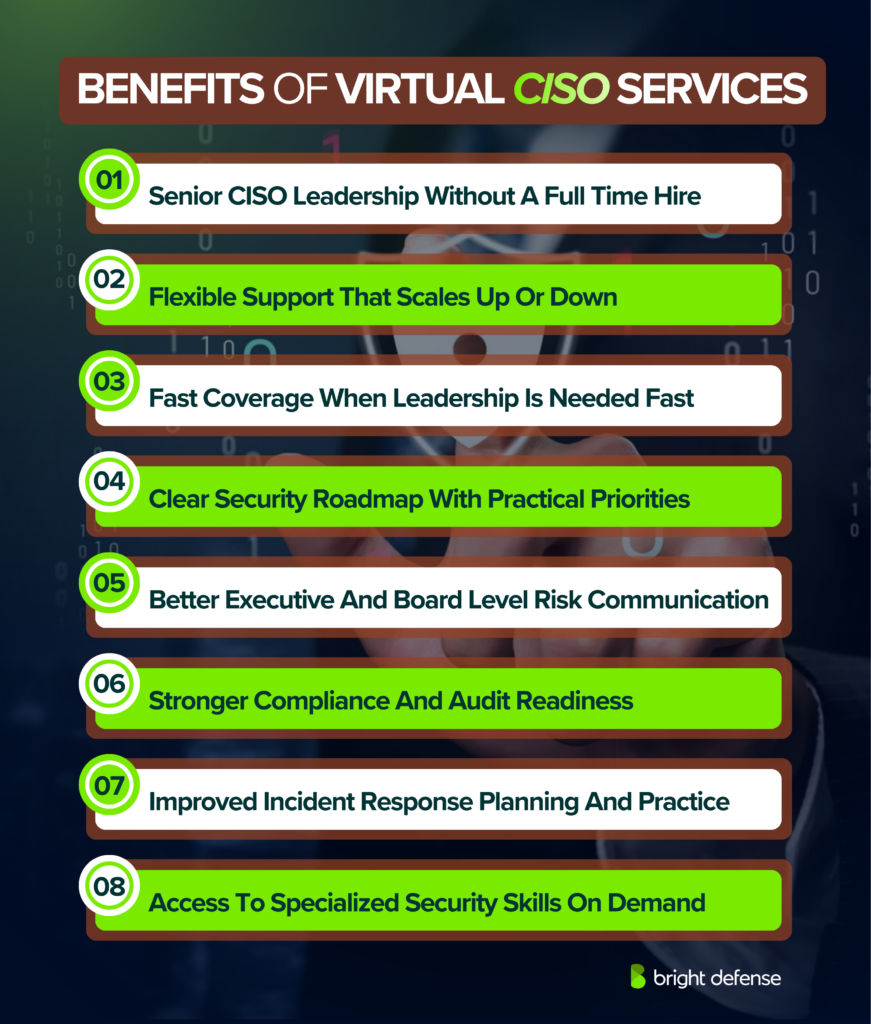
1. Senior Security Leadership Without Hiring Full Time
A vCISO gives you CISO level guidance without adding a full time role to payroll. This works well when you need a senior voice to advise leadership, set direction, and keep security work organized, but you do not need a CISO in the office every day. It also gives you a clear point person for security decisions, which helps avoid confusion across IT, engineering, and leadership.
2. Flexible Support That Fits Your Situation
A vCISO can spend more time during busy periods such as audits, customer security reviews, a new product launch, or a major system change. When things calm down, the level of support can scale back. This makes it easier to get help where it matters most, rather than paying for full time coverage when the workload does not require it.
3. Faster Help When You Need Coverage Now
Hiring a full time CISO can take months, and some teams need leadership sooner. A vCISO can step in quickly to fill a gap, stabilize priorities, and keep progress moving. This can also help when your previous security leader left, your company is growing fast, or your board wants clearer security ownership.
4. Clearer Plan and Priorities
Many organizations have security tools and tasks but no clear plan. A vCISO helps you build a practical security roadmap that matches your business goals and your real risks. This usually includes deciding what to fix first, what can wait, and what needs budget, staff time, or outside help.
5. Better Communication With Leadership
Security work often fails when it stays stuck in technical details. A vCISO helps translate security risk into plain business terms so leaders can make decisions with confidence. This also improves updates to executives and boards because the message stays focused on risk, impact, and progress.
6. Stronger Compliance and Audit Readiness
A vCISO can help you prepare for SOC 2, ISO 27001, HIPAA, PCI DSS, and similar requirements, depending on your needs. The work often includes defining policies, assigning control owners, collecting evidence, and preparing for audits. This reduces last minute scrambling and makes customer security questions easier to answer.
7. Better Incident Readiness
A vCISO helps you get ready for security incidents before they happen. This often includes an incident response plan, clear roles, contact lists, and practice sessions that test how your team would respond. When something goes wrong, a prepared team makes faster, calmer decisions.
8. Access to Extra Skills When Needed
Many vCISO engagements come with access to additional security specialists for projects such as risk reviews, policy work, vendor assessments, or technical testing. This gives you more depth without hiring multiple full time roles. It also helps when you have a short term need that calls for a specific skill set.
What Are the Drawbacks of vCISO Services?
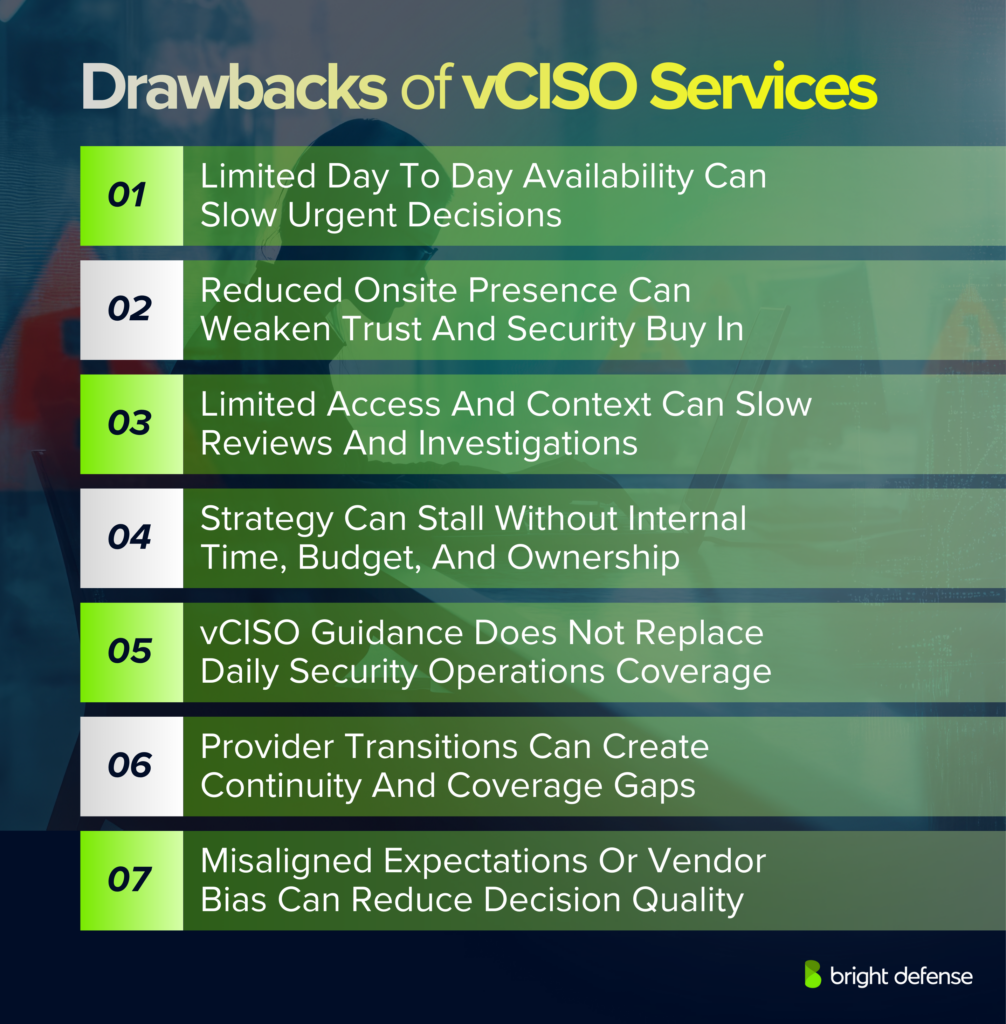
Below are the main drawbacks of vCISO services, including limited availability, weaker day-to-day leadership presence, and execution gaps when fast decisions and strong internal influence are required:
1. Less Day To Day Availability
A vCISO is not always immediately reachable because the role is part time and scheduled, which can slow decisions during urgent projects, fast moving incidents, or last minute audit requests. Some organizations notice extra coordination overhead compared with an in house leader who can join meetings on short notice.
2. Weaker Onsite Presence and Relationship Building
A vCISO can have a harder time building trust and momentum across departments because they are not present in the same way a full time executive is. That distance can reduce buy in for security changes, especially when teams already feel stretched.
3. Harder Access and Organizational Context
A vCISO may not get the same access, permissions, and internal context that an employee receives, which can slow investigations, reviews, and day to day guidance. This can also make it harder for the vCISO to stay fully connected to how work actually flows inside the company.
4. Strategy Can Stall Without Internal Time and Resources
A vCISO can recommend the right actions, but progress often depends on your team having time, budget, and ownership to carry out the work. Some engagements struggle when stakeholders cannot commit resources or when leadership support is inconsistent.
5. Not a Replacement for an Operational Security Team
A vCISO usually focuses on direction, priorities, and leadership, not hands on daily security operations such as patching, monitoring, and log review. If you do not have enough internal staff or operational coverage, the plan can look good on paper while real work does not happen.
6. Coverage Gaps and Continuity Risk
A vCISO is often a temporary provider, so transitions can create gaps and slow progress if knowledge transfer is weak. Replacing a vCISO can delay plans and leave the organization in a holding pattern during a time when steady leadership matters.
7. Fit Issues and Vendor Bias Risks
A vCISO engagement can fail when expectations are not clearly aligned, when the assigned person does not match what you were sold, or when the provider pushes product and tool choices instead of business focused guidance. These risks drop when the scope, deliverables, and decision authority are clear at the start and when the vCISO has strong experience in your industry.
The Future Of Virtual CISO Services
Virtual CISO services will keep expanding as more service providers add vCISO offerings and more organizations look for senior security guidance that fits a flexible schedule.
1. More MSPs And MSSPs Will Add vCISO Offerings
More managed service providers will treat vCISO work as a core service instead of a niche add on. Cynomi’s survey research and industry coverage point to fast adoption, including a shift from 19% of MSPs and MSSPs offering vCISO services to 86% that offer or plan to offer them by the end of 2024. Cynomi also reports that nearly all providers plan to add vCISO services, with 98% saying they will add them to their offerings.
2. Demand Will Rise As Security Decisions Move Up To Leadership
Demand will rise because organizations need someone who can translate security issues into clear priorities, budgets, and decisions. Cynomi reports that 75% of MSPs and MSSPs describe vCISO services as high demand and another 19% describe moderate demand, which signals broad customer pull. MSSP Alert also reports that 94% of surveyed providers say they see customer demand for vCISO services.
3. Breach Pressure Will Keep Pushing Organizations Toward Outside Leadership
Breach trends will keep pushing organizations to seek experienced guidance, especially when internal teams feel stretched. Verizon’s 2025 DBIR reporting shows 22,052 incidents reviewed and 12,195 confirmed breaches analyzed, with ransomware present in 44% of breaches.
The same reporting highlights how uneven the impact can be, with ransomware tied to 88% of SMB breaches, which often forces smaller teams to choose what matters most first.
4. Hiring Gaps Will Keep Fractional Leadership Popular
Fractional leadership will stay popular because many organizations still cannot hire enough experienced security people.
ISC2 estimates a global cybersecurity workforce of 5,468,173 professionals and a workforce gap of 4,763,963 people, which supports the continued use of outsourced and fractional leadership models.
When hiring takes longer or budgets stay tight, a vCISO can cover leadership needs while internal capability grows.
5. Insurance Pressure Will Drive More Structured Security Programs
Insurance requirements and financial risk concerns will push more organizations to formalize controls, documentation, and incident readiness, which aligns well with typical vCISO work.
A National Association of Insurance Commissioners cyber insurance briefing notes that 72% of SMEs without cyber insurance say a major cyberattack could destroy their business, and it reports 33,561 cyber insurance claims in 2023.
These signals often translate into stronger demand for guided risk decisions, control tracking, and proof of progress.
6. vCISO Work Will Become More Packaged And Measurable
vCISO engagements will move toward clearer deliverables and repeatable workflows so organizations can see progress instead of advice that stays on paper.
Cynomi reports that providers face skills and technology constraints, including about one third who say they lack the technology to support vCISO services and more than one quarter who report limited security or compliance knowledge, which encourages more structured methods and tooling.
Cynomi also describes a shift toward standard work processes and easier access to common frameworks, which supports more consistent outcomes across clients.
Source: Cynomi
Beyond Core vCISO Offerings
vCISO support can extend beyond core advisory work into practical services. These include cybersecurity questionnaire completion, cybersecurity roadmap tracking and reporting, and cybersecurity business alignment.
Below are key areas vCISOs can support beyond their core offerings:
1. Cybersecurity Questionnaire Completion
vCISO services extend to the completion of cybersecurity questionnaires required by clients, partners, or regulatory bodies. This ensures that responses are not only accurate but also reflect the organization’s commitment to cybersecurity best practices.
2. Cybersecurity Roadmap Tracking and Reporting
Developing a cybersecurity roadmap is one thing; tracking progress and reporting is another. vCISOs offer invaluable assistance in monitoring the implementation of cybersecurity initiatives, providing regular updates to stakeholders, and adjusting strategies as needed to address emerging threats.
3. Cybersecurity Business Alignment
Aligning cybersecurity efforts with business objectives is crucial for maximizing ROI and ensuring strategic coherence. vCISOs work closely with executive teams to ensure that cybersecurity strategies support overall business goals, enhancing resilience without hindering growth.
4. Third Party Risk Management
In an interconnected world, third-party vendors can introduce significant risks. vCISO services include the assessment and management of these risks, ensuring that vendors comply with the organization’s cybersecurity standards.
5. Internal Risk Management
Identifying and managing internal risks is a continuous process. vCISOs assist in developing internal risk management frameworks, conducting regular assessments, and fostering a risk-aware culture within the organization.
6. Cybersecurity Metrics Program for Board and C-Suite
To effectively communicate cybersecurity posture to top executives and board members, vCISOs develop and manage a cybersecurity metrics program. This enables informed decision-making and demonstrates the value of cybersecurity investments.

7. Compromise Assessment
Regular compromise assessments are vital for detecting breaches that may have gone unnoticed. vCISOs conduct these assessments to uncover any signs of compromise, enabling timely response and mitigation.
8. Tabletop Exercises
Simulating cyber incidents through tabletop exercises is a key part of preparedness. vCISOs facilitate these exercises, testing the organization’s response capabilities and identifying gaps in incident response plans.
Why Choose Bright Defense for vCISO Services
Bright Defense vCISO services give you experienced security leadership that helps you set clear priorities, reduce risk, and stay on track with security and compliance work without hiring a full time CISO. This support fits teams that need steady guidance, executive level reporting, and practical direction that matches their size, budget, and day to day security demands.
Final Thoughts
The breadth of vCISO services encompasses every aspect of cybersecurity, from strategic planning and implementation to ongoing management and incident response. By leveraging these services, organizations can not only enhance their cybersecurity posture but also align their security initiatives with business objectives, ensuring sustainable growth in the face of evolving cyber threats. Whether you’re a small business or a large enterprise, embracing vCISO services is a strategic step towards securing your digital assets and safeguarding your future.

Get In Touch