Lehigh Valley Pays $800K in HIPAA Settlement

Updated:
November 15, 2026
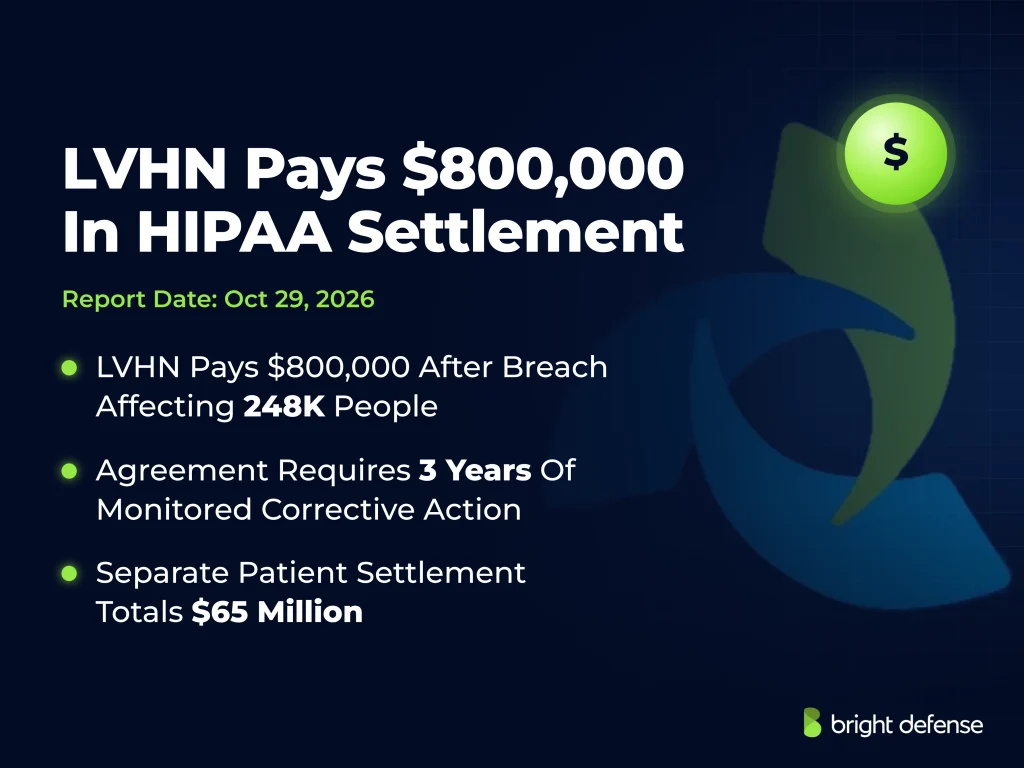
Lehigh Valley Health Network paid $800,000 to resolve an OCR HIPAA investigation after a ransomware attack affected 248,359 people. The agreement requires 3 years of monitored corrective action and is separate from the $65 million patient class settlement.
This article examines what OCR found, the corrective work LVHN must complete and how the HIPAA settlement differs from the patient lawsuit. It also explains what healthcare organizations can learn about acquired systems, risk analysis and timely breach notifications.
What Is the Lehigh Valley Health Network HIPAA Settlement?
On October 29, 2026, HHS announced the Lehigh Valley Health Network HIPAA settlement, which resolves potential violations involving patient information and the response to a ransomware attack.
The payment works out to about $3.22 for each of the 248,359 people affected. This comparison describes the size of the regulatory payment; it is not compensation paid to each patient.
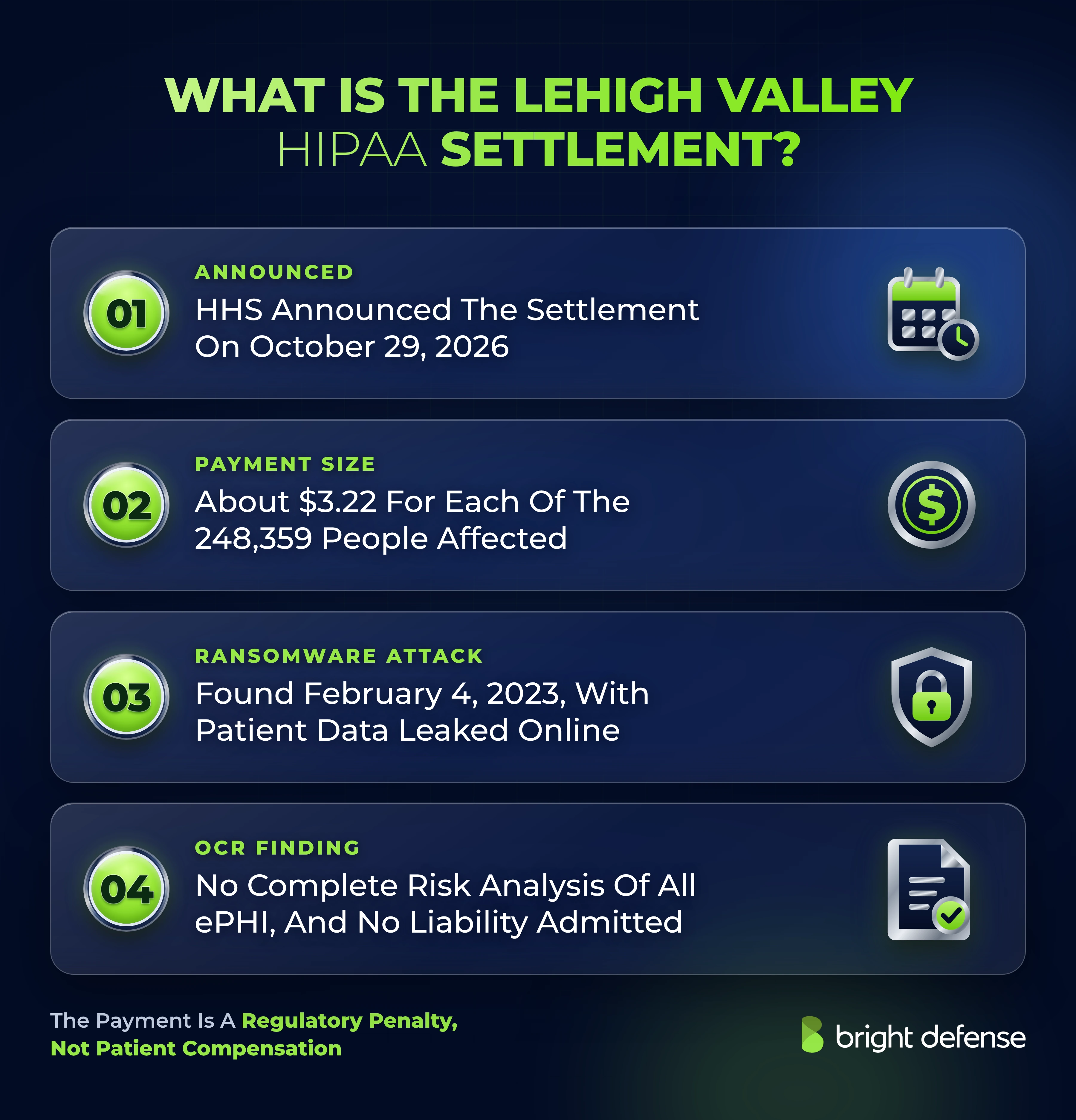
LVHN discovered suspicious activity on February 4, 2023 and reported the breach to HHS on May 15, 2023. Stolen information was published on the dark web, including sensitive photographs of patients receiving radiation oncology treatment. Medical records and financial and identity information were exposed.
In 2021, Delta Medix joined Lehigh Valley Health Network. The attack arrived in February 2023, roughly 2 years after the acquisition. OCR subsequently found that LVHN had not completed an accurate and thorough risk analysis covering all its ePHI.
The signed resolution agreement describes the affected system as belonging to Lehigh Valley Physician Group Delta Medix. LVHN does not admit liability under the agreement.
What Did OCR Find in the Lehigh Valley Health Network Investigation?
For Lehigh Valley Health Network, OCR’s investigation found potential failures in risk analysis, regular system activity reviews and breach notification.
OCR cited an inadequate analysis of risks to electronic protected health information and missing procedures for regular review of system activity. It found impermissible disclosure and untimely notifications to affected individuals and HHS.
“The best defense against cyberattacks is full implementation of the HIPAA Security Rule.”
OCR Director Paula M. Stannard
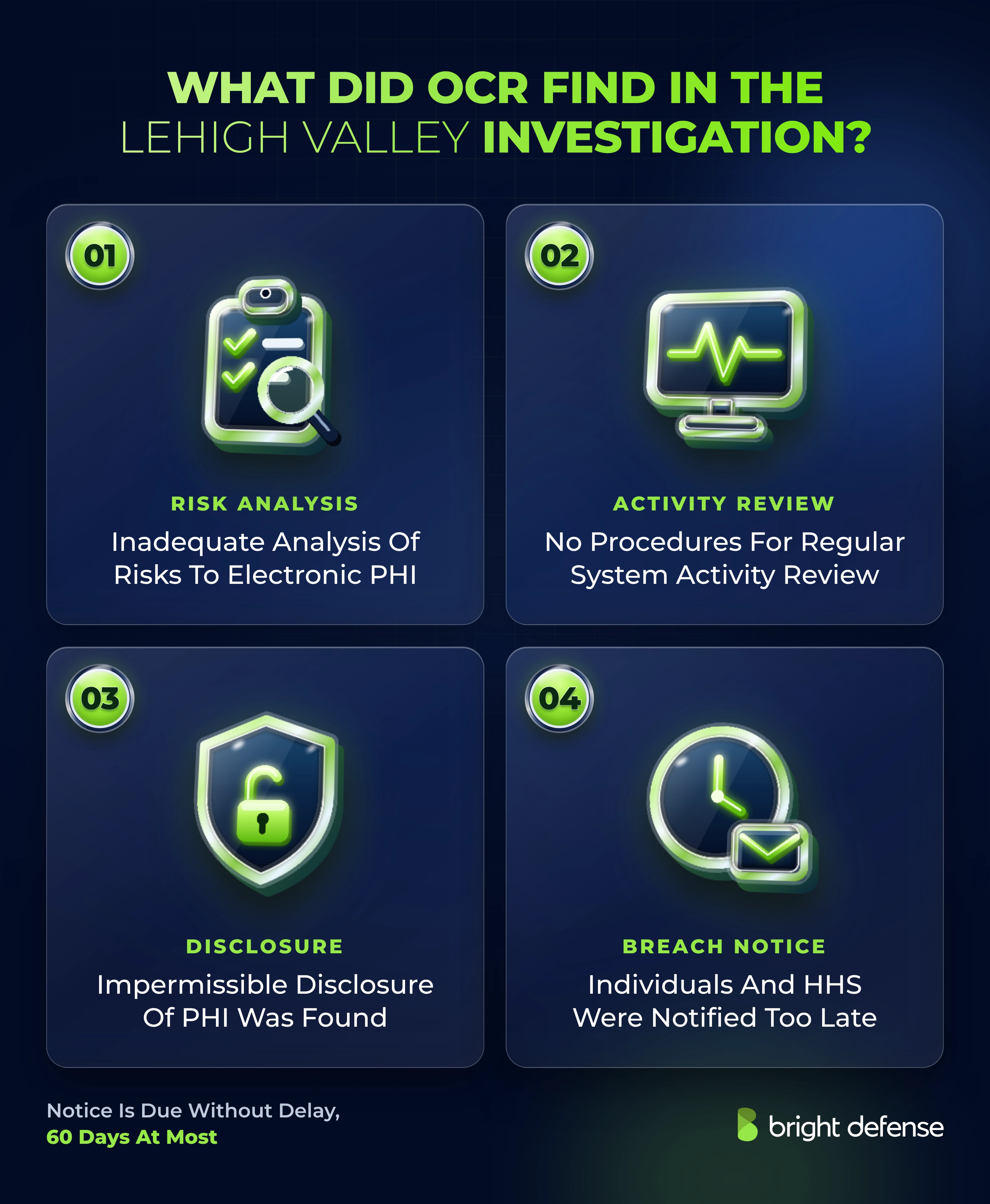
Before an incident, a risk analysis connects weaknesses to corrective work. After suspicious activity appears, access reports and audit logs help investigators trace it. Notification procedures address the separate duty to inform affected people.
Under the Breach Notification Rule, Lehigh Valley Health Network and other covered entities must notify affected individuals without unreasonable delay and no later than 60 days after discovery of a breach of unsecured PHI. Breaches affecting 500 or more individuals require notification to HHS without unreasonable delay and no later than 60 days after discovery.
The outer limit does not make waiting until day 60 appropriate in every case. For response planning, organizations need clear responsibility for evaluating notification duties and preparing notices alongside the technical investigation.
What Does the Lehigh Valley Health Network Corrective Action Plan Require?
For Lehigh Valley Health Network, the corrective action plan requires an ePHI system inventory, a risk analysis and a risk management plan covering its legacy systems and listed entities.
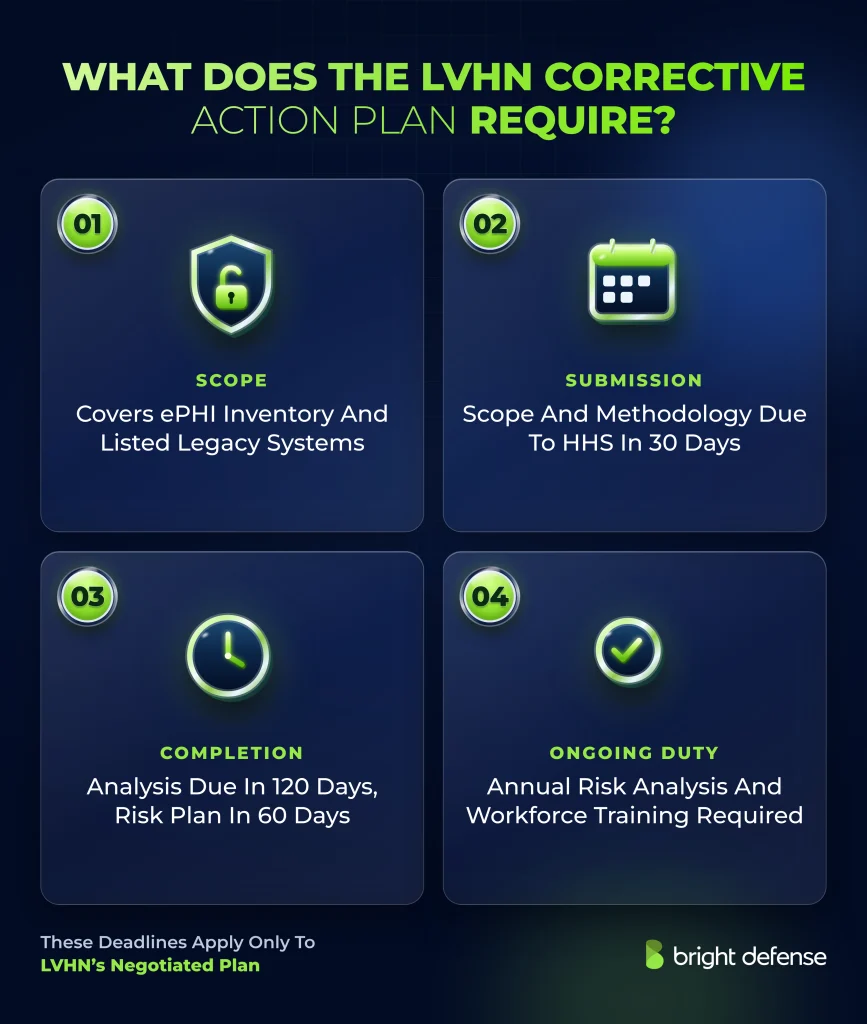
LVHN must submit its proposed analysis scope and methodology to HHS within 30 days of the agreement’s effective date. The completed analysis is due within 120 days of HHS approving that approach. A risk management plan follows within 60 days of approval of the analysis.
The plan requires policy updates and workforce training. LVHN must repeat its risk analysis and update its risk management plan at least annually, with further revisions when relevant changes warrant them.
These deadlines belong to LVHN’s negotiated corrective action plan. They are not universal deadlines for every organization subject to HIPAA.
How Does the Lehigh Valley Health Network Settlement Differ From the Class Action?
For patients, the Lehigh Valley Health Network class action provides a separate compensation process from the payment to OCR.
The $65 million class settlement is about 81 times the $800,000 OCR payment. For LVHN, the patient litigation settlement carried the larger payment obligation.
The settlement administrator confirms that initial payments were mailed on March 20, 2025. Relief Tier IV supplemental payment checks were mailed on April 30, 2026.
The two proceedings address different consequences of the same breach: private claims brought by affected patients and federal enforcement of HIPAA requirements.
What Should Healthcare Organizations Do After the Lehigh Valley Health Network Settlement?
After the Lehigh Valley Health Network settlement, healthcare organizations can review acquisition inventories, risk ownership and notification readiness. Following are 4 practical actions:
- Add every acquired practice’s systems to the ePHI inventory and risk analysis promptly after closing. Do not wait for an annual review to account for newly acquired systems.
- Give each open risk one named owner and a due date. Review the list monthly to check whether corrective work is progressing.
- Begin preparing patient notices when a breach is discovered. An internal target of day 45 leaves 15 days before the 60-day outer limit, but it never permits an unreasonable delay.
- Keep a dated record of each system activity review, including the reviewer and follow-up actions. Without records, an organization may struggle to demonstrate that reviews occurred.
HHS risk analysis guidance covers all ePHI an organization handles, regardless of location or storage medium. Smaller applications and acquired practices belong in that assessment alongside the primary health record platform.
For help with risk assessments and corrective work, explore Bright Defense’s HIPAA services. Use Contact Us to discuss your compliance gaps.
How Bright Defense Helps Address HIPAA Risk Analysis and Response Gaps
Bright Defense’s HIPAA services help healthcare organizations assess risks to electronic protected health information and prioritize corrective work. For the gaps discussed in the LVHN investigation, that review can focus on acquired practices, legacy systems, and smaller applications that may fall outside existing assessments.
Your team can turn findings into a documented action plan with assigned owners, remediation priorities, and evidence of completed work. Reviewing system activity procedures, workforce training, and breach response responsibilities also helps staff prepare to investigate suspicious activity and coordinate notification decisions.
Contact Bright Defense to review your HIPAA compliance gaps and strengthen risk management across your healthcare environment.
Frequently Asked Questions
1. Will Patients Receive the $800,000 HIPAA Settlement Payment?
The $800,000 was paid to HHS’s Office for Civil Rights. It is separate from the patient class-action settlement. Patients seeking information about compensation can use the class-action administrator’s website for that proceeding.
2. What Should Our Practice Review First After This Settlement?
Check that your risk analysis covers every system handling electronic protected health information, including acquired practices and smaller applications. Then confirm that documented risks have assigned owners and that system activity reviews actually take place.
3. Can We Wait Until a Ransomware Investigation Is Finished to Notify Patients?
An ongoing technical investigation does not automatically pause HIPAA notification duties. HHS guidance requires covered entities to notify affected individuals without unreasonable delay and generally within 60 days of discovering a breach of unsecured protected health information.
4. Do All Healthcare Organizations Now Need Annual Risk Analyses?
The annual schedule described here is part of LVHN’s negotiated corrective action plan. This settlement does not impose that same schedule on every organization. Other providers must evaluate their own applicable HIPAA duties and relevant changes to their operations.
5. Does Paying a Settlement End the Organization’s Compliance Work?
Not in this case. LVHN accepted 3 years of monitored corrective action, including risk management, policy review and workforce training. The payment and the corrective obligations are separate parts of the resolution.
Sources
- HHS Office for Civil Rights, Lehigh Valley Health Network settlement announcement. https://www.hhs.gov/press-room/hhs-ocr-settles-ransomware-investigation-lehigh-valley-health-network.html
- HHS, Lehigh Valley Health Network resolution agreement and corrective action plan. https://www.hhs.gov/sites/default/files/ocr-ra-cap-lvhn.pdf
- HHS, Breach Notification Rule. https://www.hhs.gov/hipaa/for-professionals/breach-notification/index.html
- Doe v. LVHN settlement administrator, Frequently Asked Questions. https://www.lvhndatabreachsettlement.com/Home/FAQ
- HHS, Guidance on Risk Analysis. https://www.hhs.gov/hipaa/for-professionals/security/guidance/guidance-risk-analysis/index.html