CMMC Reform Proposals Include ISO 27001 Credit

Updated:
November 14, 2026
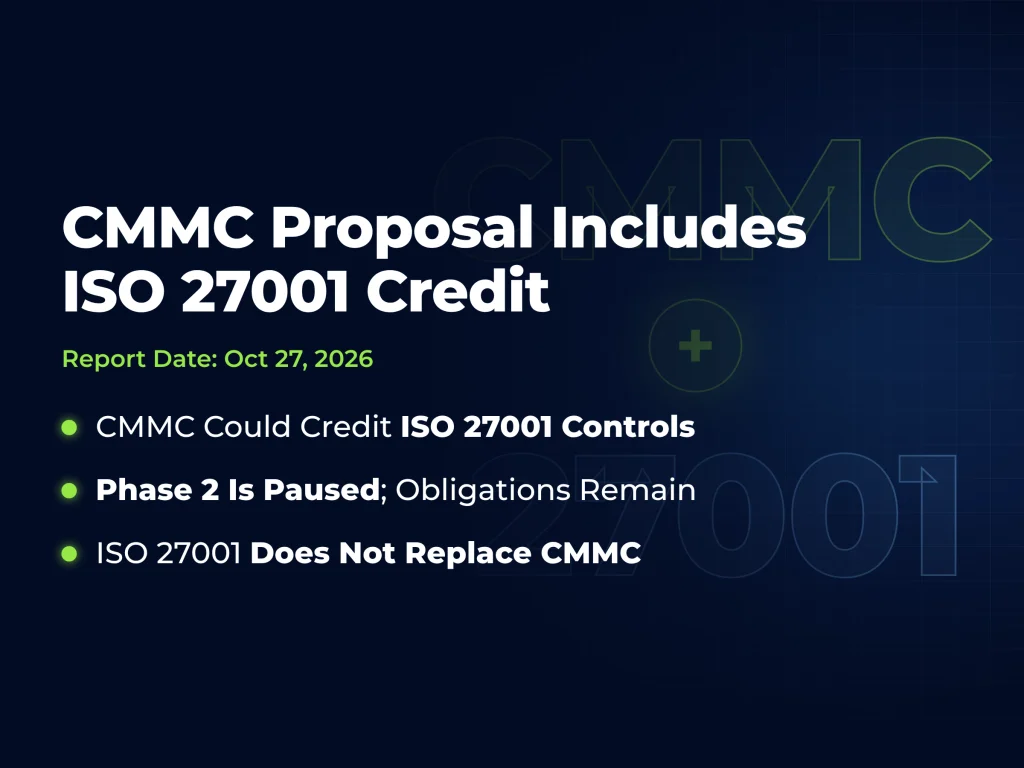
A CMMC reform proposal could reduce duplicate assessment work for defense contractors through credit for comparable ISO 27001 requirements. Federal News Network’s October 27 report describes the recommendation in a CMMC task force summary, but it does not establish an approved substitute for CMMC compliance.
This news article explains what the proposal covers, which requirements remain in effect during the Phase 2 pause, and how contractors can identify existing ISO 27001 controls and evidence that could support their CMMC preparation.
What the ISO 27001 Proposal Covers
The task force recommended assessment guidance recognizing comparable and relevant ISO 27001 requirements. It placed that work within a proposed six-month timeline. The recommendation forms part of a wider review of CMMC costs and implementation challenges.
Other options include restarting Phase 2 for a narrower contractor population over a 90-day period and extending eligible remediation plans to 270 days through rulemaking. The summary also discusses moving to NIST SP 800-171 Revision 3 and improving assessor consistency.
These are reform options, not implementation deadlines. The department declined to comment on Federal News Network’s findings.
Phase 2 Remains Paused
The department’s current CMMC overview continues to describe the program as paused in Phase 1. The July 13 suspension affected Phase 2, which had originally been scheduled to begin on November 10, 2026.
Phase 1 self-assessment requirements remain in place. The department also states that the pause does not remove contractors’ obligations to protect covered information under DFARS clause 252.204-7012.
For applicable Level 2 self-assessments, the current baseline remains the 110 security requirements in NIST SP 800-171 Revision 2. A proposal to recognize existing compliance work does not itself change those requirements.
That distinction matters for budgeting. Contractors still need to address obligations in their contracts while potential reforms move through review.
ISO 27001 Certification Does Not Establish CMMC Compliance
ISO/IEC 27001 sets requirements for an information security management system. It addresses how an organization manages information security risks and improves its program over time.
CMMC verifies implementation of specified safeguards for federal contract information and controlled unclassified information. Controlled unclassified information, or CUI, requires protection under applicable government rules even though it is not classified.
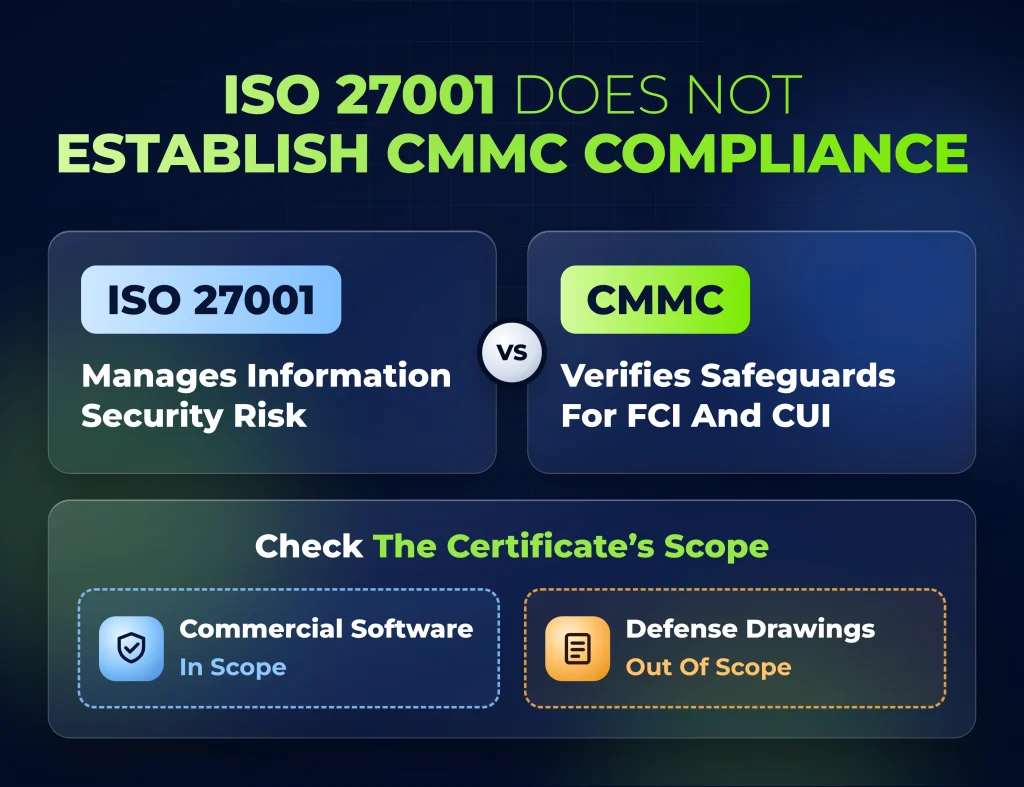
The frameworks can involve related security work, but their assessment purposes differ. An organization’s ISO certification also has a defined scope. That scope needs to be compared with the systems involved in its defense contracts before existing work can be treated as relevant.
For example, a company might certify the information security management system supporting its commercial software business. A separate environment used to handle defense drawings could fall outside that certification’s scope. The certificate alone would not demonstrate that the defense environment meets its requirements.
Where Shared Evidence Could Help
The practical opportunity is to examine existing work before creating a second set of documents. Policies and implementation records may support more than one assessment when they address the relevant requirements and cover the right systems.
For example, an access management procedure used in an ISO program could provide useful background for CMMC preparation. The contractor would still need evidence showing how access restrictions operate in the environment being assessed.
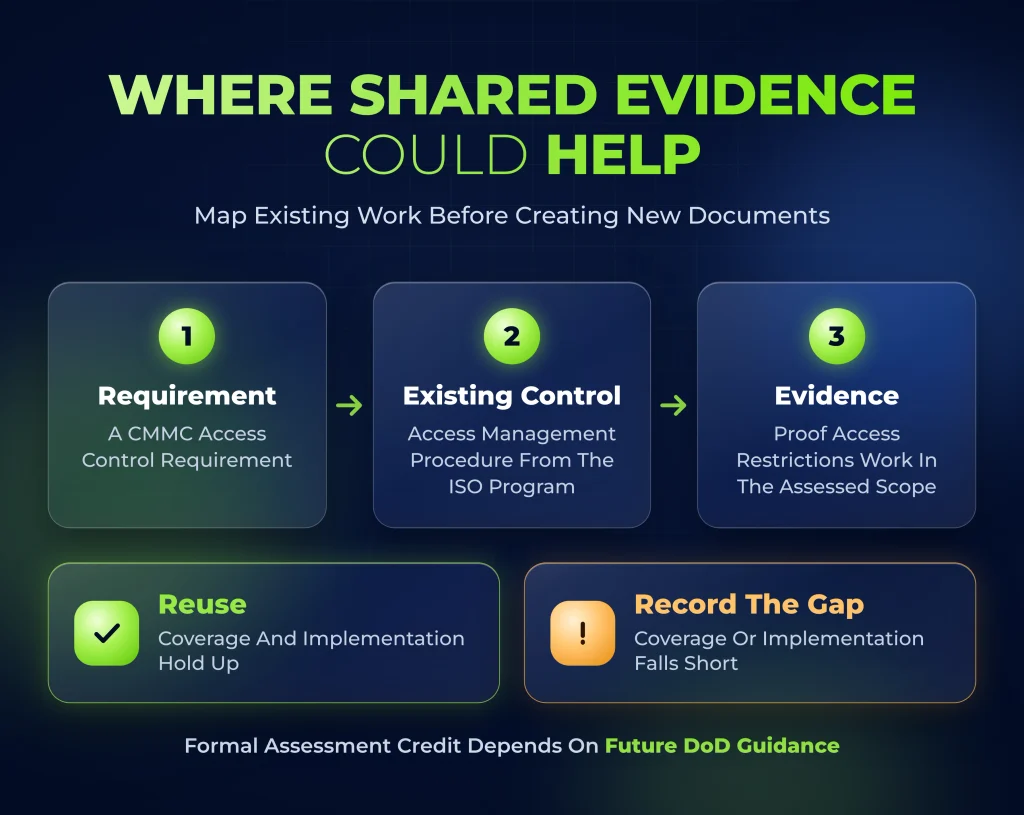
A useful comparison identifies the requirement, the existing control, and the evidence supporting it. It also records gaps where the control’s coverage or implementation falls short. This helps teams distinguish work they can reuse from work they still need to complete.
That preparation can help organize both programs today. Any future formal assessment credit would depend on the department’s published eligibility conditions and guidance.
Prepare for CMMC With Bright Defense
Bright Defense helps defense contractors identify CMMC gaps and determine where existing ISO 27001 work can support their preparation. Our CMMC consulting and ISO 27001 consulting services include gap analysis, risk assessment, and implementation support.
For companies managing both frameworks, a coordinated review can identify reusable evidence, check whether controls cover the relevant systems, and prioritize unfinished work. Your team can address current contractual requirements while potential reforms remain under review.
Talk to Bright Defense to assess your readiness and define the next steps for your defense contract environment.
Frequently Asked Questions
1. Can Our ISO 27001 Certificate Replace CMMC?
No approved replacement route is established by the reported proposal. The option concerns credit for comparable requirements. Your company must still meet the CMMC and information-protection obligations that apply to its contracts.
2. Should We Pause CMMC Preparation Until the Reforms Are Final?
The proposals do not justify postponing existing contractual duties. Keep working on applicable requirements and confirmed gaps. Separate that necessary work from spending that depends specifically on a future rule or revised assessment process.
3. Can We Start Using NIST SP 800-171 Revision 3 Instead of Revision 2?
The reform proposal alone does not authorize that switch. The draft story identifies Revision 2 as the current baseline for applicable Level 2 self-assessments. Confirm the requirements in your solicitation or contract before changing your assessment basis.
4. Which ISO 27001 Work Could Help With CMMC Preparation?
Policies, risk records, and control evidence may be useful when they cover the relevant CMMC requirements and defense environment. Compare the scope of your ISO certification with the systems handling contract information, then document remaining implementation gaps.
5. Do Contractors Now Have 270 Days to Close Assessment Gaps?
No. The reported 270-day option is a proposed reform requiring further action. It does not automatically extend an existing remediation deadline or make every finding eligible for a remediation plan.