How To Choose A Cybersecurity Compliance Framework
Updated:
October 27, 2026
Choosing a cybersecurity compliance framework starts with knowing what your business must prove and who needs that proof. Legal obligations can determine your first priority. Customer requirements can determine which assessment comes next.
77% of business and IT leaders say customers and other stakeholders demand verified proof of security and compliance, a finding included in our cybersecurity compliance statistics. That makes the choice a procurement decision with revenue consequences. A strong security program can still leave a deal waiting when the buyer requires a different type of assurance.
This guide helps you match frameworks to your business and plan the work needed to meet their requirements.
Key Takeaways
- Framework selection starts with legal obligations, contracts, and customer expectations
- Confirm the report or certification buyers accept before committing to an assessment
- Define the systems, services, and data covered, then assess existing control gaps
- Budget for preparation, staff time, remediation, and ongoing assessments
- Shared controls can reduce duplicate work when evidence meets each framework’s requirements
Which Cybersecurity Framework Fits Your Business?
Begin with requirements you cannot choose away, such as applicable laws and contract clauses. Then compare the assurance your buyers expect. The situations below give you a practical starting point for that decision.
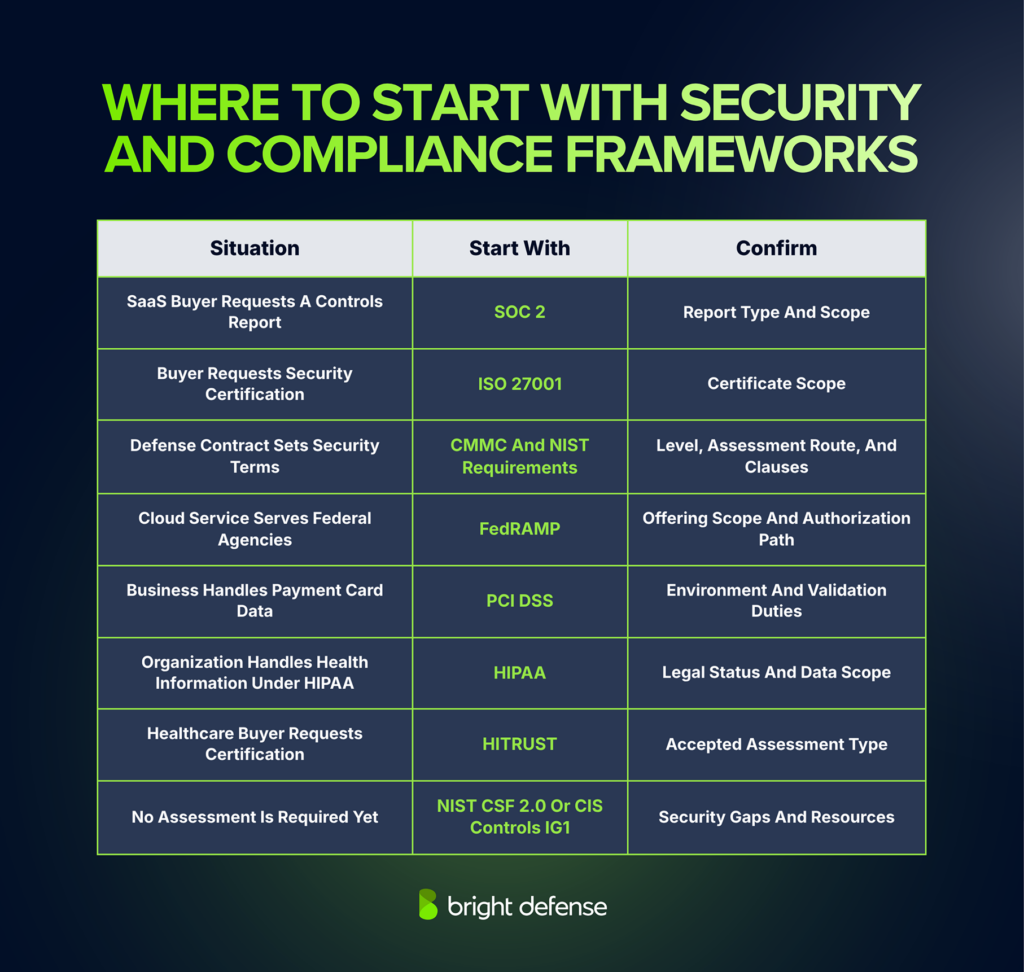
Geography can help you anticipate requests. SOC 2 is common in North American vendor reviews, while ISO 27001 has broad international recognition. Ask buyers what they accept before treating either as a sales requirement.
The deliverable matters, too. A SOC 2 report contains an independent CPA firm’s opinion on controls within a defined system. ISO 27001 certification confirms that an information security management system meets the standard within its stated scope. NIST CSF and CIS Controls can guide your security program without producing either deliverable.
In ISC2’s 2025 survey, 77% of cybersecurity professionals identified compliance with standards such as ISO 27001, NIST, or SOC 2 as a top requirement for vendors. This reinforces the value of choosing a framework that matches your buyers’ requirements before investing in implementation and assessments.
What Are The Main Cybersecurity Frameworks And Standards?
The options below fall into four groups: security and assurance, government and defense, industry and privacy, and business governance. Some help you organize security work. Others create obligations through law or customer contracts.
Security Frameworks And Assurance Standards
- SOC 2: An independent examination of a service organization’s controls. Choose it when customers want assurance about the systems that deliver your services. Type 2 examines how controls operate over a period of time.
- ISO 27001: An international standard for an information security management system, or ISMS. It suits organizations seeking formal security management and certification that buyers recognize across markets.
- NIST Cybersecurity Framework 2.0: A framework for assessing cybersecurity risk and planning improvements. Its six functions help leadership and technical teams organize their priorities. It can guide an internal program alongside contractual compliance work.
- CIS Controls: A prioritized set of security safeguards. Implementation Group 1, known as IG1, offers a practical starting point for essential cyber hygiene. Teams can build on that baseline as their risks and resources change.
- Cyber Essentials: A UK government-backed certification scheme covering basic technical protections. Consider it when UK customers or procurement requirements call for the scheme.
- Essential Eight: Australian government guidance built around eight mitigation strategies. Its maturity model helps teams assess how consistently they apply those protections. Check customer and government requirements before choosing a target maturity level.
Government And Defense Requirements
- NIST SP 800-53: A catalog of security and privacy controls that supports federal information security requirements. Federal programs select and tailor controls through applicable baselines. The entire catalog is not a single checklist for every system.
- NIST SP 800-171: Requirements for protecting controlled unclassified information in nonfederal systems. Revision 3 is published, but the version that applies to your work depends on the governing requirement. CMMC Level 2 continues to reference Revision 2.
- CMMC: A US Department of Defense assessment program for contractor systems handling federal contract information or controlled unclassified information. The contract determines the required level and assessment route. Level 2 includes self-assessment and third-party assessment routes, so confirm which applies.
- The planned November 10, 2026, Phase 2 transition was suspended in July 2026. Check current acquisition guidance and your contract before budgeting around a rollout date. A schedule change does not remove existing contractual security obligations.
- FedRAMP: A US government program for assessing and authorizing cloud services used by federal agencies. Pursue it when your cloud offering and federal customer requirements fall within its scope. Plan for continuing assessment work after authorization.
- FISMA: US legislation requiring federal agencies to manage information security risk. Its reach includes systems operated on an agency’s behalf. Contractor obligations depend on the service and contract.
Industry And Privacy Requirements
- PCI DSS: A payment industry standard for protecting cardholder data. Your payment setup determines the scope and validation route. Outsourcing payment processing can reduce the work, but it does not automatically remove all merchant responsibilities.
- HIPAA: US law governing covered entities and their business associates. The Security Rule addresses electronic protected health information. Determine whether your organization has a regulated role before treating HIPAA as applicable.
- HITRUST: An assessment and certification program that healthcare buyers may request. Its assessment options provide different levels of assurance. Confirm the buyer’s required option before choosing one, and assess HIPAA obligations separately.
- GDPR: EU data protection law that can apply to organizations outside the EU when they offer goods or services to people in the EU or monitor their behavior there. Applicability depends on the processing activity. Holding information about an EU resident does not, by itself, settle the question. European regulators issued EUR 1.2 billion in GDPR fines in the 12 months to January 2026, and cumulative fines since May 2018 now total EUR 7.1 billion. Enforcement has held at that annual level for two straight years, which makes an unresolved applicability question a real financial risk for a US company selling into Europe.
- CCPA: California privacy law, amended by the California Privacy Rights Act, or CPRA. Cybersecurity audit regulations took effect on January 1, 2026, for qualifying businesses. First annual certifications are due in 2028, 2029, or 2030, depending on the applicable revenue tier.
- NIS2: An EU directive covering cybersecurity risk management and incident reporting for specified entities. National implementation matters. Check the rules in each country where your organization falls within scope.
- DORA: An EU regulation addressing digital operational resilience in the financial sector. It covers ICT risk management and incident reporting, with requirements for testing and third-party arrangements. It is distinct from the software delivery performance metrics that share the DORA acronym.
Business Governance And Financial Controls
- SOX: US legislation with requirements affecting public-company financial reporting. IT controls matter where systems support that reporting. SOX is not a general cybersecurity certification for every financial services business.
- COBIT: A framework for governing and managing enterprise information and technology. It helps connect technology decisions to business objectives. Larger organizations may use it alongside a security framework.
- COSO Internal Control Integrated Framework: A framework for designing and assessing internal controls. Organizations commonly use it for financial reporting controls, including work supporting SOX compliance.
How Do You Choose The Right Cybersecurity Compliance Framework?
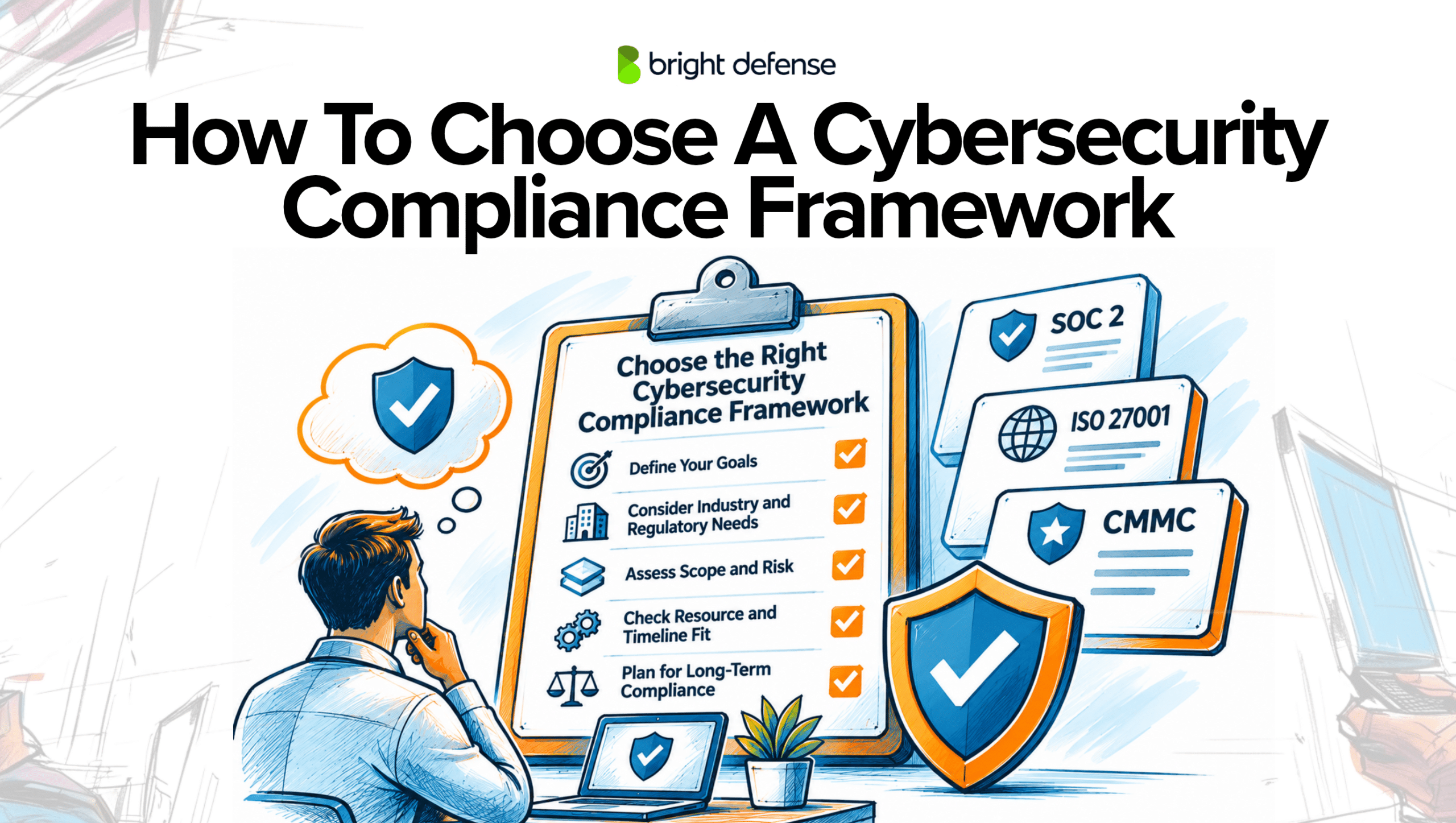
A useful selection process ends with a named framework and a workable implementation plan. These six steps move from mandatory requirements to the resources needed for delivery.
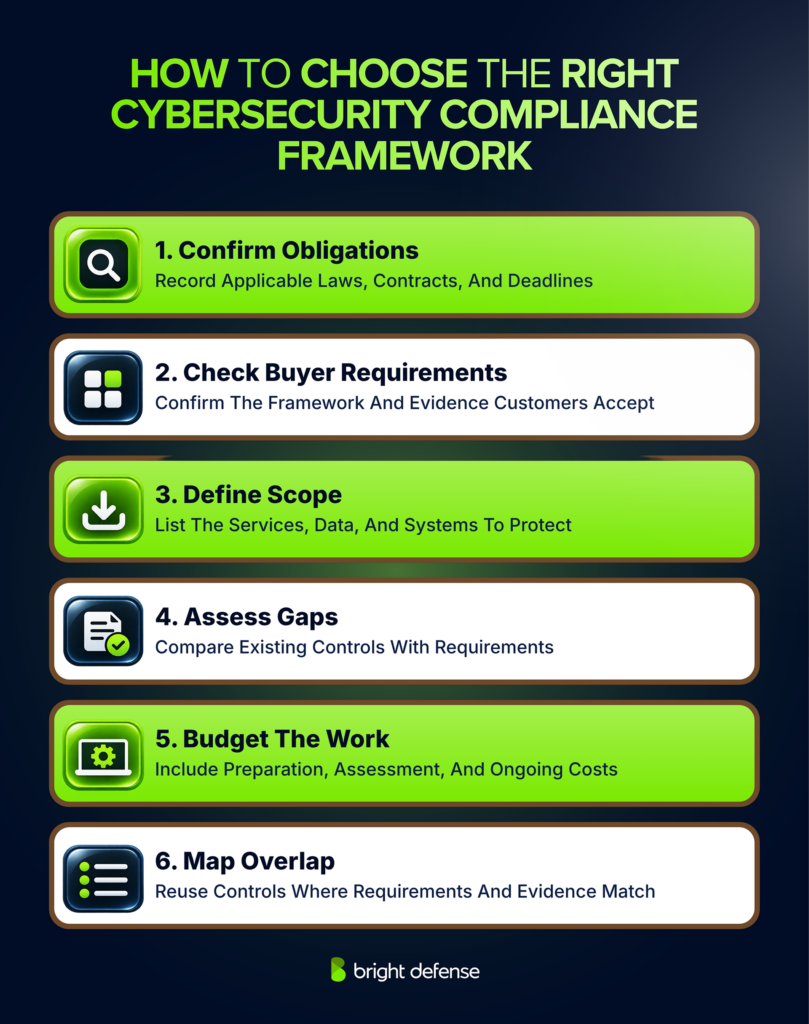
1. Confirm Your Legal And Contractual Obligations
List the requirements that apply to your services. Record the source of each obligation and its deadline. This prevents an optional certification project from taking priority over a binding requirement.
For a healthcare organization, the first question is whether it is a covered entity or business associate. For a defense supplier, CMMC readiness begins with confirming the contract’s requirements and the systems handling protected information.
International expansion needs the same care. Determine which privacy or sector rules apply to your activities in each market. Use qualified legal advice when the applicability question remains unclear.
2. Ask Customers What Evidence They Accept
A request to “be compliant” is too broad to budget against. Ask for the named framework and exact deliverable. For SOC 2, confirm the report type and categories the buyer expects.
For ISO 27001, check whether the proposed certificate scope will cover the purchased service. Ask when the evidence is due. A procurement deadline can change which project you complete first.
Example: A SaaS company plans to pursue ISO 27001 for international growth. Its largest prospect requires a SOC 2 Type 2 report before contracting. The company confirms that requirement and prioritizes SOC 2, while preparing shared controls for a later ISO 27001 assessment.
3. Define What Your Security Program Must Protect
Scope affects both cost and the value of the final assessment. Describe the service being assessed and the information it handles. Then trace the systems and people that support it.
A narrow scope can reduce unnecessary work. It can leave buyers dissatisfied when a critical service falls outside the assessment. Confirm that the proposed scope matches what customers need assurance about.
Use the same exercise to rank security risks. Frequent account compromise points to stronger authentication and access controls. A service with strict uptime commitments needs dependable recovery arrangements.
4. Compare Requirements With Your Existing Controls
A gap assessment shows what is already working and what needs attention. Check evidence of execution as well as written policies. A scheduled access review is incomplete when nobody performs it.
NIST CSF’s Current and Target Profiles can help organize this comparison. The Current Profile describes your present cybersecurity outcomes. The Target Profile describes the outcomes you want to achieve.
Turn the gaps into an implementation plan with named owners and completion dates. Separate changes your team can make directly from work that depends on vendors. This gives you a more realistic view of readiness.
5. Budget For Preparation And Ongoing Assessment
Request quotes against the same scope. Separate assessment fees from preparation costs. Include staff time and any outside implementation support in the comparison. In A-LIGN’s 2026 Compliance Benchmark Report, 20% of surveyed organizations cited limited staffing as a key barrier to consistent, high-quality audit cycles. a-lign.com
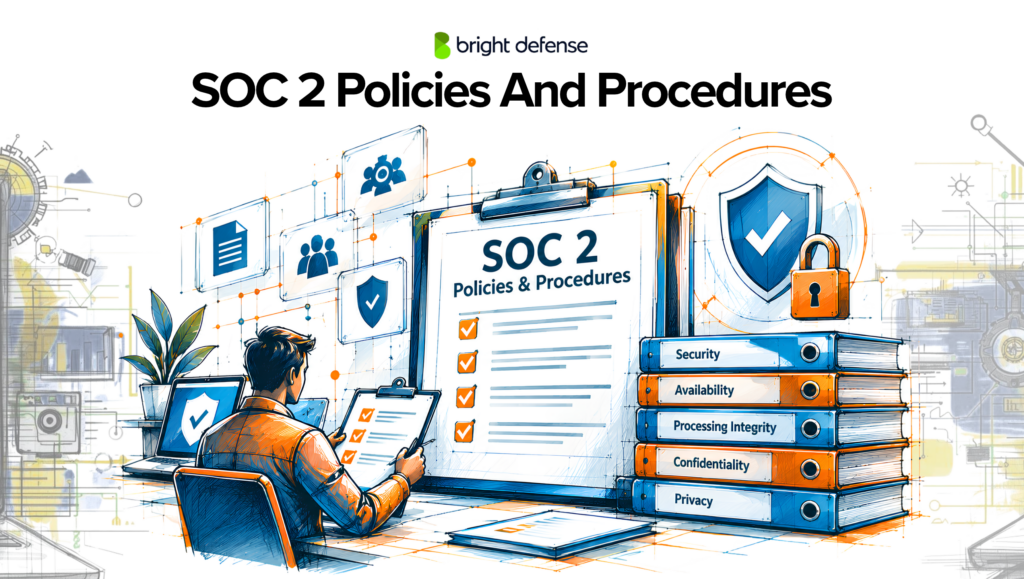
A SOC 2 timeline includes readiness work before the examination period. Type 2 commonly covers 3–12 months of control operation. Testing and report preparation can continue after that period ends, so its closing date is not necessarily your delivery date.
ISO 27001 certification generally follows a 3-year cycle. Annual surveillance audits sit between initial certification and recertification. Budget for maintaining the ISMS throughout the cycle.
For CMMC, get a quote for the assessment route your contract requires. The cost gap between the two routes is wide. DoD’s cost analysis in the CMMC program rule puts a Level 2 self-assessment at $40,691 over three years for a larger contractor, while a C3PAO assessment runs $109,632 for the same contractor and $100,293 for a small business.
The third-party route costs close to three times as much, and those figures exclude remediation work. Confirm the current rules before assuming every Level 2 engagement follows the same route.
Ask each provider what the quote excludes. Remediation and repeat assessment work can change the total. A lower initial audit fee may leave you with a larger implementation bill.
6. Coordinate Overlapping Requirements
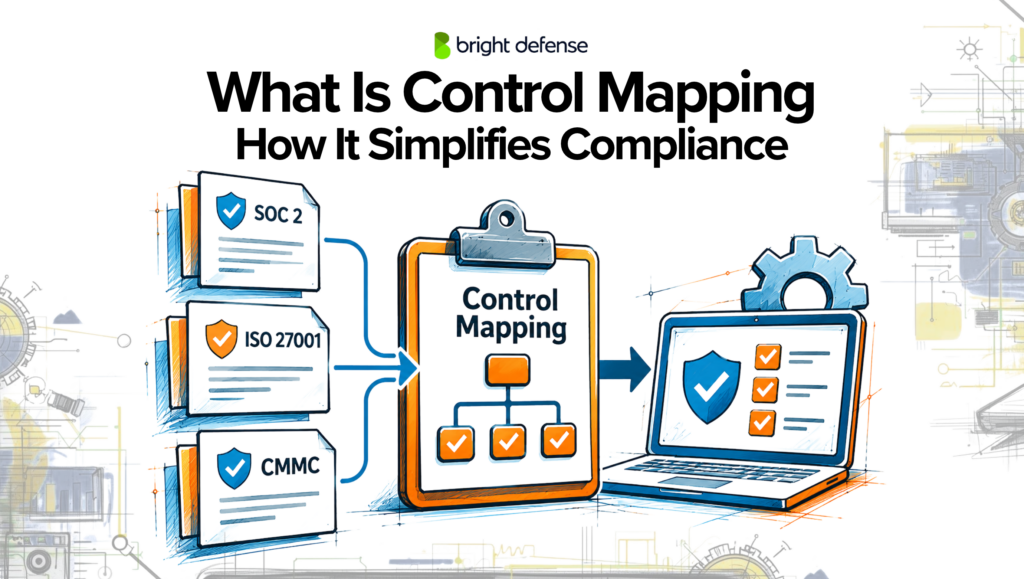
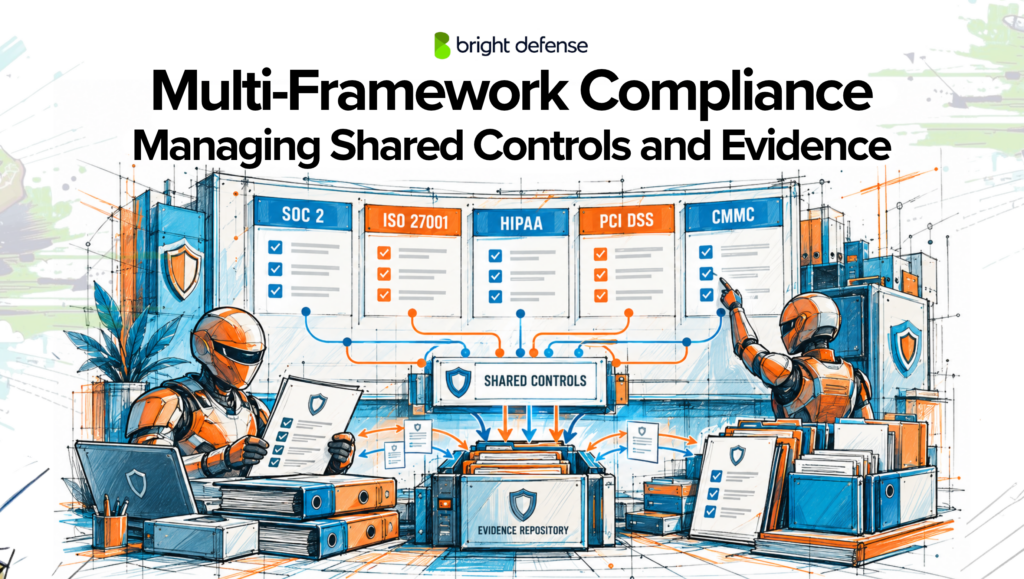
Organizations pursuing more than one framework can reuse parts of their control program. An access review can support multiple assessments when its scope and evidence meet each requirement.
Keep a control map that connects each activity to the requirements it supports. Store its evidence with a clear owner and review date. Check for gaps before treating one assessment’s evidence as sufficient for another.
Example: A SaaS company pursuing SOC 2 and ISO 27001 uses one employee access approval process. It retains the approval records and maps that process to both sets of requirements. Each assessor still evaluates the evidence for their own engagement.
Bright Defense helps organizations coordinate shared work across SOC 2 and ISO 27001. This can reduce repeated preparation while preserving the requirements of each assessment.
In A-LIGN’s 2026 Compliance Benchmark Report, one in four surveyed organizations named managing multiple audits throughout the year as their greatest compliance challenge.
How Bright Defense Can Help You Choose And Implement A Framework
Bright Defense helps you turn framework selection into a practical compliance plan. We review your customer requirements and current security program to clarify which work deserves priority.
Once the scope is clear, we help address control gaps and prepare policies your team can follow. Evidence collection becomes part of normal operations, giving you a clearer view of assessment readiness.
Our continuous compliance services combine expert guidance with managed automation. We help track ongoing control work and support remediation as your business changes.
Talk with Bright Defense about your next customer requirement and the resources available to meet it. We can help you choose a practical starting point and plan the steps that follow.
Frequently Asked Questions
1. Can I Use NIST CSF While Preparing For SOC 2?
Yes. NIST CSF can help you organize risks and prioritize improvements. Map that work to the applicable SOC 2 criteria, then check what additional controls and evidence the examination needs.
2. Do I Need Certification To Use A Cybersecurity Framework?
No. You can use NIST CSF or CIS Controls to improve security without certification. ISO 27001 offers certification, while SOC 2 produces an attestation report. Choose the deliverable your customer or contract requires.
3. What Can I Do When Customers Request Different Frameworks?
Confirm whether each request is mandatory. Some buyers accept alternative evidence; others specify a particular assessment. Prioritize binding deadlines and build a shared control program where requirements overlap.
4. Can A Small Team Manage More Than One Framework?
Yes, with a realistic scope and workload. Reuse controls where the requirements permit it, and give each recurring task an owner. Stagger assessments when simultaneous preparation would stretch the team too far.
5. When Do I Need To Reconsider My Framework Choice?
Revisit the choice when your business or obligations change. A new regulated customer can introduce requirements your current assessment does not cover. Expansion into a new market can create a similar need. Review the fit during routine security planning, too.
6. Which Cybersecurity Framework Is Best For A Startup?
Start with the framework your first enterprise buyers ask for. For US SaaS startups, that is usually SOC 2. Without a buyer request, NIST CSF 2.0 or CIS Controls IG1 gives you a practical security baseline at a lower cost.
7. Is SOC 2 Or ISO 27001 Better For My Business?
Your customers’ location decides the better fit. US buyers request SOC 2 most often, and ISO 27001 carries more recognition with European and international enterprises. Selling into both markets justifies pursuing both through one shared control program.
8. How Long Does It Take To Meet A Framework’s Requirements?
Your existing gaps and the required assessment set the timeline. A SOC 2 Type 1 report tests control design at a single point in time. A Type 2 report covers an observation period of three to twelve months after readiness work finishes. ISO 27001 certification runs through a Stage 1 documentation review and then a Stage 2 audit.
9. What Does Implementing A Framework Cost?
Audit or certification fees cover only part of the bill. Budget for new tools and outside readiness support where your team has gaps. Staff time needs a line of its own, since operating controls and collecting evidence continue after the first audit.
10. Does Following A Framework Make My Business Secure?
No. A framework gives your security program structure, and an assessment proves your controls worked within a defined scope. Attackers target what falls outside that scope. Regular penetration tests and vulnerability scans between audits keep those gaps visible.
Sources
- Vanta: Top AI Security Trends For 2026, including the 77% customer and stakeholder assurance finding.
- NIST: Cybersecurity Framework Profiles, explaining Current and Target Profiles.
- Official CMMC Policy Updates, including the suspension of the planned Phase 2 transition.
- California Privacy Protection Agency: September 2025 Regulations Announcement, covering effective dates and cybersecurity audit certification deadlines.
- SGS: ISO/IEC 27001 Certification Process, covering certification and surveillance.