What is Cybersecurity Compliance Audit?
Updated:
October 28, 2026
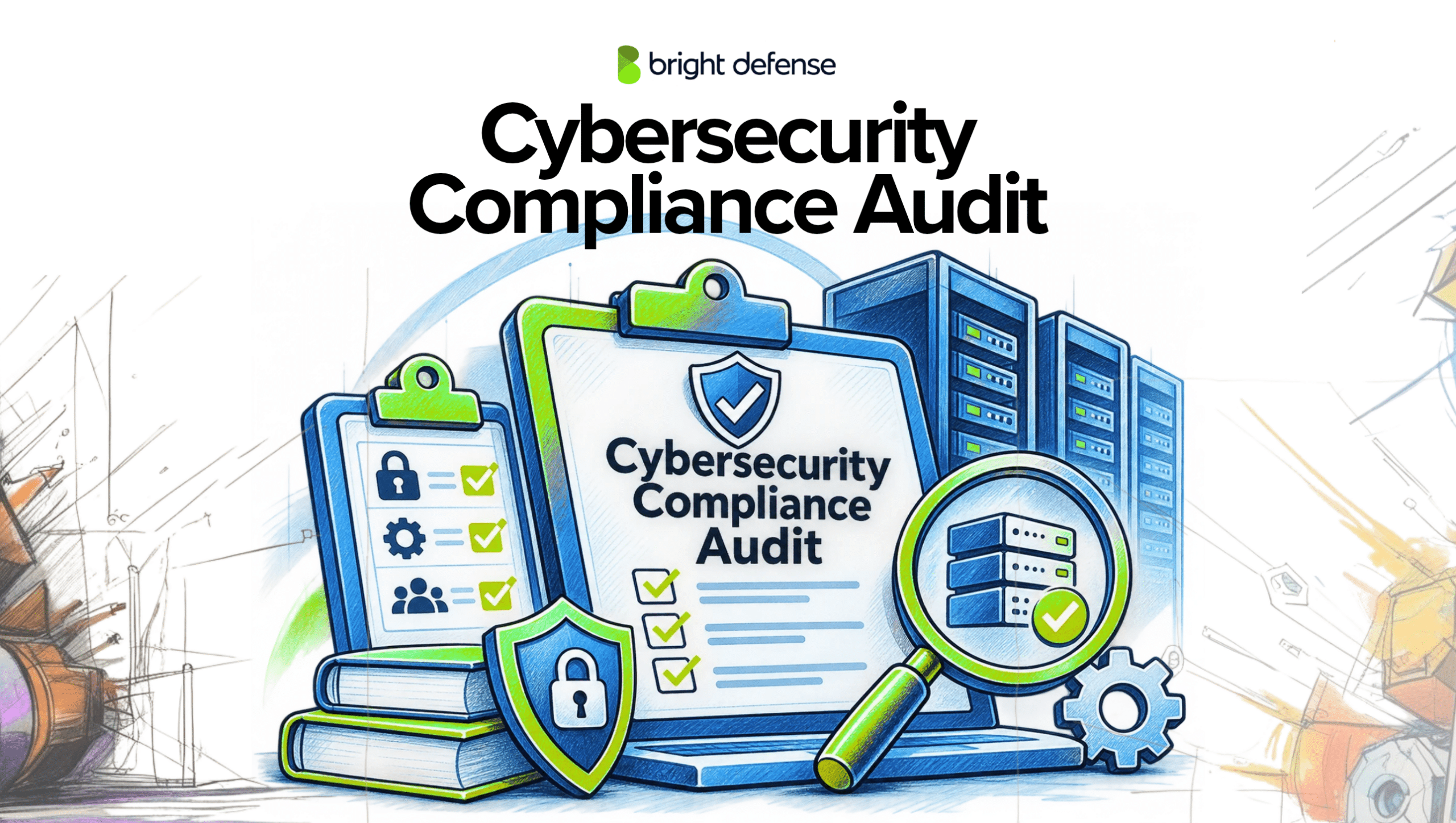
A cybersecurity compliance audit examines whether your organization meets specified security requirements. That means providing evidence that your team follows its policies and that controls work as intended.
97% of organizations in A-LIGN’s 2026 benchmark conduct at least two audits annually. Preparing reusable evidence and assigning clear responsibilities can make those recurring reviews easier to manage.
Learn what auditors examine, how the audit process works, and which preparation steps help your team avoid missing evidence and last-minute delays.
Key Takeaways
- Cybersecurity compliance audits check controls against specified security requirements
- Preparation requires a clear scope, assigned responsibilities, and corrected gaps
- Audit evidence includes policies, access records, training logs, and system settings
- Every finding needs an owner, deadline, corrective action, and verified fix
- Ongoing monitoring helps maintain compliance between audits
- 97% of organizations conduct at least two audits annually
What Is A Cybersecurity Compliance Audit?
A cybersecurity compliance audit is a structured review of whether an organization meets specified security requirements.
Auditors examine evidence and compare actual practices with the criteria being assessed. Those criteria may come from a security framework, a regulation, or the organization’s own policies.
The audit has a defined scope, which sets the boundaries of the review. It specifies the systems or services being assessed and, where applicable, the period covered.
Auditors review records and interview employees to understand how the controls work. They may inspect configurations or test selected activities.
Example: A company requires approval before employees receive administrator access. The auditor examines access requests and approval records, then checks whether the permissions granted match those approvals.
The results explain where the organization meets the audit criteria and where gaps remain. Findings give the responsible teams a basis for corrective work. The conclusions apply to the scope examined; they do not guarantee that the organization will never experience a security incident.
Compliance can lapse between assessments. Verizon’s 2024 Payment Security Report shows that only 14.3% of organizations assessed maintained full compliance with the Payment Card Industry Data Security Standard (PCI DSS) during interim checks. Nearly all had passed a previous validation assessment, illustrating the need to check whether required controls remain in place.
How Does A Cybersecurity Compliance Audit Work?
A cybersecurity compliance audit begins with agreeing on what will be assessed. It ends with a conclusion supported by evidence. These five stages explain how to prepare for the review, support the auditor’s work, and act on the results.
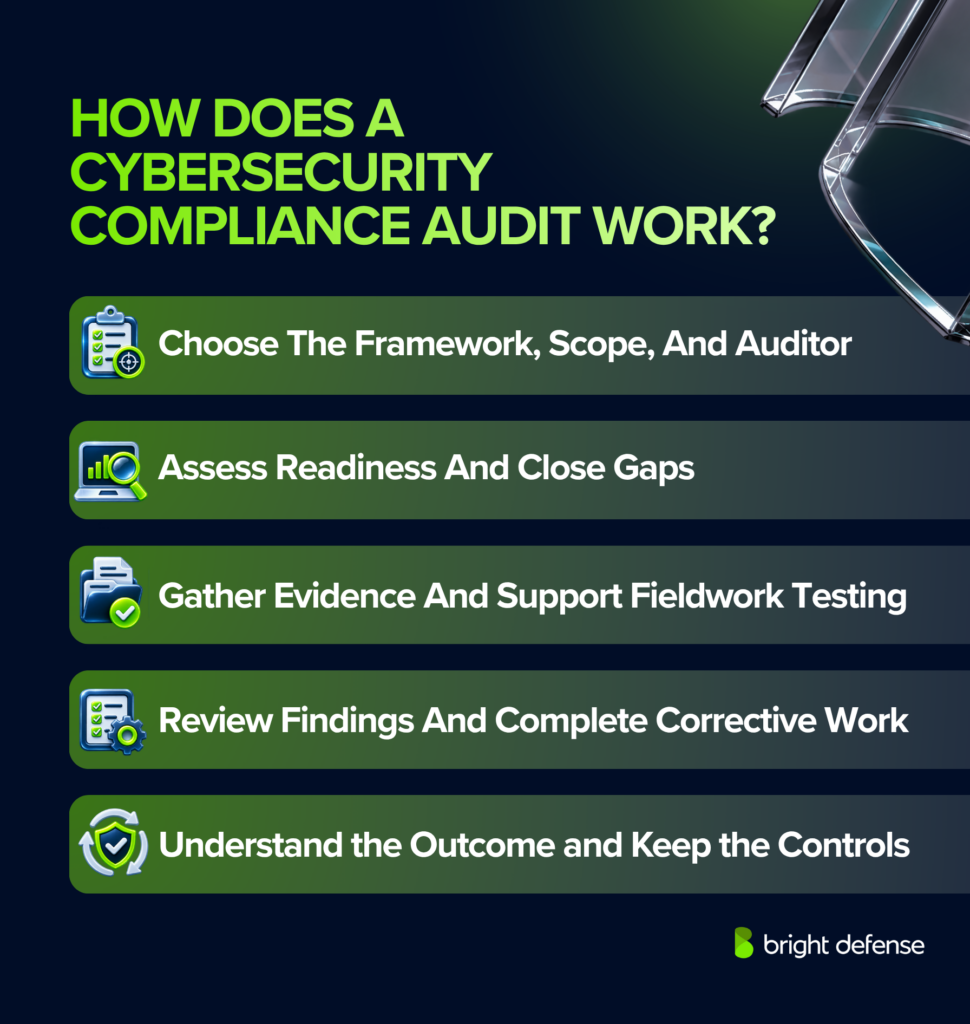
1. Choose The Framework, Scope, And Auditor
Your audit criteria depend on your business obligations and customer expectations. Confirm what assurance the intended audience needs before committing to an assessment.
Choose an audit firm with experience in your industry and the framework being assessed. Confirm that it has the qualifications required for the engagement. Ask how the firm handles evidence requests and who will conduct the work.
Work with the auditor to finalize the scope. This sets the boundaries around the services and systems being examined. Include the teams and third parties that support those services.
For example, a software company may scope its audit around one customer-facing application. The review then covers the cloud infrastructure hosting that application and the employees who administer it.
Before fieldwork begins, agree on the evidence period and key dates. Clarify the expected deliverables and how additional work affects fees. Your team remains responsible for operating its controls and correcting weaknesses.
2. Assess Readiness And Close Gaps
Use a cybersecurity gap analysis to compare your current practices with the applicable requirements. Check whether each control is in place and whether your team has evidence that it works. This review can begin before auditor selection and continue as the scope is finalized.
Separate missing evidence from missing activity. An approval record stored in another system may be recoverable. An approval that never happened requires corrective action.
Use a readiness tracker to record:
- The requirement and current gap
- The person responsible for fixing it
- The completion deadline
- The evidence needed to confirm the fix
Preparation time depends on your starting point and the assessment requirements. Build your schedule around the work needed to close gaps. Allow for any period during which controls must operate before they can be assessed.
3. Gather Evidence And Support Fieldwork Testing
Evidence collection and testing overlap throughout the audit. Auditors move between reviewing records, asking questions, and watching employees demonstrate processes.
Typical evidence requests include:
- Approved policies and employee acknowledgments
- Access approvals and completed access reviews
- System settings and monitoring records
- Training completion records
- Change tickets and security test results
Check each submission before sharing it. Confirm that it covers the requested system and period. Include enough context for the auditor to understand what the record shows.
A change ticket might show that an engineer tested an update before release. The approval history then shows who authorized the production deployment.
During interviews and walkthroughs, employees explain their responsibilities and demonstrate how they perform tasks. In a July 2026 survey of 201 security and compliance practitioners, 50.7% named getting time and input from technical teams among their biggest audit preparation bottlenecks. Schedule their participation early and prepare them to discuss their actual work and locate supporting records.
Auditors often examine a sample of activities. Selection may be random, risk-based, or guided by professional judgment. The approach depends on the control and the purpose of the test.
An auditor may select employee departures from the review period. They then compare termination dates with account deactivation records to check whether access was removed on time.
Keep submissions in a controlled evidence repository and track follow-up requests. Some questions require clarification; others may expose a control failure that needs corrective work.
4. Review Findings And Complete Corrective Work
When the auditor raises a finding, confirm the facts and the requirement involved. Provide missing context where it exists. Avoid creating records that imply an activity happened when it did not.
For each confirmed issue, record the cause and corrective action. Give the work an owner and a deadline.
A fix completed during the audit may improve the control going forward. It does not erase an earlier failure within the period being assessed. Management’s acceptance of a risk does not automatically satisfy a mandatory requirement.
Suppose a quarterly review missed two administrator accounts. The team can review those accounts immediately, then change the account inventory process to prevent the same omission.
How a finding affects the outcome depends on the engagement rules and its significance.
5. Understand The Outcome And Maintain The Controls
The final deliverable depends on the assessment. A SOC 2 examination produces an attestation report containing the auditor’s opinion. The AICPA’s illustrative SOC 2 report shows how a Type 2 report presents control tests and their results.
An ISO 27001 engagement can lead to certification following the certification body’s decision. ISO’s explanation of certification clarifies that external certification bodies issue certificates, not ISO itself.
Read the outcome carefully before describing it to customers. Any public claim needs to match the assessed scope. Review report-sharing restrictions before distributing detailed security information.
After the audit, keep corrective actions moving and continue collecting evidence. In Pentest-Tools.com’s July 2026 survey of 201 security and compliance practitioners, 80.6% reported collecting compliance evidence throughout the year.
Keep this work on a regular schedule alongside ongoing compliance monitoring to support the next assessment and catch problems between audits.
Which Security Controls And Policies Do Auditors Review?
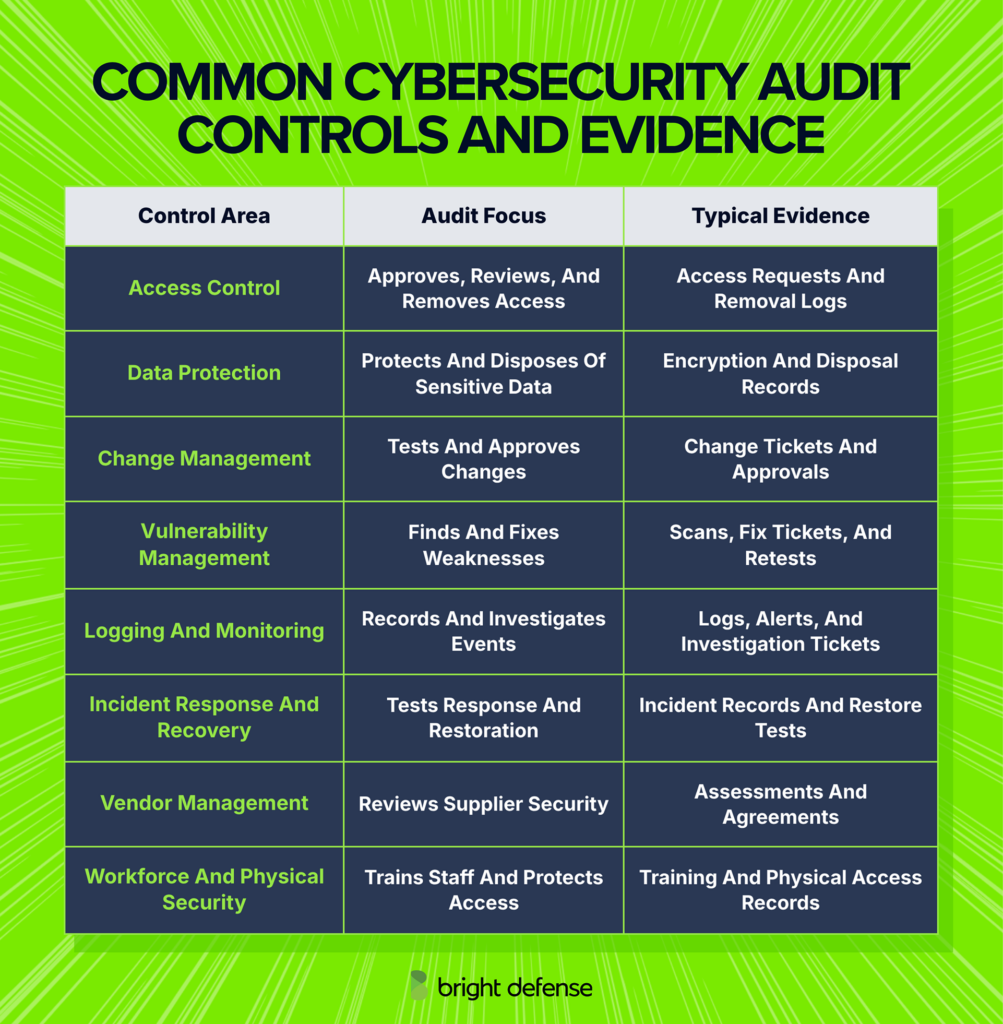
Auditors review the controls that support the requirements within your audit scope. They compare written policies with actual practices, then examine evidence that those controls work. The eight areas below connect common security responsibilities with the records auditors may request.
How Do Policies Connect To Audit Evidence?
Policies give auditors a reference for what your organization expects. Supporting records show whether employees and systems meet those expectations.
For example, a vulnerability management policy may require critical weaknesses to be fixed within 15 days. An auditor can compare scan dates with remediation tickets to check whether the team met that deadline. The 15-day target is the company’s commitment in this example, not a universal audit requirement.
Keep policy commitments specific enough to test and realistic enough to follow. When exceptions are permitted, retain the approval and the reason for the exception.
Does Every Audit Cover The Same Controls?
The framework and scope determine which controls receive attention. A payment security assessment focuses on the environment handling cardholder data. An audit of a cloud service examines the systems and processes supporting that service.
Even when two assessments cover the same control, they may require different evidence. A configuration screenshot shows a setting at one point in time. Records covering the assessment period can show whether the control continued to operate.
Confirm these expectations during planning so control owners know what to retain before evidence requests arrive.
How Do Organizations Address Security Gaps After An Audit?
Organizations address audit findings through a corrective action plan. Each finding needs an owner and a deadline. Closure requires evidence that the fix works.
The five steps below turn audit findings into tracked improvements and give reviewers a clear record of what changed.
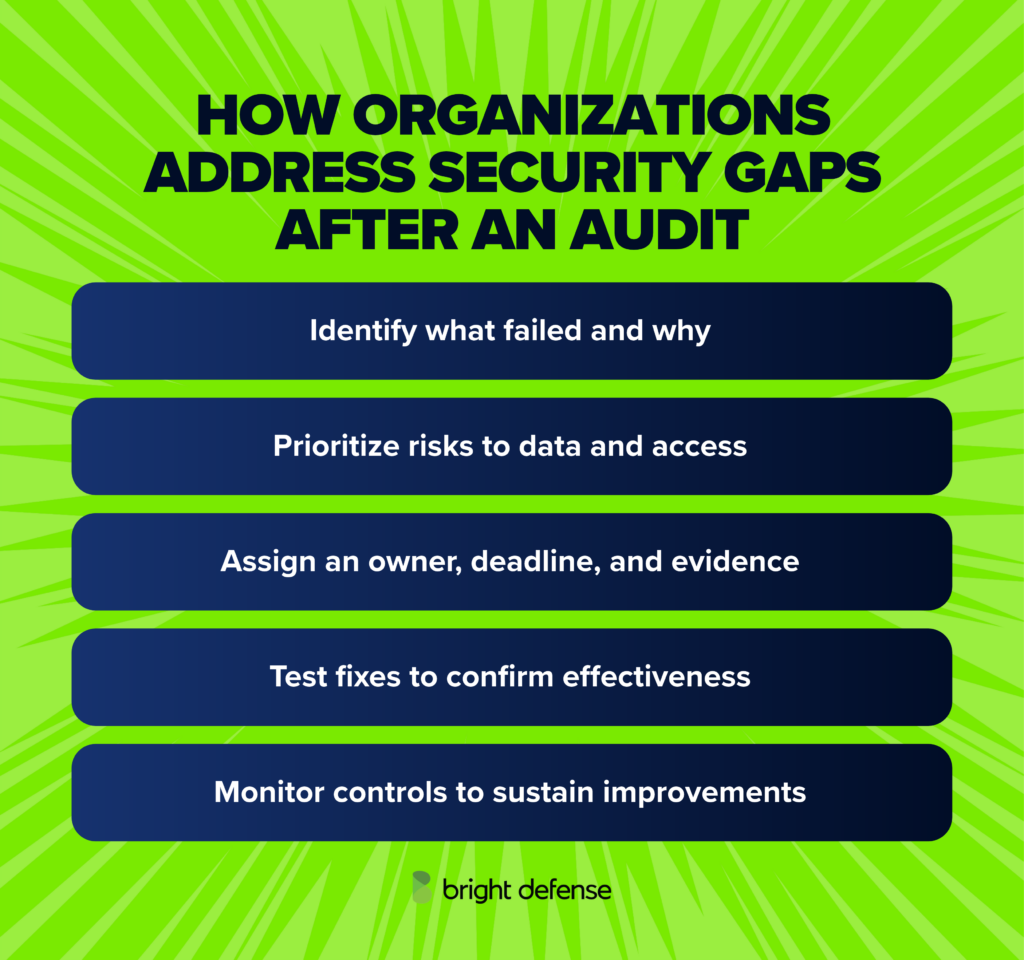
1. Confirm The Finding And Its Cause
Start with the requirement the auditor assessed. Determine whether the finding reflects a failed control or insufficient evidence of an activity.
Then investigate why the issue occurred. A missed access review may stem from an incomplete account list or unclear responsibility. Understanding the cause helps prevent the same failure in the next review.
2. Prioritize The Work By Risk
Consider the potential harm and how easily the weakness could be exploited. Give urgent attention to issues that expose sensitive data or allow unauthorized access.
Framework rules may impose corrective action deadlines. Factor those into the plan alongside business risk. Technical vulnerability scores can inform prioritization, but they do not measure every type of audit finding.
An active administrator account belonging to a former employee needs immediate attention. An outdated policy owner’s name may be less urgent when responsibility has already transferred and the control continues to work.
3. Assign An Owner And A Deadline
Give each corrective action to someone with the authority to complete it. Record the intended fix and the evidence needed to confirm completion.
A practical tracker includes:
- The finding and affected system
- The corrective action and responsible owner
- The target completion date
- The current status and closure evidence
Corrective work can remain unfinished long after recommendations are issued. As of February 2026, more than 730 cybersecurity recommendations that the U.S. Government Accountability Office had made to federal agencies since 2010 remained without full implementation.
When a permanent fix takes time, record any temporary safeguards. Include their limitations and an expiry or review date.
4. Test The Fix Before Closing The Finding
A completed task does not necessarily mean the underlying problem is resolved. In Pentest-Tools.com’s July 2026 survey of 201 security and compliance practitioners, 28.9% named retesting and demonstrating successful remediation among their biggest audit preparation bottlenecks. Check the fix against the requirement that prompted the finding and retain evidence of the result.
A team may change its deployment process to require approval before release. To verify the fix, a reviewer checks a subsequent deployment and confirms that approval occurred before the change went live.
Keep the test result with the corrective action record. Where the assessment requires auditor verification, submit the evidence through the agreed follow-up process.
5. Check That The Improvement Lasts
Update the procedure or system setting that allowed the gap to occur. Explain any changed responsibilities to the people performing the work.
Schedule a follow-up check based on the control’s frequency. For a quarterly access review, inspect the next completed review to confirm that the original omission has not returned.
Closing a finding records a successful correction. Continued monitoring shows whether that correction remains effective.
How Can Bright Defense Help You Prepare For A Cybersecurity Compliance Audit?
Bright Defense prepares your organization for an audit through gap assessments and hands-on remediation support. Our team reviews your current controls against the applicable requirements, then builds a readiness roadmap around the work that remains.
Our continuous compliance services combine expert guidance with managed automation. We develop policies that reflect your operations and organize evidence for review. During the audit, we support your team with evidence requests and follow-up questions.
After the assessment, we track corrective work and monitor controls through an ongoing monthly engagement. This keeps audit preparation connected to daily security responsibilities and reduces the work left until the next review.
Talk to Bright Defense about your target framework and audit timeline. We can turn those requirements into a practical preparation plan.
Frequently Asked Questions
1. Who Conducts A Cybersecurity Audit?
Cybersecurity audits are conducted by qualified internal auditors or external assessors. The qualifications required depend on the engagement.
A SOC 2 examination requires an independent licensed CPA firm. ISO 27001 certification audits are performed by certification bodies. A security consultant can assist with preparation, but that role does not automatically qualify them to issue the final report or certificate.
2. What Evidence Is Required For A Cybersecurity Audit?
Auditors request evidence that shows whether the controls within scope meet the assessment criteria. Common records include approved policies, access reviews, training completion records, and system configurations.
The evidence must cover the systems and dates being assessed. A current backup configuration shows how backups are configured today. Successful backup logs and restoration tests provide evidence of their operation over time.
Confirm the evidence requirements with your auditor before collection begins.
3. What Does A Cybersecurity Audit Report Include?
An audit report generally describes the scope and assessment criteria. It explains the work performed and presents the findings and conclusions.
The format depends on the engagement. A SOC 2 Type 2 report includes management’s assertion and a description of the system. It contains the auditor’s opinion, control tests, and test results. Recommendations and corrective action plans may appear separately, depending on the engagement.
4. How Often Should Organizations Conduct Cybersecurity Audits?
There is no single audit frequency that applies to every organization. The schedule depends on the framework, contractual commitments, and applicable regulatory requirements.
Internal audit schedules can account for risk and previous findings. Significant system changes or security incidents may justify additional reviews.
HIPAA, for example, requires periodic technical and nontechnical evaluations and consideration of changes affecting electronic protected health information. This requirement does not impose a universal annual external certification audit.
5. Is A Cybersecurity Compliance Audit Mandatory?
An audit can be required by law, a contract, or a certification program. Other organizations commission one to provide assurance to customers.
SOC 2 is generally pursued to meet customer or business needs. A customer contract can make obtaining the report a condition of doing business.
Check the exact obligation before choosing an assessment. A requirement to conduct a risk analysis does not necessarily require an independent audit.
6. How Much Does A Cybersecurity Compliance Audit Cost?
There is no standard price across cybersecurity compliance audits. Fees depend on the framework and scope. Organizational complexity and the amount of testing affect the quote.
Ask firms to price the same scope so their proposals are comparable. Separate the assessment fee from preparation and remediation costs. Confirm whether follow-up testing and travel are included.
An audit quote alone will not capture your employees’ preparation time or the cost of fixing control gaps.
7. How Long Does A Cybersecurity Compliance Audit Take?
The timeline depends on readiness and the type of assessment. Preparation, fieldwork, and report completion are separate parts of the schedule.
Some engagements assess controls at a specified date. Others examine their operation over a defined period. SOC 2 Type 1 and Type 2 reports make this distinction: Type 1 addresses a date, while Type 2 covers a period.
Ask the auditor to specify the evidence period and expected delivery date. Include time for follow-up requests and any required corrective work.
8. What Is The Difference Between An Internal And External Audit?
An internal audit is performed on behalf of the organization to assess its controls and support improvement. Employees or an outsourced provider can perform it, provided the arrangement preserves objectivity.
An external audit is performed by a party outside the organization. It may support customer assurance, regulatory oversight, or certification.
The purpose and applicable rules determine the distinction. Hiring an outside consultant to perform your internal audit does not turn it into a certification audit.
9. How Does A Cybersecurity Audit Differ From A Penetration Test?
A cybersecurity compliance audit evaluates controls against specified requirements. It can examine policies and operational records alongside technical settings.
A penetration test uses authorized attack techniques to explore whether weaknesses can be exploited. It has a defined scope and agreed rules for testing.
Penetration test results can support an audit. They do not replace the wider assessment of compliance requirements.
10. What Happens When An Organization Fails A Cybersecurity Compliance Audit?
The outcome depends on the assessment rules and the seriousness of the findings. Some engagements use certification decisions; others produce an auditor’s opinion. A finding does not automatically mean the entire assessment has failed.
The organization needs to investigate the cause and complete corrective work. The assessor may require additional evidence or follow-up testing before closing the issue.
Fixing a problem improves the control going forward. It does not change the fact that the problem existed during the period examined.