CIS v8.1 Updates For NIST CSF 2.0 And Cloud Security
Updated:
September 21, 2026
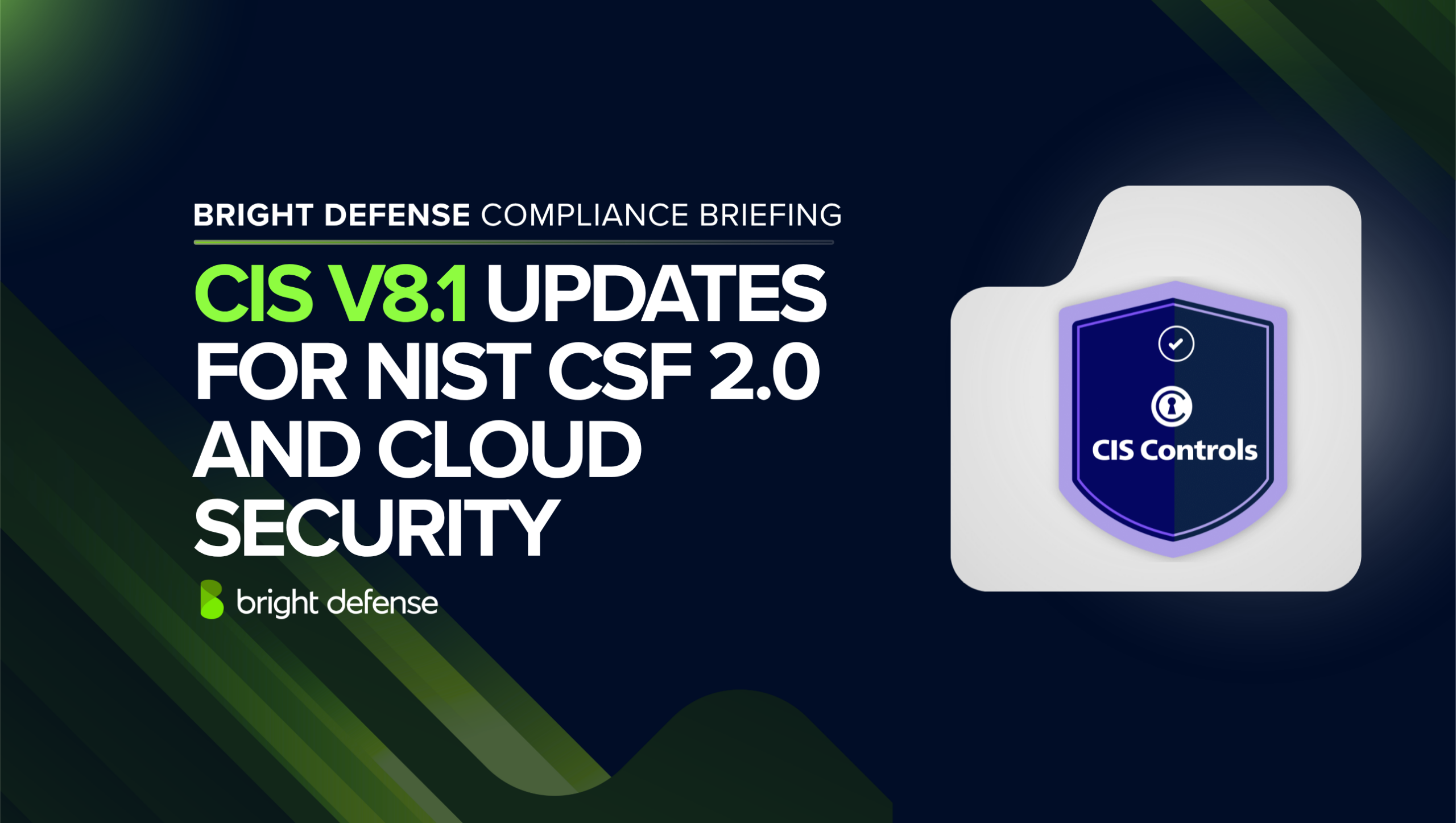
The Center for Internet Security’s CIS Controls v8.1 update turned a widely used cybersecurity baseline into a closer fit for NIST’s Cybersecurity Framework 2.0 and modern cloud environments, giving security teams a clearer route from board-level governance to technical safeguards. CIS released the update in June 2024, then followed with a NIST CSF 2.0 mapping and a cloud companion guide as organizations faced tighter audit demands, broader supply-chain risk and rising cloud exposure.
What Is CIS Controls v8.1 And Why Does Its NIST CSF 2.0 Mapping Matter Now?
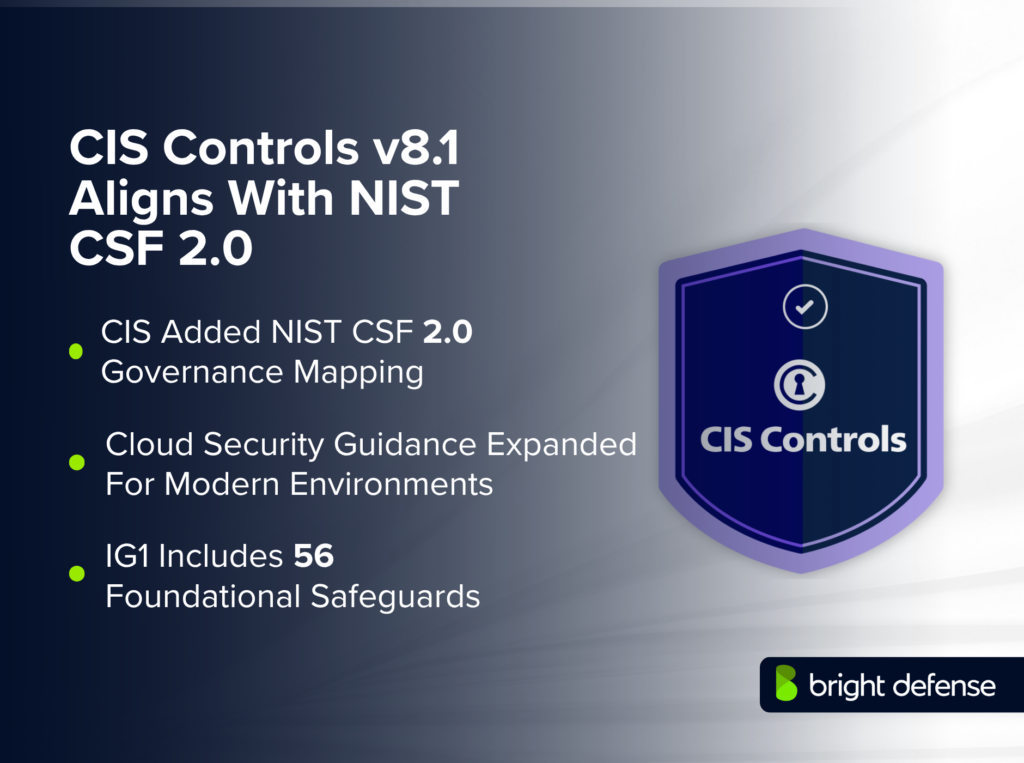
CIS Controls v8.1 is an iterative update to CIS Controls v8.0 that maps CIS Safeguards to NIST CSF 2.0, adds a Govern security function, revises asset classes and clarifies selected safeguard descriptions. The timing matters because NIST CSF 2.0 moved cybersecurity governance into the framework core in 2024.
CIS said the update was designed to preserve continuity for existing Controls users while reflecting new governance expectations. NIST said CSF 2.0 applies to organizations of any size, sector or maturity, rather than only critical infrastructure. The practical result is a crosswalk that lets security leaders connect operational controls, risk ownership, board reporting and cloud responsibilities in one control program.
When Did CIS Controls v8.1 Move From CIS v8 And NIST CSF 2.0 Drafts To The Latest Cloud Update?
The timeline began when CIS published CIS Controls v8 on May 18, 2021, as a reorganized baseline for cloud, mobile and modern enterprise environments. NIST then opened its CSF update process in 2022, issued a concept paper in January 2023, published the CSF 2.0 draft on August 8, 2023, and finalized CSF 2.0 on February 26, 2024.
CIS published CIS Controls v8.1 on June 24, 2024, announced it publicly on June 25, 2024, and released the v8.1 mapping to NIST CSF 2.0 on the same date. CIS released the Cloud Companion Guide for CIS Controls v8.1 on December 9, 2024. The latest directly related CIS implementation artifact found in this review was the CIS Controls v8.1.2 Worksheet in Arabic, published on June 10, 2026.
What Did CIS Change In CIS Controls v8.1 For NIST CSF 2.0 And Governance?
CIS Controls v8.1 changed the framework in targeted areas rather than replacing the v8 structure. CIS listed five main updates: new and expanded glossary definitions, revised asset classes with new safeguard mappings, minor typo fixes, clarified safeguard descriptions and realigned NIST CSF security function mappings to match CSF 2.0.
The biggest substantive change was the addition of the Govern function. CIS said governance topics are now easier to locate as recommendations that help enterprises collect evidence for compliance.
A structured GRC program can connect policies, responsibilities, risk decisions and executive oversight to technical safeguards for asset inventory, vulnerability management, logging, incident response and penetration testing.
Which Organizations Are Affected By CIS Controls v8.1, NIST CSF 2.0 Mapping And Cloud Guidance?
CIS Controls v8.1 affects organizations that use CIS Controls as a cybersecurity baseline, audit framework, procurement reference or bridge to other requirements. The mapping is relevant to enterprises that report against NIST CSF 2.0, cloud service users, hybrid infrastructure operators, state and local governments, regulated sectors and small businesses using Implementation Group 1.
The scope is broad because CIS describes the Controls as a prioritized set of safeguards for enterprises of any size. CIS says IG1 contains 56 foundational safeguards and serves as essential cyber hygiene for all enterprises.
The Cloud Companion Guide extends the Controls to IaaS, PaaS, SaaS and FaaS environments, where shared responsibility changes who owns each security task. Cloud penetration testing can verify whether customer-controlled identities, configurations, applications and exposed services operate securely within that model.
What Penalties Or Legal Consequences Are Tied To CIS Controls v8.1 Adoption?
CIS Controls v8.1 does not create a direct federal penalty structure because it is a voluntary cybersecurity framework. The legal effect comes from contracts, audits, safe harbor laws, regulator expectations and litigation risk, especially where an organization has represented that its security program follows CIS Controls, NIST CSF or another recognized framework.
CIS said the Controls have been included in cybersecurity safe harbor statutes in Ohio, Utah, Connecticut and Iowa. Ohio’s safe harbor law took effect on November 2, 2018, and Utah’s Cybersecurity Affirmative Defense Act took effect on May 5, 2021. Those laws can provide an affirmative defense after certain breach claims when an organization maintains a written cybersecurity program that reasonably conforms to an approved framework.
What Compliance Steps Should Organizations Take For CIS Controls v8.1, NIST CSF 2.0 And Cloud Security?
Organizations should treat CIS Controls v8.1 as a control mapping and evidence project, not only as a checklist. The first step is to select the correct Implementation Group, map safeguards to NIST CSF 2.0 outcomes, define cloud shared-responsibility owners and maintain proof for policies, asset inventories, access controls, logging, vulnerability management and penetration testing.
A practical program should start with IG1, then expand to IG2 or IG3 based on risk, resources and regulatory pressure. A cybersecurity gap analysis can compare current safeguards with CIS Controls v8.1 and NIST CSF 2.0 outcomes before teams commit resources to remediation. Cloud teams should document which controls belong to the customer, which belong to the provider and which are shared.
How Did Industry Respond To CIS Controls v8.1 And NIST CSF 2.0?
Industry response was mostly operational rather than political, with training, vendor mapping and practitioner guidance following the CIS release. SANS published CIS Controls v8.1 material on February 3, 2026, Cisco updated a CIS Controls v8.1 solution brief on November 25, 2025, and Tripwire described the update as a minor but useful governance and mapping revision.
No official CIS adoption rate for CIS Controls v8.1 was found in the materials reviewed. No Reuters, AP, Bloomberg, Financial Times, Wall Street Journal or BBC article focused on CIS Controls v8.1 was found in searches for this report. Axios covered the broader NIST CSF 2.0 release on February 27, 2024, noting that the NIST framework could shape future cybersecurity requirements for government contractors.
What Government Or Court Actions Are Connected To CIS Controls v8.1 And NIST CSF 2.0?
The main government action was NIST’s final release of CSF 2.0 on February 26, 2024, after a multiyear process that included 134 written responses to a 2022 RFI, 92 written responses to a 2023 concept paper and a draft comment period that closed on November 6, 2023. NIST said the update expanded the framework to all sectors and added stronger governance and supply-chain guidance.
The main court-related issue is indirect. CIS Controls v8.1 can matter in breach litigation when parties argue over reasonable security, contractual duties or safe harbor eligibility. No court ruling specific to CIS Controls v8.1, the NIST CSF 2.0 mapping or the v8.1 Cloud Companion Guide was found in the reviewed sources.
What Costs, Operational Burdens And Open Questions Remain For CIS Controls v8.1?
CIS did not publish a sectorwide cost estimate for CIS Controls v8.1, and NIST CSF 2.0 is not a prescriptive rule with a government cost schedule. Costs will vary based on control maturity, asset visibility, cloud complexity, logging coverage, penetration testing cadence, evidence collection and whether the organization must meet contract or regulatory audit terms.
Open questions remain around adoption rates, audit interpretation and how regulators will reference CSF 2.0 in future rules. The latest NIST CSF page reviewed on June 18, 2026 showed continuing work on CSF 2.0 quick-start guidance and informative references. That matters because mappings can change as NIST and standards owners refine reference tools and implementation examples.
How Bright Defense Helps Organizations Map CIS Controls v8.1 To NIST CSF 2.0 And Cloud Security
Bright Defense helps organizations turn CIS Controls v8.1, NIST CSF 2.0 and cloud security guidance into testable, evidence-ready security programs. The work typically includes Penetration Testing, Continuous Compliance and Security Assessments that measure whether safeguards work in real systems, not only whether policies exist.
For cloud and hybrid environments, Bright Defense can review asset inventories, access paths, logging coverage, vulnerability exposure and incident response workflows against CIS Controls v8.1 and NIST CSF 2.0 outcomes.
A formal vendor risk management program can also assess cloud providers, software suppliers and other third parties that influence the organization’s security posture.
That helps leadership see gaps in plain language, prioritize fixes and prepare documentation for audits, customer reviews and cyber insurance questionnaires.
Sources Cited In This CIS Controls v8.1 Report
- Center for Internet Security — CIS Critical Security Controls v8 (May 18, 2021)
- Federal Register — Evaluating and Improving NIST Cybersecurity Resources: The Cybersecurity Framework and Cybersecurity Supply Chain Risk Management (February 22, 2022)
- NIST — CSF 2.0 Concept Paper (January 19, 2023)
- NIST CSRC — The NIST Cybersecurity Framework 2.0 Initial Public Draft (August 8, 2023)
- NIST — The NIST Cybersecurity Framework CSF 2.0 (February 26, 2024)
- NIST — NIST Releases Version 2.0 Of Landmark Cybersecurity Framework (February 26, 2024)
- Axios — Biden Administration Issues New Cyber Road Map (February 27, 2024)
- Center for Internet Security — CIS Critical Security Controls v8.1 (June 24, 2024)
- Center for Internet Security — Center For Internet Security Releases CIS Controls v8.1 With New Governance Recommendations (June 25, 2024)
- Center for Internet Security — NIST Cybersecurity Framework CSF 2.0 Mapping For CIS Controls v8.1 (June 25, 2024)
- Center for Internet Security — CIS Critical Security Controls v8.1 Change Log (June 25, 2024)
- Center for Internet Security — Cloud Companion Guide For CIS Controls v8.1 (December 9, 2024)
- Tripwire — CIS Controls Version 8.1: What You Need To Know (February 26, 2025)
- Cisco — Framework Foundations: CIS Controls v8.1 Solution Brief (November 25, 2025)
- SANS Institute — CIS Controls v8.1 (February 3, 2026)
- Center for Internet Security — CIS Controls v8.1.2 Worksheet Arabic (June 10, 2026)