What Is Control Mapping
Updated:
October 27, 2026
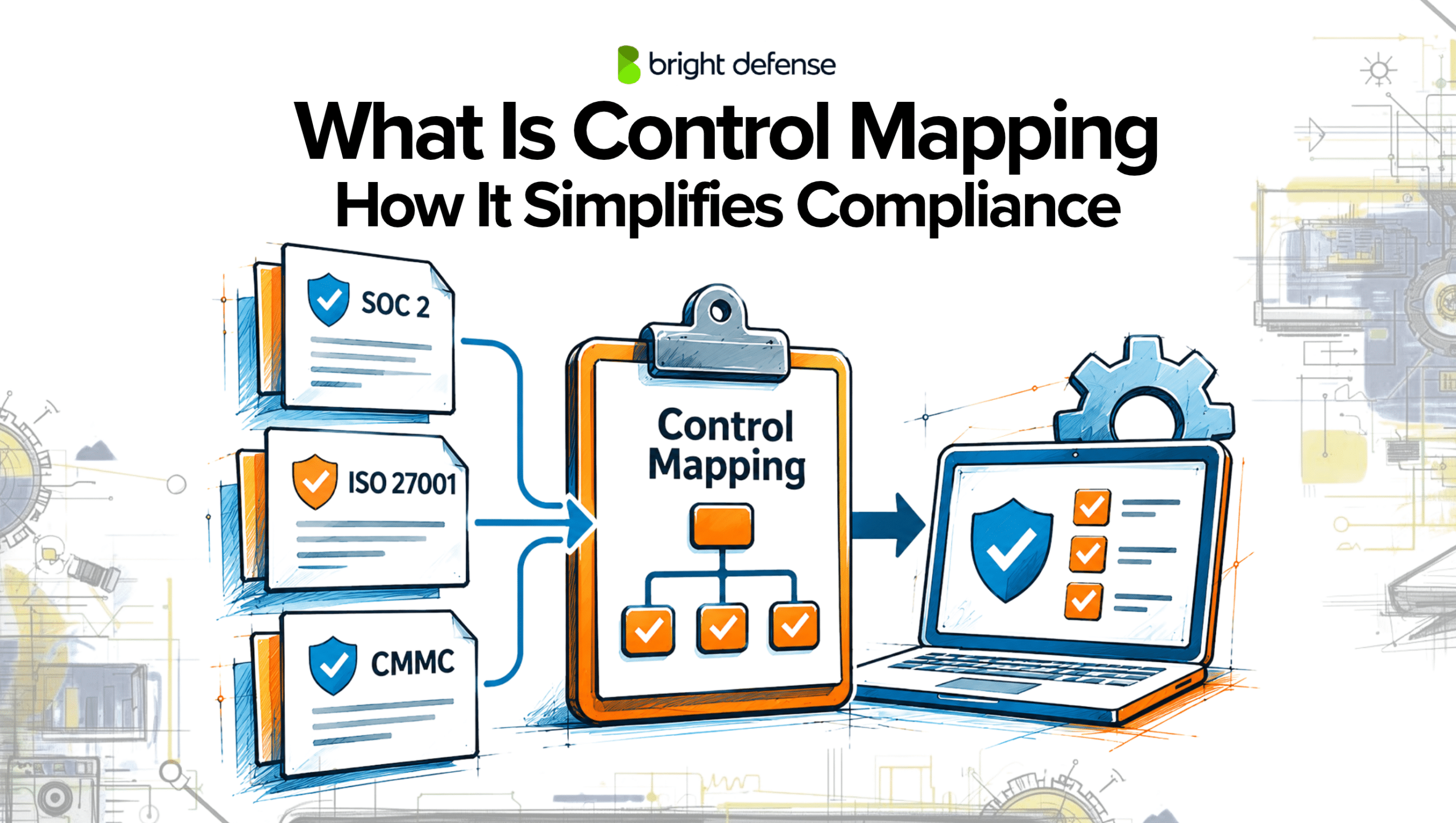
Control mapping connects security safeguards to the requirements they support. A clear map shows which work can serve several assessments and where a team needs additional controls.
Without those connections, a new framework can trigger another round of requests for records employees have already supplied. Nearly 90% of practitioners in a July 2026 compliance cycles survey manually remap or re-document evidence across frameworks, which is that repeated round of requests measured. Separate trackers make it harder to see whether the same process covers both assessments.
This guide explains how to build a mapping table, validate coverage, and use automation to keep the records current.
Key Takeaways
- Control mapping connects security safeguards to the specific requirements they support
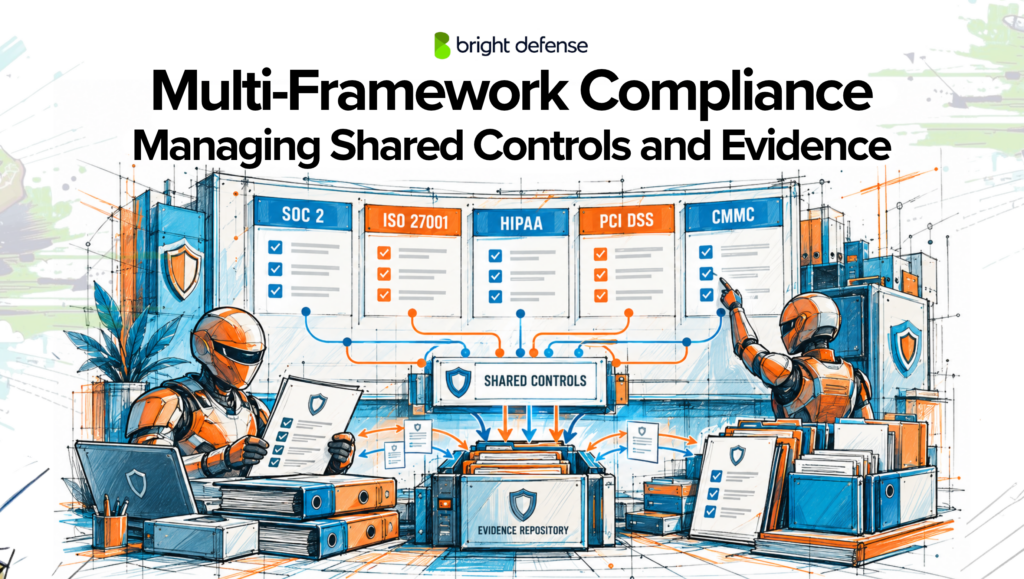
- Shared controls and evidence can reduce repeated work across compliance frameworks
- Each mapping needs a clear rationale, owner, scope, and framework version
- A mapped control still needs evidence and testing to confirm it works
- Human review and regular updates keep mappings accurate as requirements and systems change
- 63.2% of surveyed practitioners still manually remap some compliance evidence across frameworks
- 25.9% of surveyed practitioners re-document the same evidence for each compliance framework
What Is A Control?
A control is a safeguard an organization uses to reduce risk. It can be a technical setting, such as multi-factor authentication, or a recurring activity, such as reviewing employee access.
Controls turn broad security requirements into actions people can perform and verify. A useful control description explains who performs the activity and which systems it covers. It specifies when the activity occurs and what records demonstrate completion.
The distinction between a requirement, a control, and evidence is easier to see through an example:
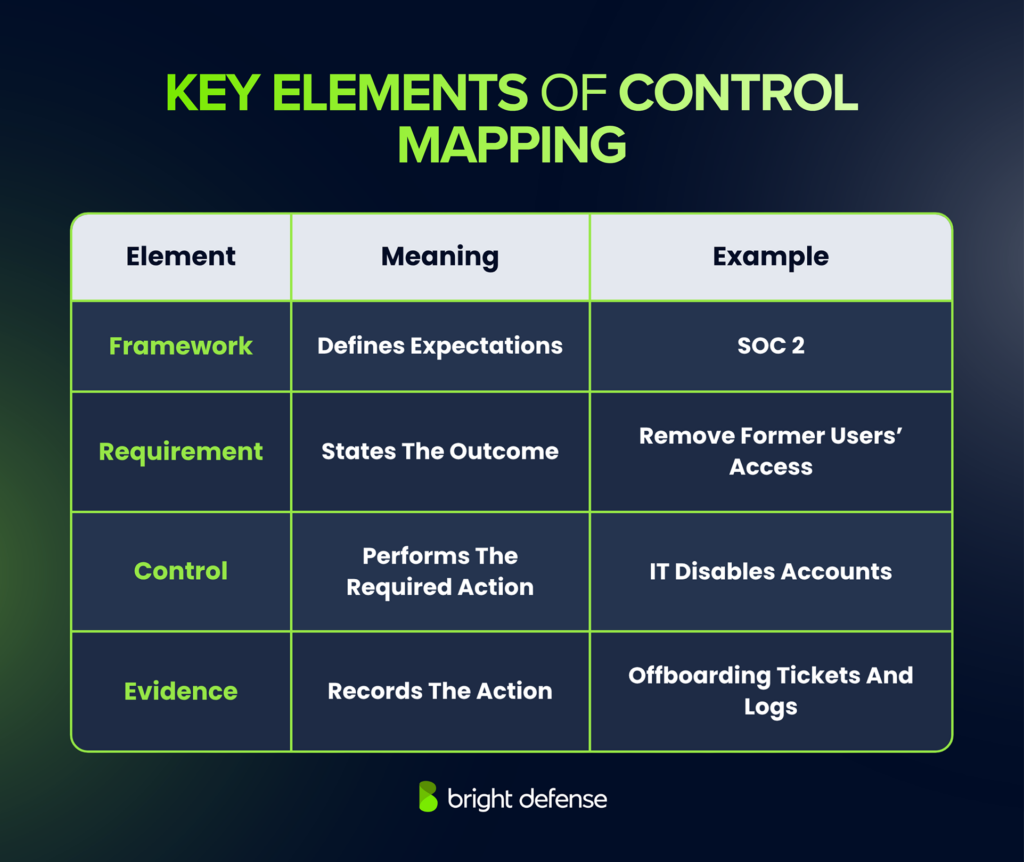
Assessors examine whether controls address the applicable requirements. They use evidence to evaluate implementation and, where the assessment requires it, operation over time.
SOC 2 policies and procedures describe security expectations and the steps employees follow. Records of completed work help demonstrate that employees follow those procedures.
Automated checks can support that evaluation, but a passing software test only confirms what that test measures.
What Is Control Mapping?
Control mapping records the relationship between an internal control and a specific framework requirement. It combines the reference number with a reason for the match, so a reviewer can understand what the control covers.
A vendor review process, for instance, may support supplier security requirements in two frameworks. The mapping records which parts it addresses and any additional checks needed for either assessment.
Mapping can begin during program design or after controls are already operating. Keep the coverage decision separate from the test result: a well-designed control may still fail in practice.
A framework crosswalk compares requirements in different standards. Your control map applies those reference relationships to the safeguards your organization actually operates.
Foundational Security Controls Can Defend Against 89% of System Intrusion Techniques.
What Is A Common Control Framework?
A common control framework is a reusable library of internal safeguards linked to multiple sets of requirements. Each safeguard has one stable reference, even when it supports several assessments.
The library can begin with your current controls; it does not require adopting a large external catalog first. Group related activities into areas such as access management or incident response, then keep the exact framework references attached to each entry.
In this article, “common control” means a safeguard shared across compliance programs. Federal risk management terminology uses the term more specifically for controls that systems can inherit from a common control provider.
Separate activities remain distinct when they have different owners or testing needs. Access approval and account removal can share an access management category without becoming one oversized control.
What Are The Benefits Of Control Mapping?
A maintained control map reduces repeated requests and makes unfinished work easier to plan. These five benefits connect everyday evidence collection to decisions about compliance effort.
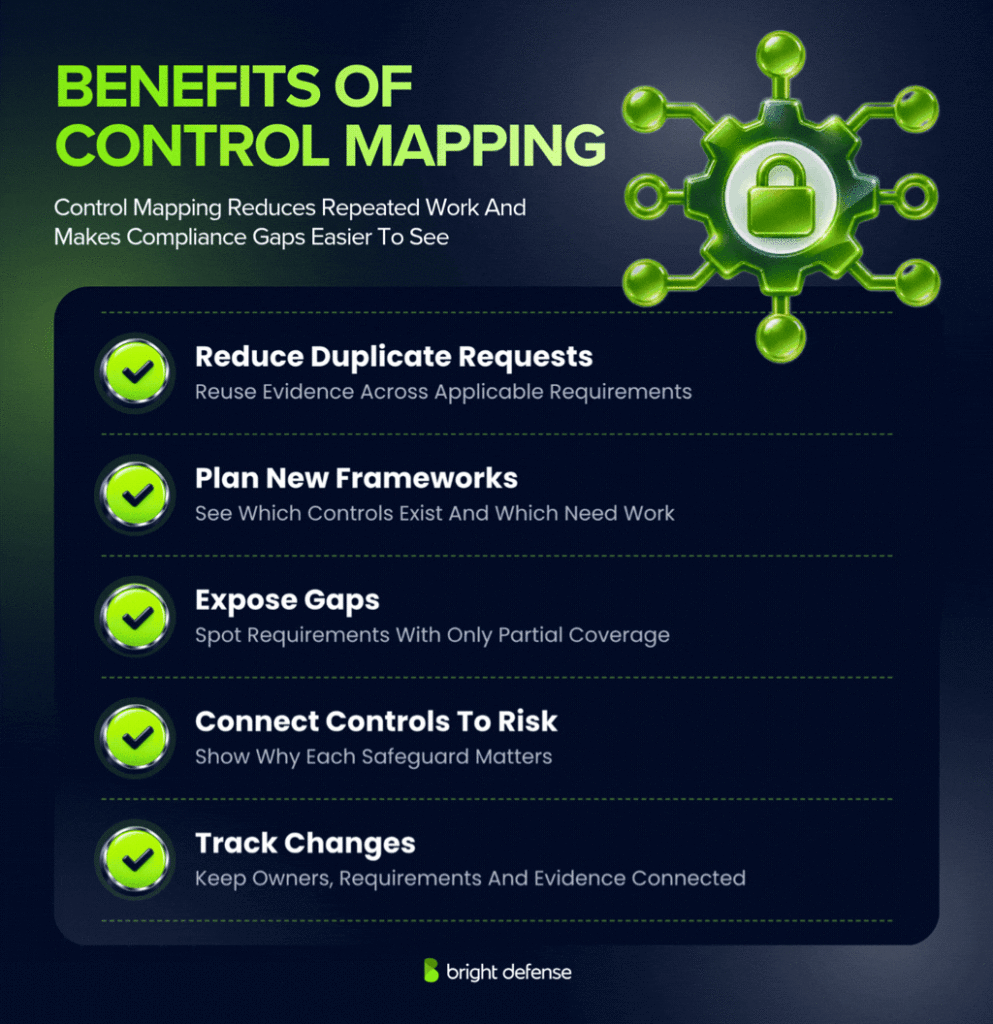
1. Reduce Duplicate Evidence Requests
HR can supply one set of training completion records, with the compliance team linking it to the requirements it supports. This reduces repeated collection while keeping the intended use of each record visible.
In Coalfire and Omdia’s 2023 study, 64% of respondents from enterprises with annual revenue above $1 billion used tools to support evidence mapping to manage costs across multiple frameworks. The figure measures tool adoption; it does not quantify the savings achieved.
That is the practical opportunity for mapping: separate the effort of collecting a record from the effort of checking which requirements it supports.
2. Plan Additional Compliance Work
Before adding a framework, compare its requirements with your control library. For teams pursuing ISO 27001 and SOC 2, that comparison should account for differences in scope, control requirements, and assessment methods. The result becomes a work plan showing reusable activities and gaps that need resources.
A team may find that its access processes are ready while supplier oversight needs improvement. It can budget for that work without rebuilding the entire program. Customer commitments and applicable obligations still determine priority.
In survey of more than 300 security leaders, almost 70% of respondents managed at least six compliance frameworks. That workload makes a clear record of shared controls and framework-specific gaps useful when planning another assessment.
3. Expose Partial Coverage
Successful backup jobs do not demonstrate successful recovery. Mapping backup and restoration activities separately makes that distinction visible before an assessment.
The same principle applies wherever one broad requirement depends on several controls. A coverage review shows which activity is missing, so a completed task does not hide an unfinished requirement.
4. Connect Controls To Business Risks
Link controls to the risks they address as well as framework requirements. This gives leadership a reason to fund the activity beyond preparing for an audit.
For a business that depends on uninterrupted service, recovery testing addresses the financial impact of an outage. A failed test deserves attention because of that exposure, even when the next assessment is months away.
5. Trace Ownership And Changes
Replacing an identity provider can affect access approvals and authentication evidence across several programs. A shared map shows the control owners which records need updating.
Reviewers can follow each requirement to the relevant safeguard and its evidence. That traceability makes inconsistent answers easier to resolve during customer reviews.
How Do You Build A Control Mapping Table?
Build the first map around a small control area, such as employee access. The six steps below produce a reviewable record of coverage and a task list for anything still missing.
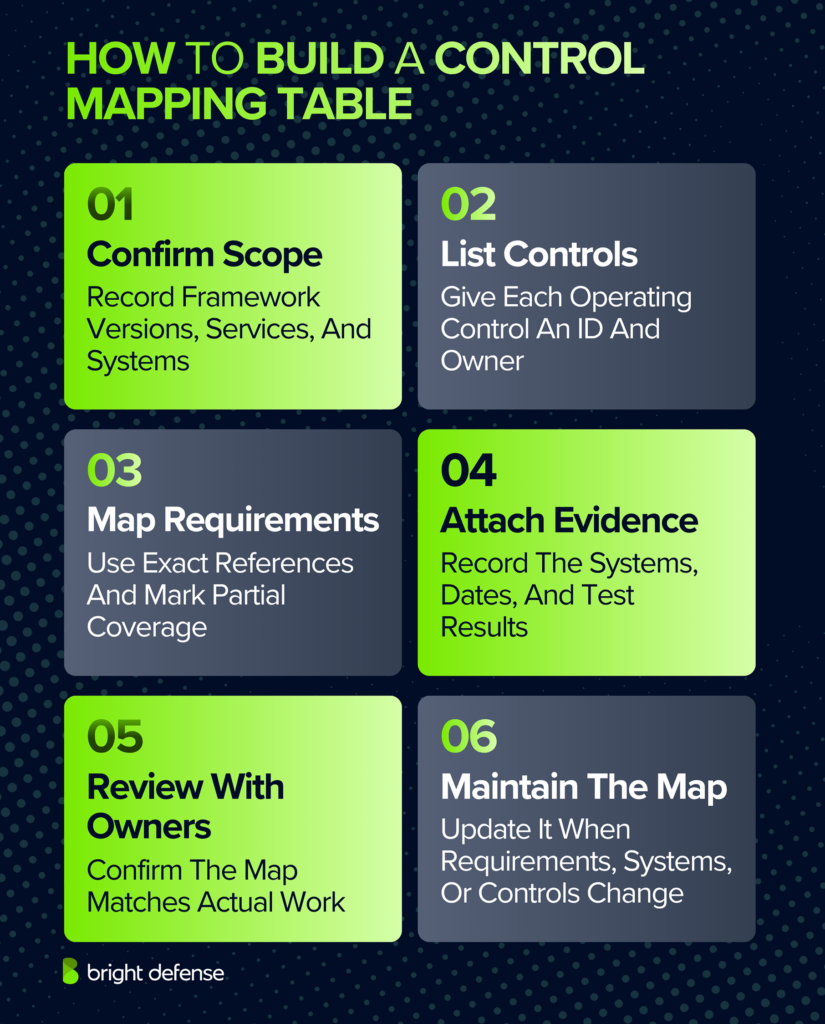
1. Confirm Scope And Framework Versions
List the frameworks you need and the versions used for each assessment. Record which services and systems fall within each scope.
Use the framework tied to your nearest commitment as an organizing reference when useful. A neutral internal control library works just as well; choosing a primary framework is optional.
2. Write Down The Controls You Actually Operate
Give each control a stable ID and a named owner. Describe the activity clearly enough that another person can perform it and gather evidence. A SOC 2 controls list can help you check whether your inventory covers relevant security activities.
For an offboarding control, specify the event that triggers removal and the systems included. Set a removal deadline that reflects your risk assessment and commitments. Do not copy a generic deadline into a policy your team cannot meet.
3. Match Exact Requirement References
Read the full requirement before adding a relationship. For SOC 2 Trust Services Criteria, use the exact criterion reference for the mapping.
Explain the match in one or two sentences. Mark partial coverage when the control addresses only part of the requirement, then record which other control or activity fills the gap.
4. Attach Evidence And Record Test Results
Link records to the activity they demonstrate. Include the covered systems and collection period so reviewers can judge whether the evidence fits the planned assessment.
Keep coverage, implementation, and test results in separate fields. “Mapped” means a relationship exists; it does not mean the activity has passed a test.
5. Review The Mapping With Control Owners
Ask the owner to confirm that the description matches daily operations. A compliance reviewer then checks the requirement interpretation and the remaining gaps.
In a July 2026 survey of 201 security and compliance practitioners, 50.7% cited obtaining time and input from technical teams as an audit preparation bottleneck. Schedule control-owner reviews early so unresolved descriptions and evidence questions have time to be addressed. what 201 practitioners experience
The worked example below uses real references but an illustrative company control. Offboarding supplies only part of each broader requirement.
Illustrative control AC-02: IT disables departing users’ accounts in the identity provider and listed applications at the approved termination time. The control owner reconciles HR departure records against completed removal tickets.
| Internal Control | Requirement Reference | Coverage And Remaining Work |
| AC-02: Employee offboarding | SOC 2 CC6.2 2017 TSC, revised points of focus 2022 | Partial: supports credential removal. User registration and authorization before credential issuance need separate coverage. |
| AC-02: Employee offboarding | ISO/IEC 27001:2022 Annex A.5.18, Access rights | Partial: supports removal of access rights. Provisioning, access reviews, and changes to rights need separate coverage. |
Evidence: HR departure list, removal tickets, and deactivation logs for the same period. Owner: IT manager. Open gap: application accounts outside the identity provider need confirmation from their system owners.
These are illustrative mappings, not an official equivalence statement. Validate them against the AICPA criteria and the applicable ISO standard.
6. Set A Maintenance Schedule
As a starting practice, review open mapping gaps monthly and the complete map quarterly. These are suggested management intervals, not universal framework requirements. Adjust them to the rate of change and any binding commitments.
Trigger an earlier review when a framework changes or a system enters the assessment scope. Revisit affected entries after a control failure, a major process change, or an ownership transfer. Keep the previous version and the reason for the update.
What Challenges Do Organizations Face With Control Mapping?
Even a complete table can overstate coverage if its relationships are weak. These five checks address the errors most likely to leave a requirement unsupported.
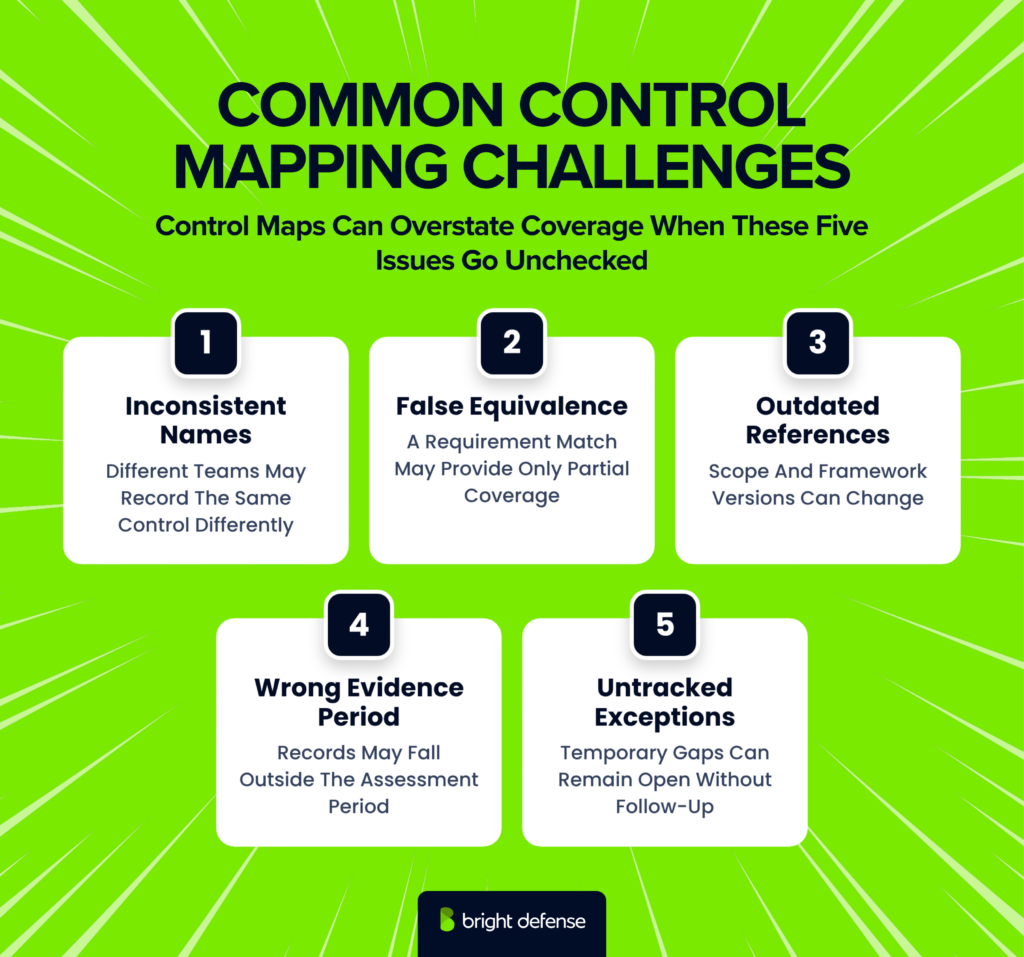
1. Inconsistent Descriptions Across Teams
“Employee offboarding” and “account termination” may refer to the same activity in different trackers. Stable control IDs let HR and IT reference one entry while retaining their own responsibilities.
Standardize the control description and scope before combining records. Similar names alone are insufficient evidence that two processes are identical.
2. Confusing A Relationship With Equivalence
NIST’s mapping relationship vocabulary distinguishes equal, subset, superset, intersects, and not related. The labels describe comparisons between source concepts, with the direction of comparison stated explicitly.
For a beginner’s operational table, full, partial, and no coverage are easier to maintain. Explain the rationale in plain language, and track test results separately. Avoid converting a broad conceptual match directly into a compliance score.
3. Losing Scope Or Version Details
When a framework releases a new version, compare what each requirement means instead of matching the old reference numbers to the new ones. The ISO/IEC 27001:2022 revision cut Annex A from 114 controls to 93.
Three separate 2013 controls, giving users access, reviewing that access, and removing it, now sit inside one 2022 control, A.5.18 Access rights. A crosswalk that still uses the old numbers would treat those three retired controls as separate requirements, when the current standard covers all three in one place.
Record which version of the framework each mapping uses, and read every changed requirement before you accept a crosswalk someone else built.
4. Reusing Evidence From The Wrong Period
A SOC 2 Type 2 examination evaluates operation over a specified period. A screenshot captured after that period may show the current configuration without proving how the control operated earlier.
Use dated activity records to demonstrate recurring work. A SOC 2 report’s control tests and results connect that work to the examination; collecting files alone does not provide the same assurance.
For manual processes, retain completion records as tasks occur. Waiting until audit preparation can leave the team unable to reconstruct what happened.
5. Leaving Exceptions Without Follow-Up
An approved exception needs an owner and an expiry or review date. Otherwise, a temporary exclusion can remain hidden behind an entry marked complete.
Include the affected mappings in the exception record. When the exception closes, confirm the corrective work and replace any evidence that no longer reflects the operating control.
How Does Bright Defense Simplify Control Mapping?
Bright Defense combines compliance expertise with managed automation for programs such as SOC 2 and ISO 27001. Our continuous compliance services cover gap assessment and ongoing evidence management.
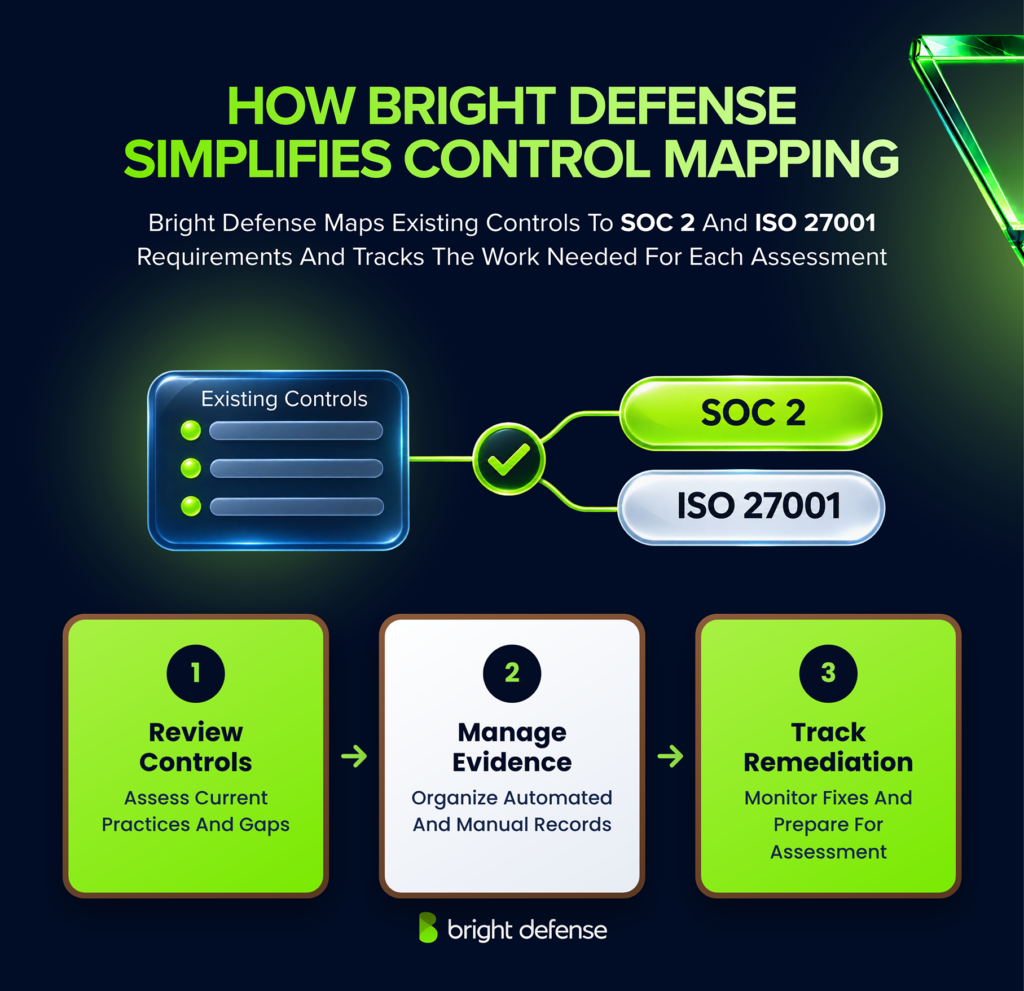
We organize preparation around your systems and business commitments. The work moves from assessing current safeguards to tracking remediation and preparing for review.
1. Review Existing Controls
We assess your current practices against the target framework and scope. The resulting gap assessment directs attention to requirements that need additional work.
2. Manage Automation And Evidence
We manage compliance automation and organize evidence from connected systems. Your team retains responsibility for confirming manual activities and providing records that integrations cannot collect.
3. Track Remediation And Preparation
We support corrective work and ongoing control monitoring. Teams pursuing more than one framework can coordinate shared preparation while keeping each engagement’s remaining tasks visible.
Talk to Bright Defense about preparing your existing controls for the next assessment.
Frequently Asked Questions
1. Which Framework Do I Use As My Starting Point?
Use the framework connected to your nearest contractual or assessment deadline when that makes planning easier. A company with mature controls can map from its internal library instead. No single framework is the mandatory starting point for control mapping.
2. Do I Need A Separate Control For Every Requirement?
No. One control can support several requirements, and one requirement can depend on several controls. Keep the activities separate when their owners or test methods differ. This makes failures easier to trace and fix.
3. How Do I Map Risks To Controls?
Describe a specific risk and assess its likelihood and impact. Link it to safeguards that prevent the event or limit its consequences. Account takeover, for instance, can connect to MFA and suspicious-login monitoring. Review the risk remaining after those controls are in place.
4. Can A Fully Mapped Requirement Still Have A Gap?
Yes. A complete design mapping can coexist with missing implementation or failed operation. Access removal may be fully described in a workflow, but an overdue account still represents a control problem. Track the design relationship separately from evidence and test results.
5. How Do I Measure Mapping Progress?
Count applicable requirements with reviewed coverage and distinguish partial coverage from full coverage. Track unresolved gaps and evidence readiness separately. A percentage based only on links created can hide missing controls and failed tests.
No. Reusing evidence depends on the scope, period, and test method required by each engagement. Each assessor decides whether the records are sufficient and may request additional samples or independent testing. Coordinate early so shared work remains useful.
Measure the effort on one representative control area before committing to a schedule. Record the time spent interpreting requirements and validating evidence. Use that result to plan the remaining work, allowing extra time for unclear requirements and new controls.
It can reduce repeated collection and preparation, but there is an upfront investment in reviewing relationships. Compare staff hours before and after implementation. Include mapping maintenance and software fees, plus assessment fees that remain separate.
A control owner confirms how the safeguard operates, and a qualified compliance reviewer validates the requirement interpretation. Keep the approver’s name and review date. Assign unresolved interpretations to someone with expertise in the relevant framework.
Software can propose links and organize evidence, but a person needs to validate meaning and scope. Reviewers need the original requirement text and the actual control description. A confident AI suggestion does not prove that the relationship is correct.