What is a SOC 2 Gap Assessment?
Updated:
July 5, 2026
You’ve decided to get SOC 2 compliant congratulations. You’re about to unlock bigger enterprise deals and build massive trust with your customers. But before you book your official audit, there’s one question you need to answer. Are you actually ready?
In practice, the majority of first time SOC 2 audits uncover significant control gaps. Industry estimates consistently show that more than 70% of organizations fail to pass a SOC 2 Type I audit on their first attempt without a prior gap assessment.
Most companies find that their existing processes do not quite align with SOC 2 standards right out of the gate. That’s where a SOC 2 Gap Assessment comes in. It is your roadmap to compliance, highlighting the blind spots in your security so you can bridge them before they become costly audit findings.
Key Takeaways
- Validate readiness before the audit (70%+ fail first-time Type I without a gap assessment).
- Use a gap assessment to find and fix control/evidence gaps early.
- Scope SOC 2 to your commitments (Security first; add other criteria as needed).
- Turn readiness into continuous compliance with ongoing monitoring and remediation.
What is the SOC 2 Framework?
Service Organization Control 2, commonly referred to as SOC 2, is a recognized compliance framework standard for tech companies and service providers. Designed and regulated by the American Institute of CPAs (AICPA), SOC 2 ensures organizations manage and protect customer data.
The main pillars or criteria of the SOC 2 framework are known as the Trust Services Criteria (TSC) or Trust Services Principles. They include:
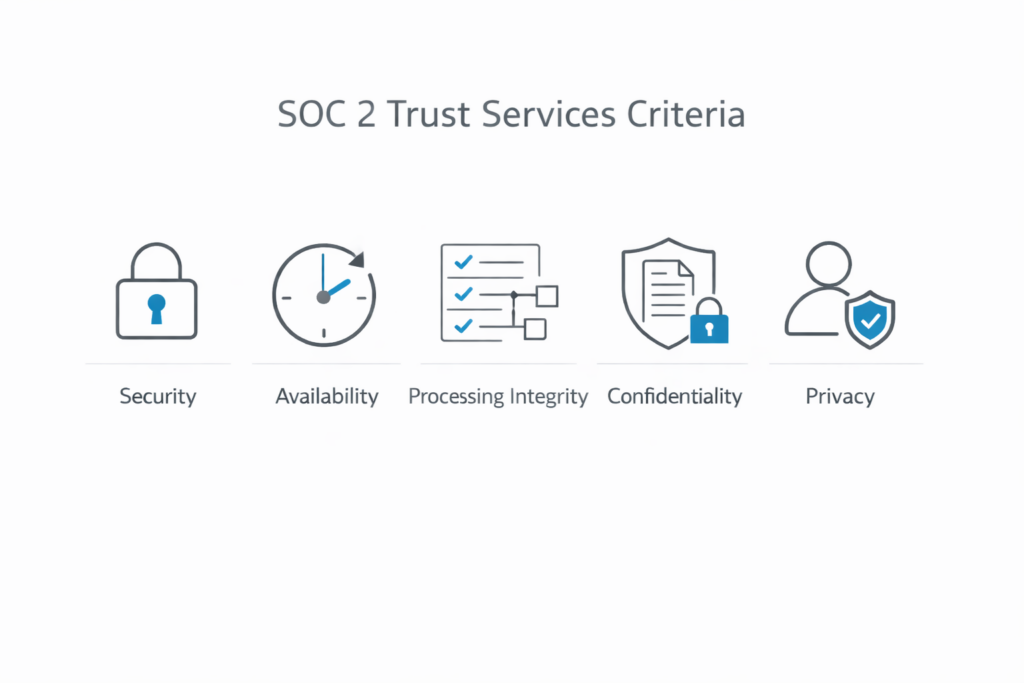
- Security: This refers to the protection of information and systems from unauthorized access, information disclosure, and damage to the systems that could compromise the availability, integrity, confidentiality, and privacy of information or systems, as well as the protection against unauthorized changes to system utilities and applications.
- Availability: This concerns the accessibility of a system, product, or service as stipulated by a contract or service commitment. It focuses on monitoring network performance and availability, site disaster recovery, and system incident handling.
- Processing Integrity: This ensures that a system achieves its objectives (e.g., timely, accurate, authorized) in processing data. It involves checking for system processing activities’ accuracy, timeliness, and authorization.
- Confidentiality: This pertains to the protection of information designated as confidential from unauthorized disclosure. Examples include encryption, network and application firewalls, and access controls.
- Privacy: Organizations collect, use, retain, disclose, and dispose of personal information (PI) in conformity with their privacy notices and the criteria in the generally accepted privacy principles that the AICPA issues.
An organization undergoing a SOC 2 audit will choose which of these criteria are relevant to its service commitments and system requirements. Organizations often consider security as a foundational principle and might pair it with one or more of the other criteria based on their business needs and the expectations of their stakeholders.
Gap Assessment: The Diagnostic Tool for Compliance Readiness
Organizations conduct a SOC 2 gap assessment as a preliminary evaluation to identify differences between their current information security posture and the AICPA’s SOC 2 Trust Services Criteria requirements. This assessment is a diagnostic tool, pinpointing non-compliance, operational vulnerabilities, and potential process improvements.
The primary goal is to provide a roadmap for organizations to understand what changes, enhancements, or remediations they need to implement before undergoing a formal SOC 2 audit. By addressing these gaps in advance, organizations can increase their likelihood of a successful audit outcome and demonstrate their commitment to maintaining high standards of security and compliance to their stakeholders.
Crucial Elements of a SOC 2 Gap Assessment
A SOC 2 Gap Assessment isn’t a one-size-fits-all checklist. It’s a multifaceted analysis comprising several integral components:
- Documentation Review: This isn’t just about having paperwork. It’s about analyzing the depth, relevance, and completeness of policies, procedures, and guidelines. It asks questions like: Are the documented procedures reflective of actual practices? Are there gaps in policy coverage?
- Technical Evaluation: Beyond the paperwork, the actual tech environment comes under scrutiny. This includes rigorous evaluations of software configurations, hardware setups, network architectures, and even access controls. It’s about ensuring that the technological backbone of an organization meets the required standards.
- Personnel Engagement: No assessment can be complete without human insights. By interviewing and interacting with key personnel, especially those in information security and human resources roles, we can better understand the practical challenges and implementations.
- Risk Landscape Identification: Recognizing potential vulnerabilities, threats, and risks in the system can shape the course of action required to fortify defenses and enhance resilience.

Why the SOC 2 Gap Assessment is Non-Negotiable
The benefits of conducting a thorough SOC 2 Gap Assessment are numerous. They include:
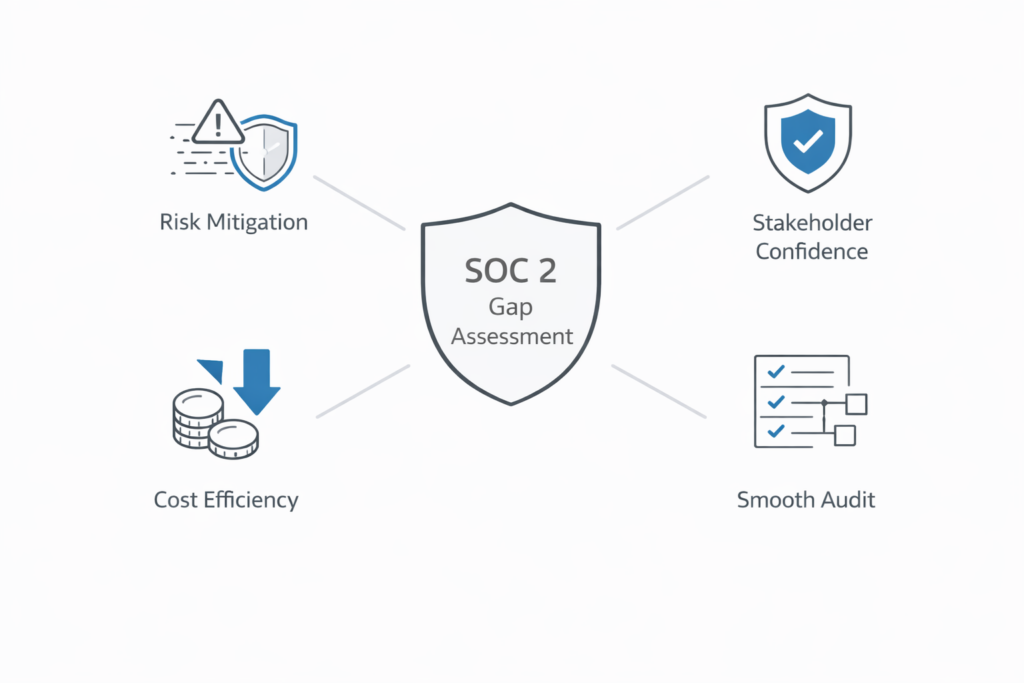
- Risk Mitigation: Early detection means early action. The cost of business disruption, fines, and productivity loss from a data breach is 2.71 times the cost of compliance. By identifying potential snags, organizations can preemptively address issues, preventing them from ballooning into significant breaches or audit failures.
- Cost Efficiency: Addressing vulnerabilities or compliance gaps during an audit is costly. Gap assessments identify and close gaps before the audit begins saving time and money.
- Enhanced Stakeholder Confidence: Demonstrating a proactive approach towards compliance readiness significantly boosts stakeholder trust and sends a clear message about the entity’s commitment to data protection.
- Smoother Audit Journey: With a majority of the groundwork done during the gap assessment, the actual SOC 2 audit can proceed with fewer hiccups, ensuring a more streamlined and efficient evaluation process.
Differences Between SOC 2 Gap Assessment and SOC 2 Audit
While both processes support the journey to SOC 2 compliance, they serve distinct and complementary purposes. The table below clearly outlines how each differs in objective, scope, and outcome:
| Dimension | SOC 2 Gap Assessment | SOC 2 Audit |
|---|---|---|
| Purpose | Identify control and evidence gaps before pursuing SOC 2. | Provide independent assurance on controls against SOC 2 criteria. |
| Output | Internal findings, gap list, and remediation roadmap. | Formal SOC 2 report with auditor opinion. |
| Who performs it | Internal team or external consultant; independence not required. | Independent, licensed CPA firm. |
| Official status | Readiness assessment; not an attestation. | Formal AICPA SOC 2 examination. |
| Timing | Conducted before the audit to reduce risk and rework. | Performed after controls are implemented. |
| Rigor | Practical and diagnostic; readiness-focused. | Highly rigorous; tests control design and/or effectiveness. |
| Audience | Internal stakeholders and leadership. | Customers, prospects, and partners. |
| Result | No pass/fail—only gaps and actions. | Auditor opinion (e.g., clean or with exceptions). |

SOC 2 Gap Assessment: The First Step Towards Continuous Compliance
The SOC 2 Gap Assessment is not just a precursor to the formal SOC 2 audit. It’s the foundation upon which the structure of continuous compliance is built. This comprehensive review establishes a clear baseline, highlighting the organization’s current security and compliance posture. It reveals strengths to be consolidated and weaknesses to be addressed. By doing so, it offers a granular view of where the organization stands and what it needs to maintain an enduring alignment with SOC 2 requirements.
Instilling a Culture of Regular Assessment
Continuous compliance demands a proactive, ongoing evaluation of systems, processes, and policies. The SOC 2 Gap Assessment introduces organizations to this rhythm. Once an organization experiences the depth and breadth of this assessment, it becomes better primed to undertake regular self-assessments, internal audits, and periodic checks, ensuring that its compliance status doesn’t lapse or become outdated.

Adapting to the Fluid Nature of Compliance
Regulatory landscapes, technological innovations, and threat vectors are seldom static. What qualifies as compliance today might be inadequate tomorrow. By engaging in a SOC 2 gap assessment, organizations effectively train themselves to be adaptable. They learn to recognize evolving standards, anticipate potential future gaps, and institute mechanisms to remain aligned with best practices.
Building Systems for Ongoing Monitoring and Reporting
One of the core tenets of continuous compliance is the ability to monitor systems in real-time and generate reports that reflect the current compliance status. The gap assessment not only identifies the need for such mechanisms but often recommends the appropriate tools, technologies, and practices that facilitate this ongoing vigilance. As a result, organizations are better equipped to detect anomalies, address vulnerabilities promptly, and ensure that compliance isn’t a sporadic effort but an embedded operational norm.
Organizations Poised to Benefit from SOC 2 Gap Analysis and SOC 2 Compliance
While the SOC 2 framework has universal relevance, certain sectors and business models derive pronounced advantages from both the gap analysis and SOC 2 compliance. These include:
1. Technology and Cloud Service Providers
Tech companies, cloud service providers (CSPs), and managed service providers (MSPs) manage large volumes of customer data and face distinct security compliance demands as a result. Customers and investors expect documented proof that security controls are in place. SOC 2 compliance fulfills that expectation, giving clients verifiable assurance that their data is handled responsibly. Before pursuing certification, a gap analysis identifies control deficiencies and defines the steps needed to meet SOC 2 requirements.
2. Healthcare IT Solutions
Healthcare data is among the most sensitive and sought-after by malicious actors. Companies offering electronic health records (EHR) systems, telehealth platforms, or other health-tech solutions need to showcase an unwavering commitment to data protection. By adopting SOC 2 standards, they not only align with best practices but also fortify trust with patients, practitioners, and partners.

3. Financial Technology (FinTech) Enterprises
FinTech firms handle an array of sensitive information, from bank account details to investment portfolios. As disruptors in finance, they need to marry innovation with security. SOC 2 compliance grounds these solutions in established security norms, and the gap analysis serves as the first step. Companies handling cross-border payments face similar compliance demands, making a clear understanding of compliance and security standards in fintech critical for determining whether SOC 2 alone provides sufficient assurance or whether additional certifications like PCI DSS and regional regulatory approvals are needed.
4. E-commerce Platforms
Consumers entrust e-commerce platforms with a wealth of information, from personal preferences to credit card numbers. To maintain and grow this trust, these platforms need to demonstrate an ongoing commitment to data security. Through SOC 2 compliance, they can offer this assurance, and the preceding gap analysis helps in fine-tuning their protective measures.
5. Software-as-a-Service (SaaS) Companies
The SaaS model is built on trust. Clients trust these platforms to handle, process, and store data remotely. To foster and nurture this trust, SaaS companies can greatly benefit from showcasing their adherence to SOC 2 standards, using the gap analysis as the initial step in this journey.
Conclusion: The SOC 2 Gap Assessment as a Catalyst for Trust and Compliance
In a digital age where data is as valuable as gold, ensuring its protection is non-negotiable. The SOC 2 Gap Assessment isn’t just another box to tick in the compliance journey. It’s an instrumental process that sets the tone for an organization’s commitment to security, trust, and excellence. Embracing it wholeheartedly can be the difference between being a trusted industry leader and grappling with the ramifications of overlooked vulnerabilities.

SOC 2 Gap Analysis from Bright Defense
Our mission at Bright Defense is to protect our clients from cybersecurity threats through continuous compliance. Our monthly engagement model delivers a robust cybersecurity program that allows you to meet compliance frameworks, including SOC 2, HIPAA, and CMMC. Once compliance certification is achieved, we constantly enhance your security program to keep up with the evolving threat landscape and compliance standards. Our compliance automation toolset gives you complete visibility into your compliance status while saving you time and money.
Our engagements typically begin with a SOC 2 gap analysis. This provides us with a thorough understanding of your existing controls and processes. The assessment will shed light on current gaps, and provide a remediation strategy. If you are interested in SOC 2 compliance and a gap analysis, we would love to assist. Contact us today to get started!
Frequently Asked Questions
A SOC 2 gap analysis (also called a SOC 2 readiness assessment) is a pre-audit review that compares your current controls, policies, and evidence to the SOC 2 Trust Services Criteria to identify what’s missing or weak before the official SOC 2 audit.
To compare your current state to a target standard or requirement, pinpoint deficiencies, and produce a prioritized remediation plan to close those gaps efficiently.
A SOC 2 assessment (formally, a SOC 2 examination) is an independent CPA-led attestation that evaluates controls relevant to one or more Trust Services Criteria (Security is always included; others include Availability, Processing Integrity, Confidentiality, and Privacy).
– Type I: evaluates control design at a point in time.
– Type II: evaluates design and operating effectiveness over a period.
A cybersecurity gap assessment is a structured review that compares your current security posture (controls, processes, and tooling) to a target baseline (e.g., NIST CSF, ISO 27001, internal standards), identifies weaknesses and missing controls, and drives a remediation roadmap.