Internal vs External Penetration Testing – Key Differences
Updated:
October 14, 2026
Internal and external penetration tests serve different purposes in assessing an organization’s security. One focuses on threats from within the network, such as a compromised device or insider access.
The other looks at how attackers might exploit systems exposed to the internet. Both tests are important, but they target different risks and require different approaches.
This blog explains how they differ, when to use them, and why both matter for building a strong security program.
Key Takeaways
- Internal penetration tests simulate insider threats or compromised devices to find risks like privilege escalation, lateral movement, and sensitive data access.
- External penetration tests simulate internet-based attacks on public-facing assets like web servers, VPNs, and cloud services.
- Internal tests focus on insider access and internal weaknesses, while external tests target perimeter defenses and exposed services.
- Both are recommended annually and after major changes, breaches, or compliance requirements (PCI DSS, SOC 2, ISO 27001).
- Using both gives a full view of risk, covering perimeter security and post-breach impact.
What Is An Internal Penetration Test?
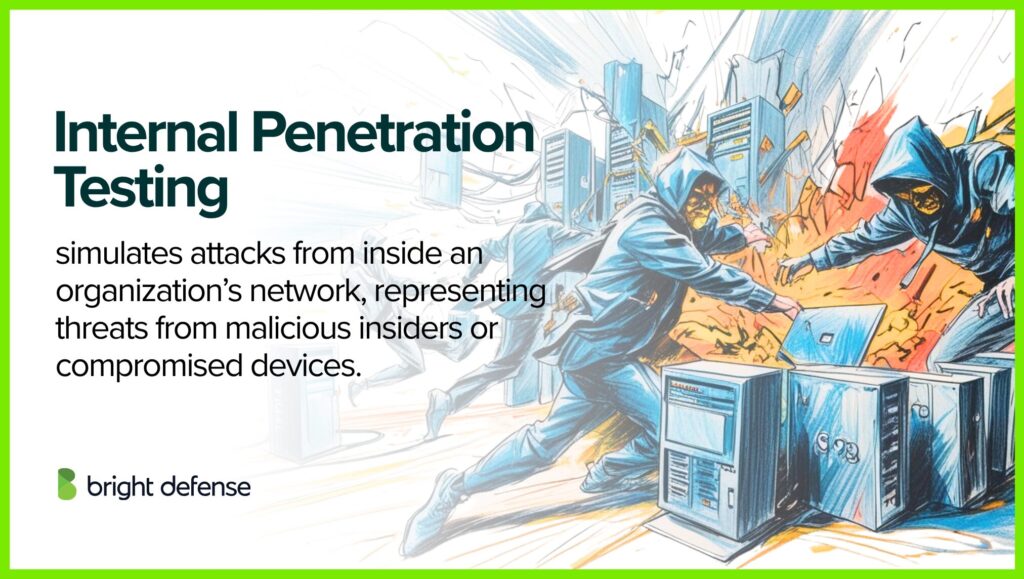
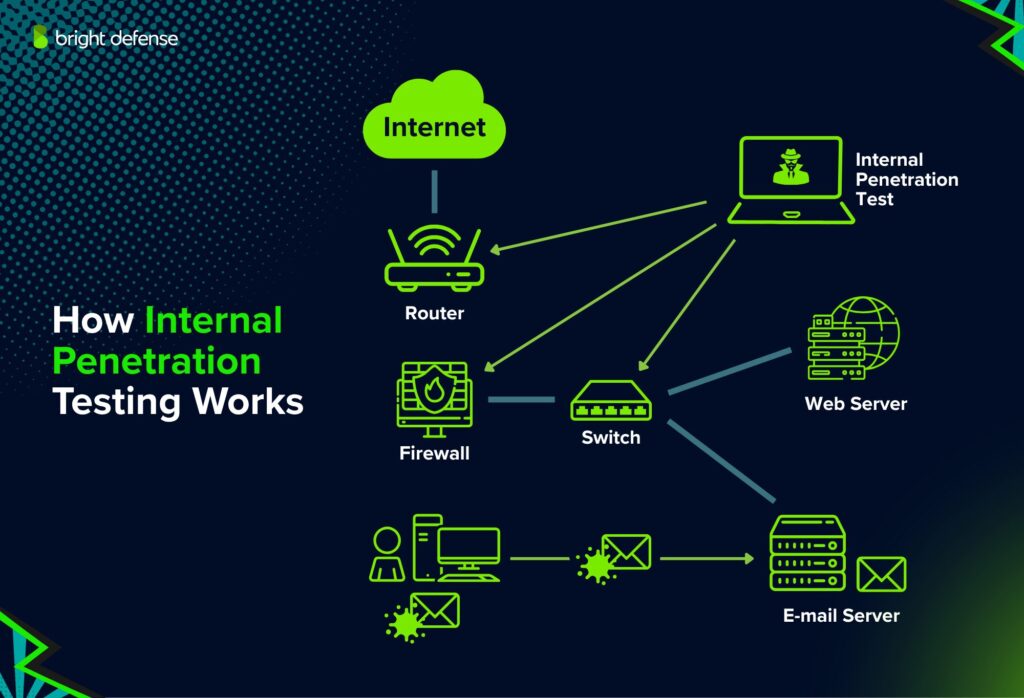
Internal Penetration Testing is a security assessment conducted from within an organization’s network. It simulates an attack that could come from a malicious employee, a contractor, or an attacker who has already bypassed the external defenses.
The aim of a internal pen test is to figure out what kind of access and damage an insider or compromised device could cause. This includes threats like privilege escalation, lateral movement across systems, and unauthorized access to sensitive data.
Typical Scenarios
- A rogue employee trying to gain access to restricted resources
- A visitor plugging in a malicious USB or device into the internal network
- Malware that infected one machine and is attempting to spread
- An attacker who breached external defenses and now has internal access
Key Focus Areas
- Misconfigured permissions and excessive privileges
- Vulnerable internal applications or services
- Insecure file shares or databases
- Unpatched systems and poor segmentation
- Credential reuse or weak passwords
When to Perform an Internal Penetration Test?
An internal penetration test is useful when an organization needs to understand what someone with access to its network could reach. It can reveal whether a compromised account, an insider, or an attacker with an initial foothold could move between systems, gain higher privileges, or access sensitive data.
Schedule a test after significant internal changes, such as network segmentation, a domain migration, or the rollout of new security tools. Testing is useful after an incident involving internal access to confirm that the weaknesses involved have been fixed.
A major expansion of privileged access can warrant a test of those accounts and their controls.
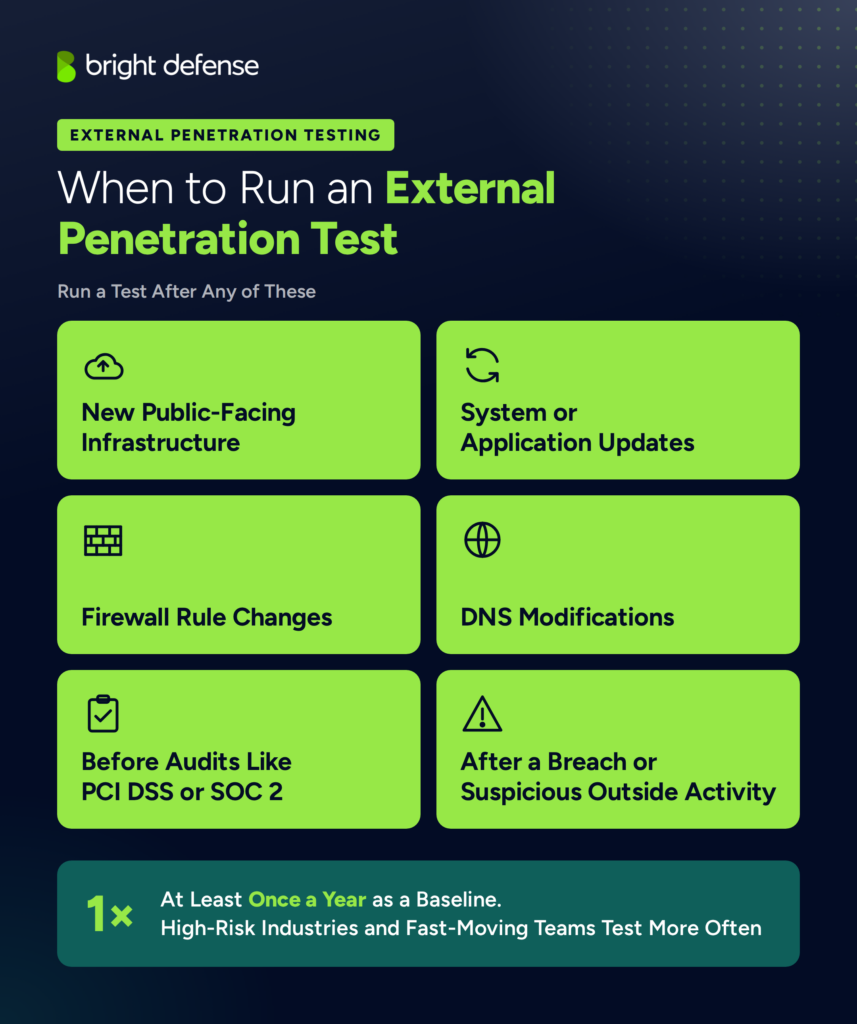
Mergers and acquisitions can introduce unfamiliar networks, accounts, and trust relationships, making an internal test useful during integration. Compliance obligations may affect the schedule. PCI DSS requires internal penetration testing at least once every 12 months and after significant changes to the in-scope environment.
An annual test is a practical baseline for other organizations, with testing frequency adjusted to their risks and applicable requirements. Environments that change frequently or hold sensitive personal data, financial information, or intellectual property may benefit from testing every six months and after major infrastructure changes.
Internal Penetration Testing Methods
Below are common tactics used during internal tests:
- Network Scanning: Identify live hosts, open ports, and exposed services using tools like Nmap or Advanced IP Scanner.
- Service Enumeration: Gather information about running services, versions, and configurations for potential weaknesses.
- Vulnerability Exploitation: Exploit outdated software, default settings, or weak configurations to gain access.
- Password Attacks: Use techniques like password spraying, brute force, and credential dumping to test authentication strength.
- Privilege Escalation: Attempt to move from user to admin using misconfigurations, token impersonation, or reused credentials.
- Lateral Movement: Navigate between systems to simulate how far an attacker could spread once inside.
- Active Directory Mapping: Use tools like BloodHound to analyze relationships, permissions, and trust paths within AD.
- File Share Analysis: Check shared drives for sensitive files, exposed credentials, or misconfigured access controls.
- Persistence Techniques: Test methods for maintaining access, such as creating new users or backdoors (if allowed in scope).
What Is an External Penetration Test?
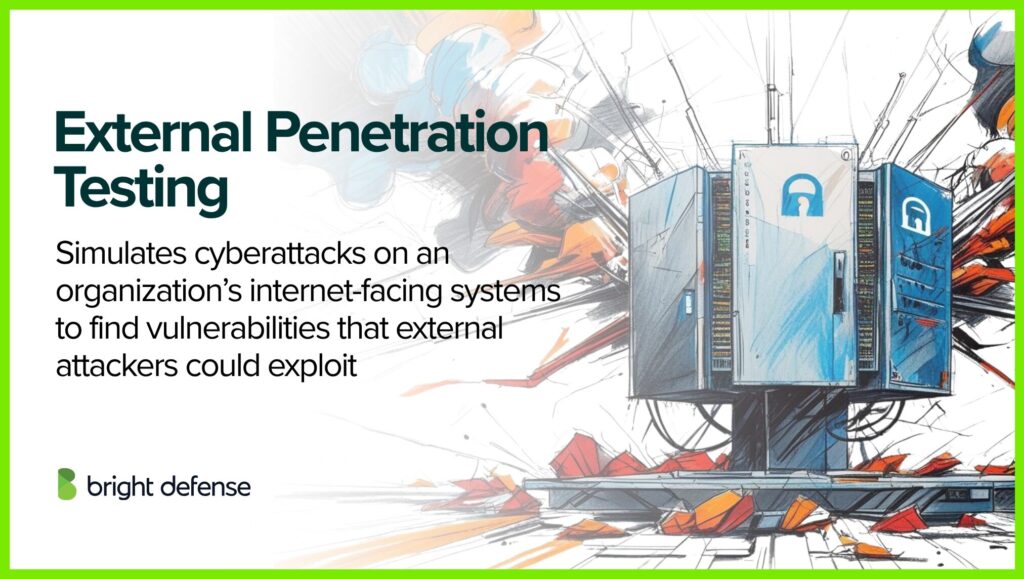
External penetration testing is an authorized security assessment that simulates attacks against an organization’s internet-facing systems.
It evaluates whether an outside attacker can exploit weaknesses to gain unauthorized access, expose sensitive information, or compromise services.
Targets commonly include public websites, internet-facing applications, email servers, VPN gateways, and exposed cloud services.
Testers identify accessible systems, investigate potential vulnerabilities, and attempt controlled exploitation within an agreed scope. They examine weaknesses such as unpatched software, insecure configurations, and inadequate authentication, including combinations of flaws that create a path into the environment.
The assessment produces a report of validated findings that explains potential business impact and recommended remediation. Its findings help organizations prioritize fixes and strengthen the defenses protecting externally accessible assets.
These systems typically include:
- Web servers
- Email servers
- DNS servers
- VPN gateways
- Cloud infrastructure
- Public-facing applications
The purpose of external penetration test is to test what a real attacker could access without any internal credentials or access. This helps organizations understand their exposure from the outside and prevent unauthorized access before it happens.
Key Focus Areas
- Open ports and exposed services
- Misconfigurations in firewalls or routers
- Weak authentication mechanisms
- Vulnerable web applications or APIs
- Data leaks through public sources or metadata
When to Perform an External Penetration Test?
Run an external penetration test whenever you launch new public-facing infrastructure, such as web apps, VPNs, or cloud services. These tests focus on anything exposed to the internet and fall under external network penetration testing.
Also perform a test after:
- System or application updates
- Firewall rule changes
- DNS modifications
These changes can introduce misconfigurations or affect session management, giving attackers an opening.
Schedule tests at least once a year. High-risk industries or fast-moving teams should test more often. Manual vulnerability testing helps catch issues that automated tools might miss.
Run tests before audits like PCI DSS or SOC 2. Also test after any breach or suspicious malicious activities from outside your network. These checks help uncover vulnerabilities detected during scanning and ethical hacking, before attackers find them first.
External Penetration Testing Methods
External penetration testing uses a range of methods to identify vulnerabilities and safely exploit weaknesses in internet facing assets. Common techniques include:
- Reconnaissance: Gather public information using WHOIS, DNS lookups, and tools like Shodan or Amass. These steps help map external network exposure and detect early security weaknesses.
- Port Scanning: Detect open ports and active services using tools like Nmap or Masscan. This helps penetration testers evaluate attack surfaces.
- Service Fingerprinting: Identify technologies and versions to find potential security vulnerabilities from unpatched or outdated software.
- Vulnerability Scanning: Use automated tools like Nessus or OpenVAS to flag known flaws. These scans contribute to regular penetration testing routines.
- Web Application Testing: Examine applications for SQL injection, XSS, CSRF, and authentication flaws.
- Brute Force Attacks: Test exposed login systems using common or leaked credentials, simulating behavior of a malicious attacker.
- SSL/TLS Inspection: Review encryption settings for weaknesses that could compromise network security.
- Exploitation: Exploit verified flaws safely to confirm actual risk and validate findings.
- Man-in-the-Middle Simulations: If allowed, test for transmission vulnerabilities, adding depth beyond basic manual testing.
Differences Between External and Internal Penetration Tests
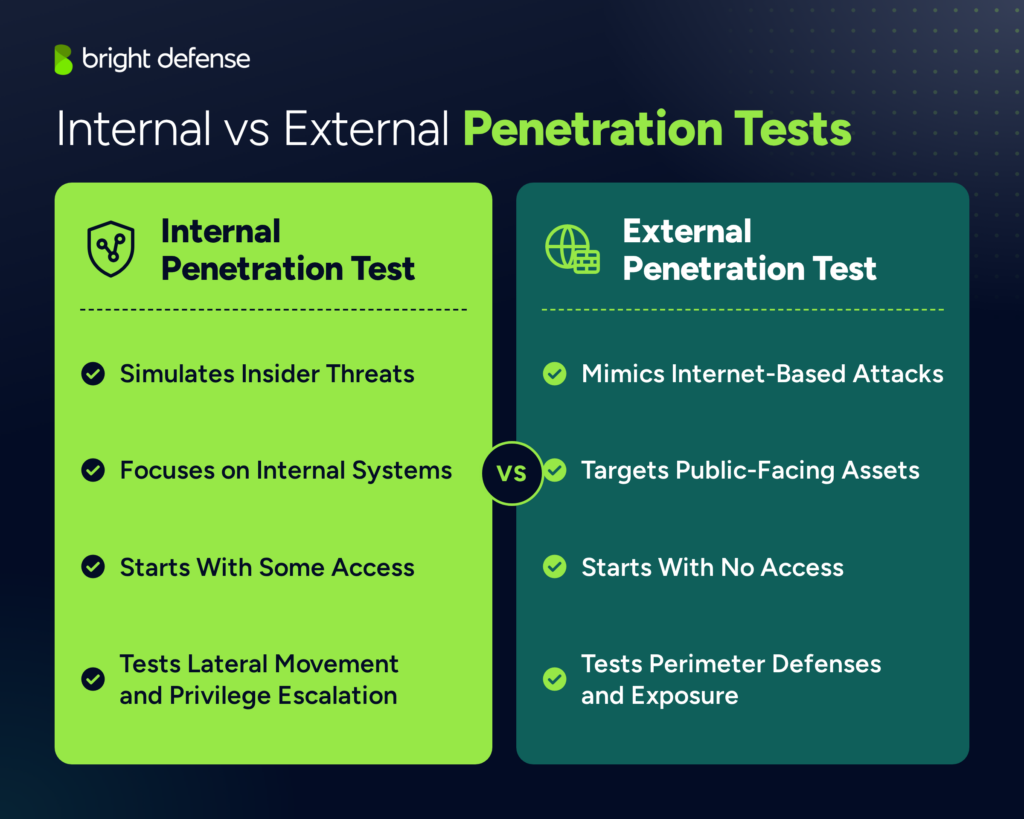
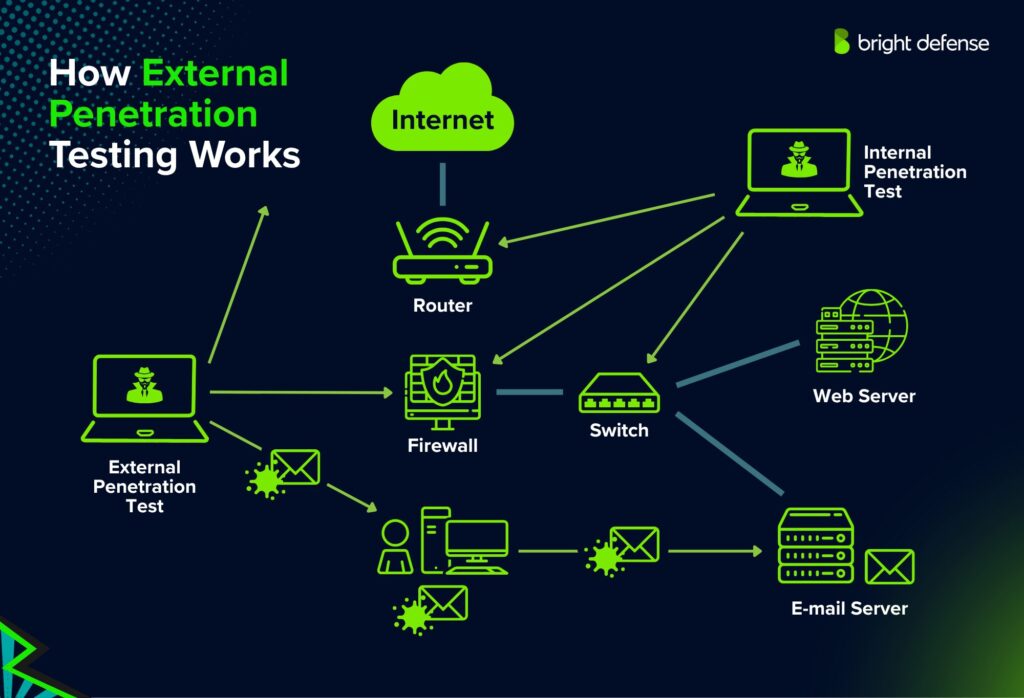
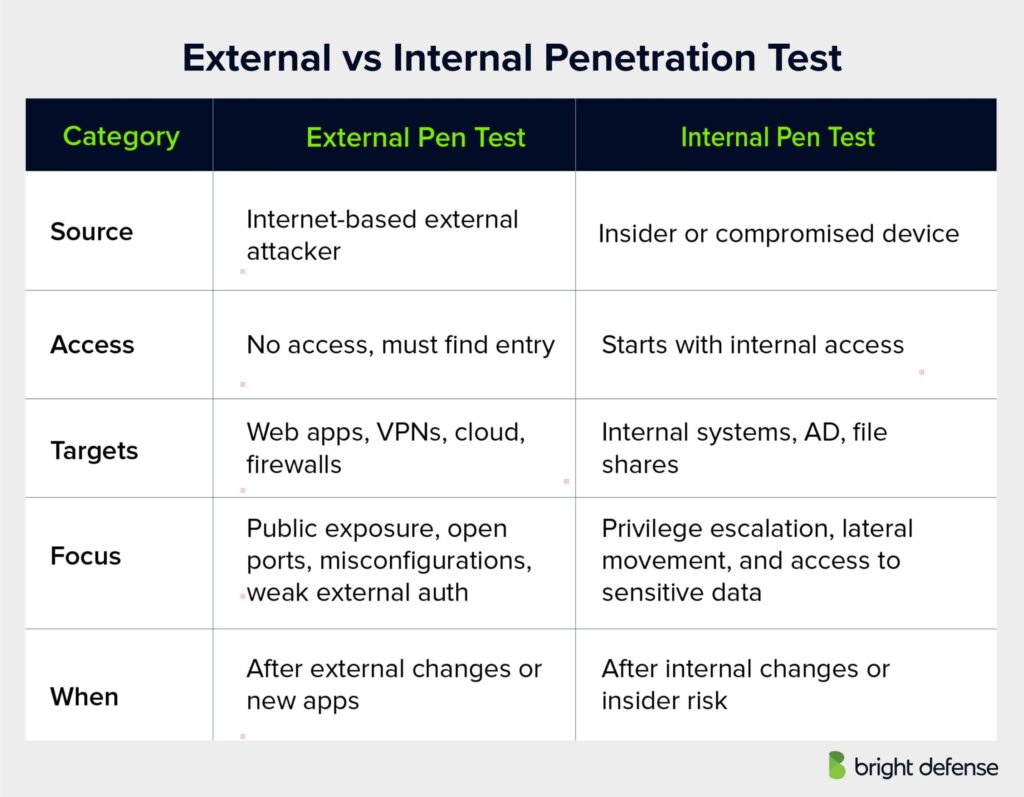
External penetration tests assess systems exposed to the internet from an outside attacker’s perspective. Internal penetration tests assess what an attacker can reach and compromise from an established position inside the environment.
Their main differences involve the starting point, target systems, access permissions, and attack paths tested.
Let’s find out the key differences between the two options:
External vs Internal Pen Test Comparison Table
1. Attacker Starting Point
External testing begins outside the organization’s network and examines exposed entry points. Internal testing begins with an agreed foothold, such as access to an internal network segment or an employee workstation.
An internal test can simulate a malicious insider or an outside attacker who has already compromised a device or account. This makes it useful for assessing the consequences of an initial breach.
2. Target Systems
External tests typically cover public IP addresses, internet-facing servers, VPN gateways, and exposed applications or services. Internal tests examine assets such as employee endpoints, internal servers, directory services, and systems holding sensitive data.
Cloud penetration testing can cover publicly exposed resources or assets reachable from an internal position, depending on the agreed scope. Detailed application testing and testing of segmentation boundaries should be explicitly included in the engagement.
3. Starting Access and Information
External testers commonly begin without authenticated access, although an engagement can include credentials for specific scenarios. Internal testers receive an agreed level of connectivity or account access; connecting to an internal network does not automatically mean receiving a valid user account.
Black-box, gray-box, and white-box testing describe how much information testers receive. These approaches are separate from the external or internal starting position, so an external test is not automatically black-box.
4. Attack Techniques and Objectives
External testing investigates whether exposed services, vulnerable software, misconfigurations, or authentication weaknesses provide unauthorized access. Internal testing emphasizes privilege escalation, movement between systems, and access to resources beyond the tester’s initial permissions.
The techniques overlap. Both forms of network penetration testing can combine weaknesses to demonstrate an attack path and its potential impact. An open port alone does not establish an exploitable vulnerability.
5. Security Controls Evaluated
External testing examines controls protecting publicly reachable systems, including restrictions on exposed services and remote access. Internal testing examines controls limiting access between users, systems, and network segments.
For example, an internal test can assess whether a compromised workstation can reach a restricted server or whether ordinary user permissions allow unauthorized access to sensitive records. Detection and response capabilities can be evaluated when the engagement includes those objectives.
6. Value in a Security Program
External testing helps teams identify weaknesses that enable an initial compromise. Internal testing helps them understand how far that compromise could spread and which assets it could affect.
Together, these penetration testing approaches provide complementary evidence for remediation. The appropriate scope depends on the organization’s architecture, risks, and applicable requirements. Findings reflect the systems, scenarios, and time covered by the engagement; ongoing vulnerability management remains necessary between tests.
Get Trusted Penetration Testing By Bright Defense Run a Pen TestHow Can Bright Defense Help You With Internal and External Pen Tests?
At Bright Defense, we help strengthen your security posture through focused internal and external penetration testing.
Internal Testing: We simulate insider threats such as compromised devices or rogue users to expose misconfigurations, excessive privileges, and overlooked weaknesses within your network.
External Testing: Our team targets your public-facing assets including web applications, VPNs, and cloud infrastructure to surface the same vulnerabilities that real-world attackers pursue.
We combine ethical hacking techniques, manual analysis, and automated testing to reveal the security flaws that matter most. Whether you are preparing for a compliance check, responding to a breach, or conducting routine testing, we deliver clear and actionable results to keep your environment secure inside and out.
Frequently Asked Questions Regarding Internal and External Pen Tests
An external penetration test targets the exposed external perimeter and critical systems reachable from public networks, including unique public access paths such as IP-restricted services and remote access vectors such as VPN connections.
An internal penetration test targets the internal perimeter and critical systems from the perspective of the internal network, including attempts to bypass internal access controls that separate in-scope systems from out-of-scope systems.
External testing tends to surface internet-exposed weaknesses on the perimeter, while internal testing tends to surface lateral movement paths, segmentation gaps, and privilege escalation opportunities after access is already present.
Yes, in PCI-scoped environments both external and internal penetration tests must include application-layer and network-layer assessments.
PCI guidance ties scope to the full CDE perimeter plus critical systems and also calls for segmentation testing when segmentation is used to keep systems out of PCI scope, because segmentation validity affects whether out-of-scope systems can impact the CDE.
An external test fits when internet exposure and remote access paths are the main concern, while an internal test fits when insider-style access, lateral movement, and segmentation strength are the main concern.
Send the in-scope target list and boundaries, constraints and allowed techniques, the testing schedule, and named technical points of contact, because rules of engagement and test plans are expected to define target systems, scope, constraints, and notifications.
Critical high-impact issues should be escalated to the right stakeholders as soon as they are found, and formal rules of engagement commonly include that immediate notification requirement alongside reporting and evidence handling expectations.
Internal testing starts from inside the organization’s environment (for example, on the internal network behind perimeter controls), while external testing starts from outside the environment and targets internet-facing systems.
A vulnerability assessment (VA) is a systematic review that evaluates security measures and finds security deficiencies, while penetration testing (PT) attempts exploitation to show whether weaknesses can be used to compromise the system, data, or environment.
Internal security focuses on risk and control inside the security boundary, including insider misuse of authorized access, while external security focuses on threats from outside the security domain that can harm systems through disclosure, modification, destruction, or service disruption.
Internal cybersecurity concentrates on controls and monitoring within the environment (including insider-risk coverage), while external cybersecurity concentrates on the internet-facing attack surface and external threat actors, with risk work commonly tracking both internal and external threats.